Ford Mustang V 4.0i V6 12V (212 Hp): An American Icon Reimagined
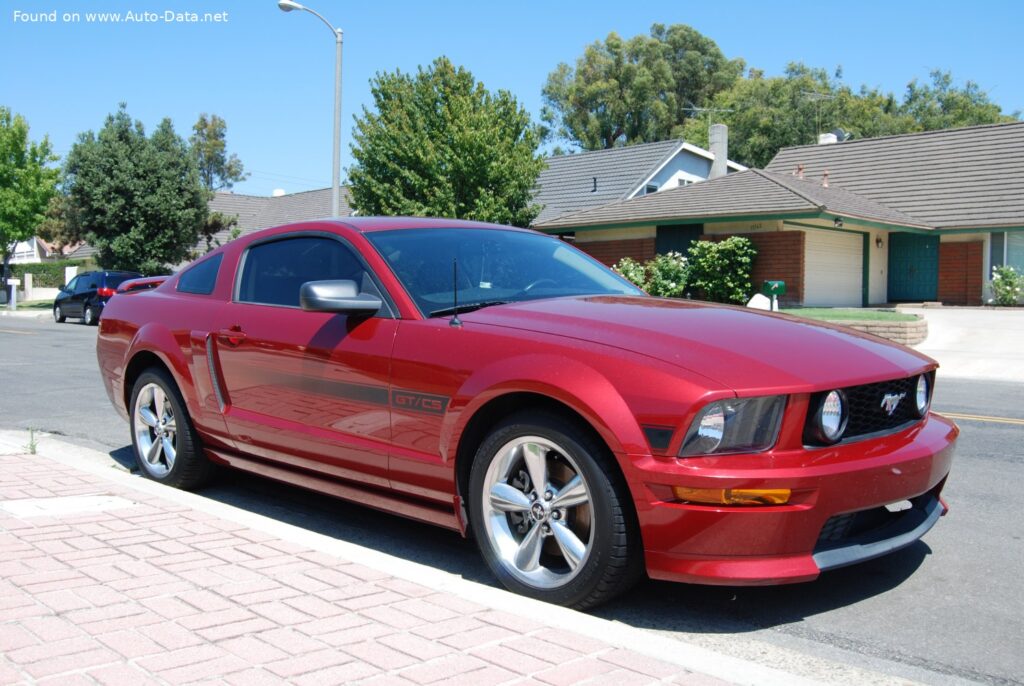
The Ford Mustang V, often referred to by its internal codename S197, marked a pivotal moment in the storied history of the American pony car. Introduced for the 2005 model year, this fifth-generation Mustang represented a significant departure from its “New Edge” SN95 predecessor, embracing a bold “retro-futuristic” design philosophy that paid homage to the iconic Mustangs of the late 1960s. The specific variant, the Ford Mustang V 4.0i V6 12V (212 Hp), served as the entry-level model, offering a blend of classic Mustang aesthetics, respectable performance, and everyday usability. Produced from 2005 to 2009, this generation was instrumental in revitalizing the pony car segment, setting the stage for a new era of muscle car rivalries.
Designed and engineered primarily for the North American market, where the Mustang has always been a cultural touchstone, the S197 aimed to reconnect with the brand’s heritage while incorporating modern engineering and safety standards. The 4.0-liter V6 model provided an accessible entry point for enthusiasts, delivering a compelling driving experience that balanced power with relative fuel efficiency for its class. Its robust powertrain architecture, featuring an internal combustion engine driving the rear wheels, adhered to the classic Mustang formula, ensuring an authentic experience for drivers.
Engine and Performance: The 4.0-Liter V6 Heart of the Ford Mustang V 4.0i V6 12V (212 Hp)
At the core of the entry-level Ford Mustang V was the robust 4.0-liter (4009 cm³ or 244.64 cubic inches) Cologne V6 engine. This naturally aspirated, 12-valve powerplant was configured in a V-engine layout, mounted longitudinally in the front of the vehicle. Delivering a respectable 212 horsepower at 5200 revolutions per minute (rpm), it offered a significant upgrade over the 3.8-liter V6 found in the previous generation. Torque output stood at 325 Nm (239.71 lb-ft) at a relatively low 3500 rpm, providing a strong, accessible surge of power for daily driving and spirited acceleration.
Power was transmitted to the rear wheels via a standard 5-speed manual transmission, a choice that underscored the Mustang’s driver-focused ethos. This combination allowed the Ford Mustang V 4.0i V6 12V (212 Hp) to accelerate from 0 to 60 miles per hour in a swift 6.7 seconds, a competitive figure for a base model in its class during that period. The top speed was electronically limited to 111.85 mph (180 km/h), prioritizing safety and tire longevity. The engine featured a multi-port manifold injection system and a compression ratio of 9.7:1, indicative of its design for balanced performance and reliability.
Despite its performance capabilities, the 4.0-liter V6 also offered reasonable fuel economy for a sports coupe of its size and power. Official ratings indicated an urban fuel consumption of 12.4 liters per 100 km (19 US mpg) and an extra-urban consumption of 8.4 liters per 100 km (28 US mpg). With a fuel tank capacity of 61 liters (16.11 US gallons), the Mustang provided a decent cruising range, making it suitable for both daily commutes and longer road trips.
Design and Features: Retro Styling Meets Modern Utility
The S197 generation Mustang’s design was its most defining characteristic. Ford’s design team, led by J Mays and Sid Ramnarace, drew heavy inspiration from the first-generation Mustangs of the mid-to-late 1960s, particularly the 1967-1968 models. The result was a muscular, aggressive coupe with a long hood, short deck, and prominent C-scoops on the flanks, instantly recognizable as a Mustang. The Ford Mustang V 4.0i V6 12V (212 Hp) retained this iconic two-door coupe body type, featuring seating for four occupants, though the rear seats were typically best suited for children or short trips.
Dimensionally, the vehicle measured 187.6 inches (4765 mm) in length, 73.82 inches (1875 mm) in width, and 54.53 inches (1385 mm) in height, with a substantial wheelbase of 107.09 inches (2720 mm). These proportions contributed to its assertive stance and stable road presence. The curb weight of 3373.07 lbs (1530 kg) was well-managed for its size, contributing to its agile feel.
Inside, the retro theme continued with a dual-cowl dashboard reminiscent of classic Mustangs, albeit updated with modern materials and ergonomics. Standard features for the V6 model included power windows, mirrors, and locks, air conditioning, and a CD stereo system. Safety features for the era included dual front airbags and available anti-lock brakes (ABS). The trunk offered a practical 12.36 cubic feet (350 liters) of storage space, making it surprisingly versatile for a sports coupe.
The suspension system consisted of a spring strut setup in the front and a traditional solid axle with a trailing arm design in the rear. While some critics noted the rear suspension’s less sophisticated nature compared to independent setups, it was a cost-effective choice that contributed to the Mustang’s robust character and ability to handle high horsepower in more potent versions. Braking was handled by ventilated discs at both the front and rear, providing confident stopping power, and the steering system utilized a rack and pinion setup for precise control. The V6 model typically rode on 215/65 R16 tires mounted on 7J x 16-inch wheel rims.
Technical Specifications: Ford Mustang V 4.0i V6 12V (212 Hp)
| Category | Specification |
|---|---|
| General Information | |
| Brand | Ford |
| Model | Mustang |
| Generation | Mustang V (S197) |
| Type (Engine) | 4.0i V6 12V (212 Hp) |
| Start of Production | 2005 year |
| End of Production | 2009 year |
| Powertrain Architecture | Internal Combustion engine |
| Body Type | Coupe |
| Seats | 4 |
| Doors | 2 |
| Performance Specs | |
| Fuel Consumption (City) | 12.4 l/100 km (19 US mpg) |
| Fuel Consumption (Highway) | 8.4 l/100 km (28 US mpg) |
| Fuel Type | Petrol (Gasoline) |
| Acceleration 0 – 60 mph | 6.7 sec |
| Acceleration 0 – 100 km/h | 7 sec |
| Maximum Speed | 180 km/h (111.85 mph) |
| Weight-to-Power Ratio | 7.2 kg/Hp (138.6 Hp/tonne) |
| Weight-to-Torque Ratio | 4.7 kg/Nm (212.4 Nm/tonne) |
| Engine Specs | |
| Power | 212 Hp @ 5200 rpm |
| Power per Liter | 52.9 Hp/l |
| Torque | 325 Nm (239.71 lb-ft) @ 3500 rpm |
| Engine Layout | Front, Longitudinal |
| Engine Model/Code | Cologne |
| Engine Displacement | 4009 cm³ (244.64 cu. in.) |
| Number of Cylinders | 6 |
| Engine Configuration | V-engine |
| Cylinder Bore | 100.4 mm (3.95 in.) |
| Piston Stroke | 84.4 mm (3.32 in.) |
| Compression Ratio | 9.7:1 |
| Number of Valves per Cylinder | 2 |
| Fuel Injection System | Multi-port manifold injection |
| Engine Aspiration | Naturally aspirated engine |
| Engine Oil Capacity | 4.7 l (4.97 US qt) |
| Coolant Capacity | 11.8 l (12.47 US qt) |
| Space, Volume and Weights | |
| Kerb Weight | 1530 kg (3373.07 lbs) |
| Trunk (Boot) Space – Minimum | 350 l (12.36 cu. ft.) |
| Fuel Tank Capacity | 61 l (16.11 US gal) |
| Dimensions | |
| Length | 4765 mm (187.6 in.) |
| Width | 1875 mm (73.82 in.) |
| Height | 1385 mm (54.53 in.) |
| Wheelbase | 2720 mm (107.09 in.) |
| Front Track | 1580 mm (62.2 in.) |
| Rear (Back) Track | 1590 mm (62.6 in.) |
| Drivetrain, Brakes and Suspension Specs | |
| Drivetrain Architecture | Internal combustion engine drives the rear wheels. |
| Drive Wheel | Rear wheel drive |
| Number of Gears and Type of Gearbox | 5 gears, manual transmission |
| Front Suspension | Spring Strut |
| Rear Suspension | Trailing arm |
| Front Brakes | Ventilated discs |
| Rear Brakes | Ventilated discs |
| Steering Type | Steering rack and pinion |
| Tires Size | 215/65 R16 |
| Wheel Rims Size | 7J x 16 |
Legacy and Market Impact
The Ford Mustang V, particularly the Ford Mustang V 4.0i V6 12V (212 Hp), played a critical role in reigniting the “pony car wars” in the American automotive landscape. Its retro-inspired styling was an immediate hit, drawing strong praise from critics and consumers alike. This design direction proved so successful that it spurred rival manufacturers to respond. General Motors, seeing the Mustang’s resurgence, greenlit the return of the Chevrolet Camaro, which debuted in 2010, also with a strong retro aesthetic. Chrysler followed suit with the Dodge Challenger, arriving in 2008, completing the modern triumvirate of American muscle cars.
In its primary market, the United States, the S197 Mustang V6 competed against a diverse range of vehicles. While the V8-powered Mustang GT squared off directly against the likes of the Pontiac GTO and eventually the Camaro and Challenger, the V6 model carved out its own niche. Its competitors included sporty coupes like the Nissan 350Z, Mazda RX-8, and even some compact sports sedans, offering a unique blend of American muscle heritage and everyday practicality at a more affordable price point. The V6 Mustang was often chosen by buyers who desired the iconic styling and sound of a Mustang without the higher purchase price, insurance costs, or fuel consumption associated with the V8 variants.
The 4.0-liter V6, while not as powerful as its GT counterpart, was praised for its reliability and adequate performance for daily driving. It provided a solid platform for customization, a hallmark of Mustang ownership, with a vast aftermarket offering performance upgrades, styling modifications, and interior enhancements. The S197 generation, including the V6 model, solidified the Mustang’s position as a perennial best-seller in its segment and ensured its continued relevance in an evolving automotive market. It demonstrated that a respectful nod to the past, combined with contemporary engineering, could create a vehicle that resonated deeply with a broad audience, securing the Mustang’s legacy for future generations.