Ford Mustang V 4.0i V6 12V (212 Hp) Automatic: A Return to Roots for the Modern Pony Car
The Ford Mustang V, internally known as the S197 generation, marked a pivotal moment for the iconic American pony car. Launched for the 2005 model year and produced through 2009, this iteration represented a deliberate and highly successful return to the Mustang’s classic roots, blending retro-futuristic styling with modern engineering. The Ford Mustang V 4.0i V6 12V (212 Hp) Automatic, specifically, served as the accessible entry point into the Mustang lineup, offering a compelling blend of classic aesthetics, rear-wheel-drive dynamics, and respectable performance for the everyday enthusiast. It was a crucial model that revitalized the Mustang’s image and sales, reminding a new generation of drivers why the Mustang had captivated hearts for decades. This generation was designed by Hau Thai-Tang and styled by Sid Ramnarace, who drew heavily from the first-generation Mustangs of the late 1960s, particularly the 1967-1968 models, to craft a car that was instantly recognizable and deeply nostalgic.
Engine and Performance: The 4.0-liter Cologne V6
Under the hood of the entry-level S197 Mustang was a 4.0-liter (4009 cm3 or 244.64 cu. in.) naturally aspirated V6 engine, a member of Ford’s venerable Cologne engine family. This specific variant, featuring a 12-valve configuration (two valves per cylinder), delivered a robust 212 horsepower at 5200 rpm. Torque output was equally impressive for its class, peaking at 239.71 lb.-ft. (325 Nm) at a relatively low 3500 rpm, ensuring a responsive feel in everyday driving conditions and ample thrust for highway maneuvers. This powertrain was a significant upgrade over the preceding 3.8-liter V6, offering not only more power but also improved refinement.
Paired exclusively with a 5-speed automatic transmission, the Ford Mustang V 4.0i V6 12V (212 Hp) Automatic directed its power to the rear wheels, upholding the Mustang’s traditional drivetrain architecture. This setup allowed the coupe to accelerate from 0 to 60 mph in a brisk 6.7 seconds, a competitive figure for a V6-powered pony car of its era. The top speed was electronically limited to 111.85 mph (180 km/h), a common practice for base models to differentiate them from their more powerful V8 siblings and to comply with tire speed ratings. The engine’s front, longitudinal layout contributed to the car’s balanced weight distribution and classic long-hood, short-deck proportions. With a compression ratio of 9.7:1 and a multi-port manifold injection system, the engine was designed for a good balance of power and efficiency, running on regular unleaded gasoline. Fuel economy figures for the automatic V6 were rated at approximately 16.9 US mpg in urban driving and 25 US mpg on the highway, making it a more practical daily driver than its V8 counterparts.
Design and Features: A Modern Retro Icon
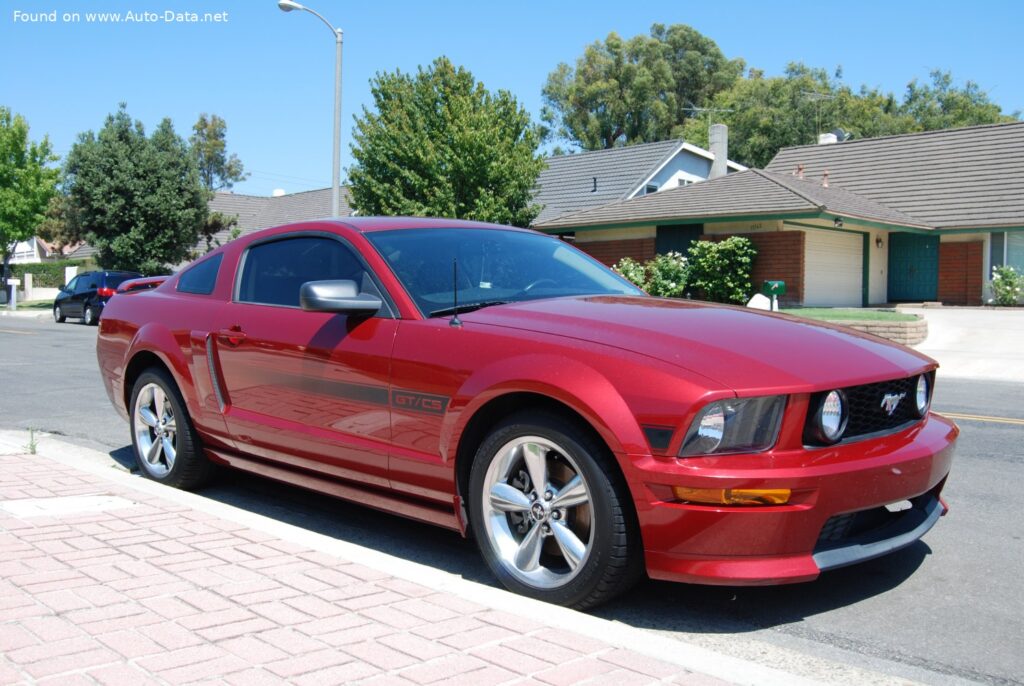
The design of the Mustang V (S197) was its most striking feature and a primary driver of its success. Ford’s design team masterfully blended elements from the original 1960s Mustangs with contemporary automotive design principles. The result was an unmistakably American coupe, characterized by its long hood, short rear deck, prominent grille, and distinctive C-scoops along the flanks. The two-door, four-seat coupe body type exuded a muscular yet elegant presence. The V6 model, while lacking some of the aggressive styling cues of the GT, still benefited from the overall retro aesthetic, making it an attractive package.
Inside, the S197 continued the retro theme with a modern twist. The dashboard featured a dual-cowl design reminiscent of the 1967-68 Mustangs, but with improved ergonomics and materials quality compared to previous generations. Standard features for the 2005-2009 V6 models typically included air conditioning, power windows and locks, a CD player, and a tilt steering wheel. Safety features for the era included dual-stage front airbags and available anti-lock brakes (ABS). The car’s dimensions, with a length of 187.6 inches, a width of 73.82 inches, and a height of 54.53 inches, gave it a substantial road presence, while the 107.09-inch wheelbase contributed to a stable ride.
The S197 Mustang employed a traditional suspension setup, featuring a MacPherson strut front suspension and a solid rear axle with trailing arms. While some critics lamented the lack of an independent rear suspension (IRS), the solid axle was a nod to the Mustang’s heritage, offered robustness for performance applications (especially drag racing), and kept costs down, allowing Ford to offer the Mustang at a competitive price. The V6 model rode on 215/65 R16 tires mounted on 7J x 16-inch wheels, providing a comfortable ride and adequate grip. Braking was handled by ventilated discs at both the front and rear, ensuring confident stopping power. Steering was managed by a rack and pinion system, offering direct and predictable control.
Ford Mustang V 4.0i V6 12V (212 Hp) Automatic Technical Specifications
| General Information | |
| Brand | Ford |
| Model | Mustang |
| Generation | Mustang V (S197) |
| Type (Engine) | 4.0i V6 12V (212 Hp) Automatic |
| Start of Production | 2005 year |
| End of Production | 2009 year |
| Powertrain Architecture | Internal Combustion Engine |
| Body type | Coupe |
| Seats | 4 |
| Doors | 2 |
| Performance Specs | |
| Fuel Consumption (Economy) – Urban | 16.9 US mpg (13.9 l/100 km) |
| Fuel Consumption (Economy) – Extra Urban | 25 US mpg (9.4 l/100 km) |
| Fuel Type | Petrol (Gasoline) |
| Acceleration 0 – 60 mph | 6.7 sec |
| Acceleration 0 – 62 mph (0 – 100 km/h) | 7 sec |
| Maximum Speed | 111.85 mph (180 km/h) |
| Weight-to-Power Ratio | 7.2 kg/Hp (138.6 Hp/tonne) |
| Weight-to-Torque Ratio | 4.7 kg/Nm (212.4 Nm/tonne) |
| Engine Specs | |
| Power | 212 Hp @ 5200 rpm |
| Power per liter | 52.9 Hp/l |
| Torque | 239.71 lb.-ft. @ 3500 rpm (325 Nm) |
| Engine Layout | Front, Longitudinal |
| Engine Model/Code | Cologne |
| Engine Displacement | 4.0 liters (4009 cm3 / 244.64 cu. in.) |
| Number of Cylinders | 6 |
| Engine Configuration | V-engine |
| Cylinder Bore | 3.95 in. (100.4 mm) |
| Piston Stroke | 3.32 in. (84.4 mm) |
| Compression Ratio | 9.7:1 |
| Number of Valves per Cylinder | 2 |
| Fuel Injection System | Multi-port manifold injection |
| Engine Aspiration | Naturally aspirated engine |
| Engine Oil Capacity | 4.97 US qt (4.7 l) |
| Coolant Capacity | 12.47 US qt (11.8 l) |
| Space, Volume and Weights | |
| Curb Weight | 3373.07 lbs. (1530 kg) |
| Trunk (Boot) Space – Minimum | 12.36 cu. ft. (350 l) |
| Fuel Tank Capacity | 16.11 US gal (61 l) |
| Dimensions | |
| Length | 187.6 in. (4765 mm) |
| Width | 73.82 in. (1875 mm) |
| Height | 54.53 in. (1385 mm) |
| Wheelbase | 107.09 in. (2720 mm) |
| Front Track | 62.2 in. (1580 mm) |
| Rear (Back) Track | 62.6 in. (1590 mm) |
| Drivetrain, Brakes and Suspension Specs | |
| Drivetrain Architecture | The Internal combustion engine (ICE) drives the rear wheels of the vehicle. |
| Drive Wheel | Rear wheel drive |
| Number of Gears and Type of Gearbox | 5 gears, automatic transmission |
| Front Suspension | Spring Strut |
| Rear Suspension | Trailing arm |
| Front Brakes | Ventilated discs |
| Rear Brakes | Ventilated discs |
| Steering Type | Steering rack and pinion |
| Tires Size | 215/65 R16 |
| Wheel Rims Size | 7J x 16 |
Legacy and Market Impact
The Ford Mustang V generation, and particularly the V6 model, carved out a significant legacy in the automotive landscape. It successfully resurrected the Mustang’s iconic styling, which had become somewhat diluted in previous generations, and brought it back to the forefront of American automotive design. The “retro” design trend it spearheaded influenced many other manufacturers and models in the years that followed.
The 4.0-liter V6 model played a crucial role in the S197’s overall market success. While the GT with its V8 engine garnered headlines and enthusiast adoration, the V6 variant was the volume seller, making the Mustang experience accessible to a broader demographic. It offered the unmistakable looks and rear-wheel-drive dynamics of a true pony car at a more affordable price point and with better fuel economy, positioning it as a compelling alternative to more generic mid-size sedans or front-wheel-drive coupes.
In its primary market, the United States, the S197 Mustang faced limited direct competition in the “pony car” segment during its early years, as the Chevrolet Camaro was dormant and the Dodge Challenger had not yet been revived. However, it competed indirectly with other sports coupes and performance-oriented cars like the Nissan 350Z (though more expensive and a pure two-seater sports car), Hyundai Tiburon, and even some European imports that offered similar performance figures but often lacked the Mustang’s unique character and heritage. The V6 Mustang’s combination of style, performance, and value ensured its dominant position in its niche.
The S197 generation, including the Ford Mustang V 4.0i V6 12V (212 Hp) Automatic, is remembered as a triumph for Ford. It re-established the Mustang as a cultural icon, proving that a modern interpretation of a classic could resonate strongly with consumers. Its impact extended beyond sales figures; it reinvigorated the pony car segment, set the stage for the return of its rivals, and cemented the Mustang’s place in automotive history as a car that consistently adapts while staying true to its core identity.