Introduction to the Ford Mustang V 4.0i V6 (205 Hp)
The fifth generation of the iconic Ford Mustang, often referred to by its internal codename S197, marked a pivotal moment in the history of the American pony car. Launched for the 2005 model year, this iteration proudly embraced its heritage with a “retro-futuristic” design that paid homage to the classic Mustangs of the 1960s, particularly the fastback models from 1967-1969. Among its initial offerings, the Ford Mustang V 4.0i V6 (205 Hp) served as the accessible entry point into the Mustang lineup, providing a compelling blend of classic styling, modern amenities, and a respectable level of performance for a broad spectrum of buyers.
Produced from 2004 to 2005 with this specific powertrain configuration, the Mustang V 4.0i V6 was a two-door coupe designed to seat four occupants. It represented a significant departure from the ‘New Edge’ styling of its SN95 predecessor, ushering in an era where Ford successfully reconnected the Mustang with its illustrious past while integrating contemporary engineering. This V6 model was crucial in drawing in customers who desired the Mustang’s legendary aesthetics and rear-wheel-drive dynamics without the higher cost and insurance premiums associated with the more powerful V8 variants. It quickly established itself as a strong contender in the sporty coupe segment, appealing to both enthusiasts and those seeking a stylish daily driver.
Engine and Performance of the Ford Mustang V 4.0i V6 (205 Hp)
At the heart of the entry-level Mustang V was Ford’s venerable 4.0-liter Cologne V6 engine. This naturally aspirated, multi-port manifold injected powerplant was configured in a “V” shape with six cylinders, each featuring two valves. With a bore of 3.95 inches (100.4 mm) and a stroke of 3.32 inches (84.4 mm), the engine displaced 244.64 cubic inches (4009 cm³). It delivered a solid 205 horsepower at 5250 rpm, providing a power-per-liter ratio of 51.1 Hp/l. More importantly for daily drivability, the engine produced a healthy 235.28 lb-ft (319 Nm) of torque at a relatively low 3500 rpm, ensuring responsive acceleration from a standstill and ample passing power on the highway.
The powertrain architecture of the Ford Mustang V 4.0i V6 (205 Hp) was classic American muscle car: a front-longitudinal engine layout driving the rear wheels. This configuration, coupled with a standard 5-speed manual transmission, offered an engaging driving experience that resonated with the Mustang’s performance heritage. While not a drag-strip monster like its V8 siblings, the V6 model was no slouch, capable of reaching a maximum speed of 111.85 mph (180 km/h). Its weight-to-power ratio stood at 7.3 kg/Hp (137.1 Hp/tonne), and a weight-to-torque ratio of 4.7 kg/Nm (213.4 Nm/tonne), indicating a respectable balance for its segment.
Fuel economy for the 4.0-liter V6, while not class-leading by modern standards, was competitive for a sporty rear-wheel-drive coupe of its era. Owners could expect approximately 16.8 US mpg in urban driving conditions and a more efficient 29.4 US mpg on the highway. The engine’s compression ratio of 9.7:1 allowed it to run on regular unleaded gasoline, making it an economical choice for everyday use. The engine oil capacity was 4.97 US quarts (4.7 liters), and the cooling system held 12.47 US quarts (11.8 liters) of coolant, ensuring robust operation under various conditions.
Design and Features
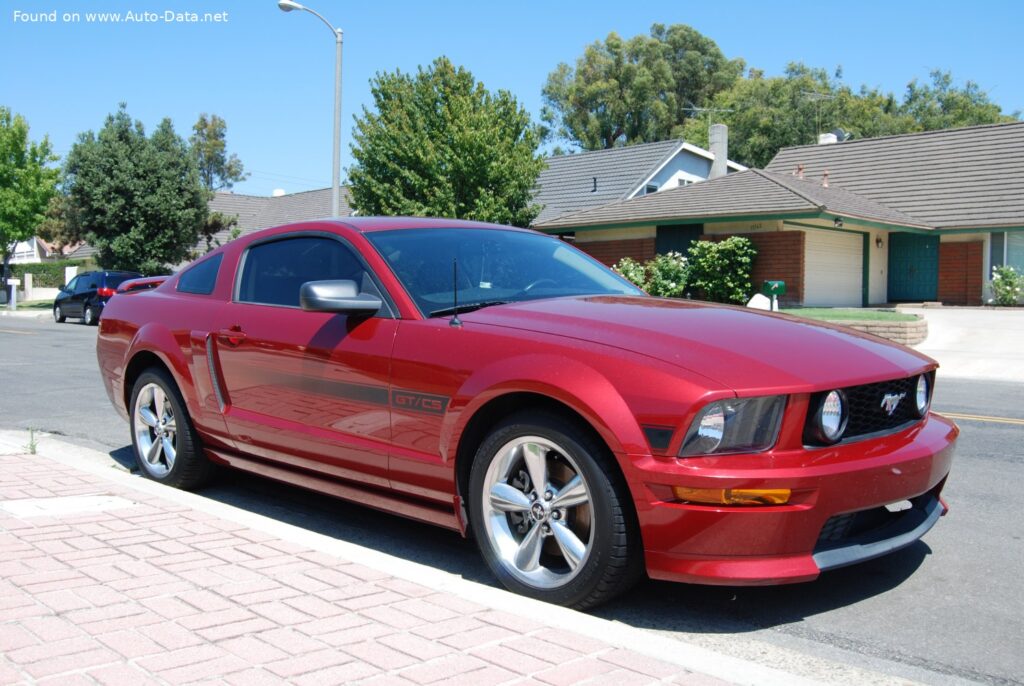
The exterior design of the Ford Mustang V was arguably its most compelling feature, marking a bold return to its roots. The S197 generation, including the 4.0i V6 model, was built on Ford’s new D2C platform, a modified version of the DEW98 platform used by the Lincoln LS and Ford Thunderbird. This platform allowed for the classic long hood, short deck proportions that defined the original Mustang. Key design elements such as the prominent grille with a galloping pony emblem, circular headlights housed in square bezels, C-scoops on the flanks, and the distinctive tri-bar taillights were direct nods to the first-generation models, yet executed with modern surfacing and detailing. The coupe body type, with its aggressive stance and muscular lines, exuded a timeless appeal that transcended mere nostalgia.
Inside, the Mustang V 4.0i V6 continued the retro theme, albeit with a contemporary interpretation. The dashboard featured a dual-cowl design reminiscent of the 1960s Mustangs, though constructed with materials and ergonomics suitable for a modern vehicle. Standard features included comfortable bucket seats for the front occupants and a rear bench seat suitable for two, making it a 4-seater coupe. The instrument cluster, with its deep-set gauges, further reinforced the classic aesthetic. While the V6 model typically came with a more basic trim level compared to the GT, it still offered essential amenities such as air conditioning, power windows, power locks, and an AM/FM stereo with a CD player.
Underpinning the Mustang V’s ride and handling were a MacPherson strut front suspension and a three-link solid axle rear suspension with coil springs. While some critics pointed to the live rear axle as an outdated technology, Ford engineers tuned it to deliver a surprisingly compliant ride and predictable handling characteristics, maintaining a connection to the car’s heritage. The braking system comprised ventilated discs on both the front and rear, providing reliable stopping power. Steering was managed by a rack and pinion system, offering direct feedback. The car rode on 215/65 R16 tires mounted on 7J x 16-inch wheel rims, providing a balance of comfort and grip for everyday driving. With a curb weight of 3295.91 lbs (1495 kg), the Mustang V 4.0i V6 felt substantial and planted on the road. The trunk offered a practical 12.36 cubic feet (350 liters) of storage, enhancing its usability as a daily driver.
Technical Specifications
| Category | Specification |
|---|---|
| General Information | |
| Brand | Ford |
| Model | Mustang |
| Generation | Mustang V (S197) |
| Type (Engine) | 4.0i V6 (205 Hp) |
| Start of Production | 2004 year |
| End of Production | 2005 year |
| Powertrain Architecture | Internal Combustion Engine |
| Body Type | Coupe |
| Seats | 4 |
| Doors | 2 |
| Performance Specs | |
| Fuel Consumption (City) | 14 l/100 km (16.8 US mpg) |
| Fuel Consumption (Highway) | 8 l/100 km (29.4 US mpg) |
| Fuel Type | Petrol (Gasoline) |
| Maximum Speed | 180 km/h (111.85 mph) |
| Weight-to-Power Ratio | 7.3 kg/Hp (137.1 Hp/tonne) |
| Weight-to-Torque Ratio | 4.7 kg/Nm (213.4 Nm/tonne) |
| Engine Specs | |
| Power | 205 Hp @ 5250 rpm |
| Power per Liter | 51.1 Hp/l |
| Torque | 319 Nm @ 3500 rpm (235.28 lb-ft @ 3500 rpm) |
| Engine Layout | Front, Longitudinal |
| Engine Model/Code | Cologne |
| Engine Displacement | 4009 cm³ (244.64 cu. in.) |
| Number of Cylinders | 6 |
| Engine Configuration | V-engine |
| Cylinder Bore | 100.4 mm (3.95 in.) |
| Piston Stroke | 84.4 mm (3.32 in.) |
| Compression Ratio | 9.7:1 |
| Number of Valves per Cylinder | 2 |
| Fuel Injection System | Multi-port manifold injection |
| Engine Aspiration | Naturally aspirated engine |
| Engine Oil Capacity | 4.7 l (4.97 US qt) |
| Coolant Capacity | 11.8 l (12.47 US qt) |
| Space, Volume and Weights | |
| Kerb Weight | 1495 kg (3295.91 lbs) |
| Trunk (Boot) Space – Minimum | 350 l (12.36 cu. ft.) |
| Fuel Tank Capacity | 61 l (16.11 US gal) |
| Dimensions | |
| Length | 4765 mm (187.6 in.) |
| Width | 1875 mm (73.82 in.) |
| Height | 1385 mm (54.53 in.) |
| Wheelbase | 2720 mm (107.09 in.) |
| Front Track | 1580 mm (62.2 in.) |
| Rear Track | 1590 mm (62.6 in.) |
| Drivetrain, Brakes and Suspension Specs | |
| Drivetrain Architecture | Internal combustion engine drives the rear wheels. |
| Drive Wheel | Rear wheel drive |
| Number of Gears and Type of Gearbox | 5 gears, manual transmission |
| Front Suspension | Spring Strut (MacPherson) |
| Rear Suspension | Trailing arm (Live Axle) |
| Front Brakes | Ventilated discs |
| Rear Brakes | Ventilated discs |
| Steering Type | Steering rack and pinion |
| Tires Size | 215/65 R16 |
| Wheel Rims Size | 7J x 16 |
Legacy and Market Impact of the Ford Mustang V 4.0i V6 (205 Hp)
The introduction of the fifth-generation Ford Mustang, including the Ford Mustang V 4.0i V6 (205 Hp), was a monumental success for Ford. It marked a powerful resurgence for the Mustang brand, which had arguably strayed from its core identity in previous generations. The S197’s unapologetically retro styling struck a chord with consumers, tapping into a deep well of nostalgia while simultaneously offering a modern, reliable platform. The V6 model played a crucial role in this success by making the iconic Mustang experience accessible to a wider audience, including younger buyers and those on a tighter budget who might not have been able to afford the V8 GT.
In its primary market, the United States, the Mustang V6 competed against a diverse range of vehicles. While direct pony car rivals like the Chevrolet Camaro and Dodge Challenger were absent from the market during this specific 2004-2005 period, the Mustang V6 carved out its niche against other sporty coupes and entry-level performance cars. Competitors included models like the Nissan 350Z (a more focused sports car), the Mazda RX-8 (known for its rotary engine and unique styling), and even some European imports that offered sporty dynamics but often at a higher price point. The Mustang’s combination of distinctive American styling, rear-wheel drive, and a powerful-enough V6 engine at an attractive price point gave it a unique value proposition.
The historical significance of the S197 generation cannot be overstated. It not only revitalized the Mustang but also ignited a “retro-futurism” design trend across the automotive industry, influencing other manufacturers to look to their past for design inspiration. The V6 model, in particular, helped democratize the Mustang, ensuring its continued relevance and popularity. It demonstrated that a Mustang didn’t necessarily need a V8 to embody the spirit of American automotive freedom and style. The 4.0L V6, while later superseded by more advanced V6 engines, served as a reliable and robust powerplant that upheld the Mustang’s reputation for dependable performance. Its production run from 2004 to 2005 established a strong foundation for the S197 generation’s decade-long success, cementing its place as one of the most beloved and impactful Mustangs in history.