The Fifth-Generation Ford Mustang GT 4.6i V8 (304 Hp): A Return to Roots
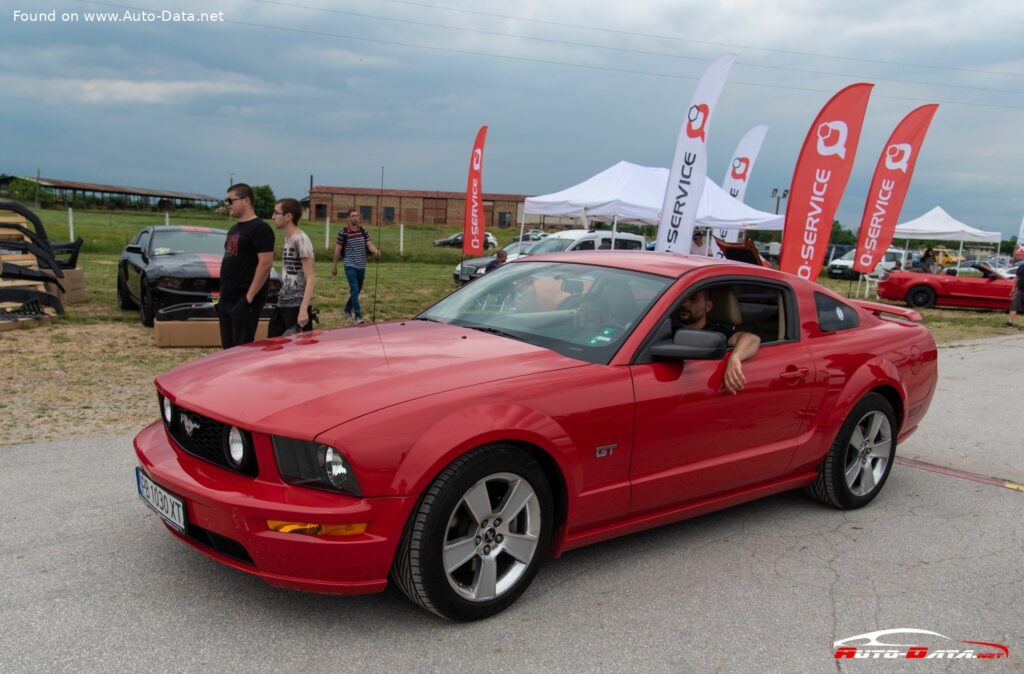
The Ford Mustang, an enduring icon of American automotive performance and style, entered its fifth generation (internally designated S197) in 2004 as a 2005 model year vehicle, marking a significant return to its heritage. This iteration of the legendary pony car was a deliberate and highly anticipated design, drawing heavily on the styling cues of the original 1960s Mustangs. Among its most popular and potent variants was the Ford Mustang V GT 4.6i V8 (304 Hp), a model that perfectly encapsulated the blend of classic muscle car aesthetics with modern engineering. Produced from 2004 to 2009, this particular GT model represented the heart of the Mustang lineup, offering a compelling package of V8 power, rear-wheel-drive dynamics, and an unmistakable presence that resonated deeply with enthusiasts across the United States and beyond. It was a pivotal model that not only revitalized the Mustang brand but also reignited the “pony car wars” with its contemporary rivals.
Engine and Performance: The Heart of the Ford Mustang V GT 4.6i V8 (304 Hp)
At the core of the Ford Mustang V GT 4.6i V8 (304 Hp) was Ford’s venerable 4.6-liter Modular V8 engine. This naturally aspirated powerplant, specifically the 3-valve SOHC (Single Overhead Camshaft) variant, was a significant evolution from previous Mustang GT engines. Displacing 4606 cubic centimeters (281.08 cubic inches), this V8 engine was engineered to deliver a robust and accessible powerband, characteristic of American muscle cars. It produced an impressive 304 horsepower at 6000 revolutions per minute (rpm), granting the Mustang GT substantial acceleration and top-end performance. The power output translated to a healthy 66 horsepower per liter, demonstrating efficient engineering for its era.
Complementing its horsepower, the engine delivered a formidable 427 Newton meters (314.94 lb.-ft.) of torque at 4500 rpm. This ample torque was crucial for the Mustang’s spirited character, providing strong off-the-line thrust and effortless highway passing capabilities. The power was transmitted to the rear wheels via a standard 5-speed manual transmission, offering drivers an engaging and direct connection to the car’s performance. This gearbox choice underscored the Mustang GT’s enthusiast-oriented nature, allowing for precise control over the V8’s extensive power band.
Performance figures for the GT model were impressive for its class. The vehicle could achieve a maximum speed of 240 kilometers per hour (149.13 mph), a testament to its V8 muscle. Despite its performance focus, Ford also aimed for reasonable fuel economy for a V8-powered sports coupe. The combined fuel consumption was rated at 15.5 liters per 100 kilometers, which translates to approximately 15.2 US miles per gallon. Urban driving saw consumption around 17 l/100 km (13.8 US mpg), while extra-urban cruising improved to 13.6 l/100 km (17.3 US mpg). With a curb weight of 1565 kg (3450.23 lbs.), the Mustang GT boasted a weight-to-power ratio of 5.1 kg/Hp (194.2 Hp/tonne), indicating a favorable power-to-weight balance that contributed to its dynamic capabilities.
Design and Features: A Modern Classic
The design of the fifth-generation Mustang, including the Ford Mustang V GT 4.6i V8 (304 Hp), was a bold departure from its “New Edge” predecessor. Penned by designers Sid Ramnarace and Hau Thai-Tang, the S197 adopted a distinct “retro-futurism” aesthetic, directly referencing the iconic 1964½ to 1970 Mustangs. This design philosophy proved immensely popular, giving the new Mustang a powerful, muscular, and instantly recognizable silhouette.
The GT model was exclusively offered as a 2-door coupe, maintaining the classic pony car profile. Its dimensions – a length of 4765 mm (187.6 inches), a width of 1875 mm (73.82 inches), and a height of 1385 mm (54.53 inches) – gave it a substantial road presence. The long hood, short deck, and prominent grille with the galloping pony emblem were all nods to its heritage. Distinctive C-scoops along the flanks and sequential turn signals (a later addition to the S197, but characteristic of the generation) further cemented its retro appeal.
Inside, the cabin was designed to accommodate four occupants, offering a driver-focused cockpit. While the interior materials were a step up from previous generations, the emphasis remained on functionality and a slightly retro-inspired layout. Key features included power steering with hydraulic assistance, providing a traditional, communicative feel. The suspension setup comprised a MacPherson strut independent front suspension, a significant improvement for handling and ride comfort compared to earlier generations. At the rear, Ford retained a solid axle with a three-link trailing arm setup, a decision often debated by enthusiasts but one that contributed to the Mustang’s traditional character and allowed for robust power delivery.
Braking performance was handled by ventilated disc brakes on both the front and rear axles, ensuring confident stopping power. An Anti-lock Braking System (ABS) was standard, enhancing safety and control during aggressive braking maneuvers. The car rode on 235/55 R17 tires mounted on 8J x 17-inch wheel rims, providing a good balance of grip and ride quality. The trunk space offered a practical 350 liters (12.36 cubic feet) of cargo capacity, making the Mustang GT a surprisingly capable daily driver for a performance coupe.
Technical Specifications: Ford Mustang V GT 4.6i V8 (304 Hp)
| Category | Specification | US Equivalent / Notes |
|---|---|---|
| General Information | ||
| Brand | Ford | |
| Model | Mustang | |
| Generation | Mustang V (S197) | |
| Type (Engine) | GT 4.6i V8 (304 Hp) | |
| Start of Production | 2004 year | |
| End of Production | 2009 year | |
| Powertrain Architecture | Internal Combustion Engine | |
| Body Type | Coupe | |
| Seats | 4 | |
| Doors | 2 | |
| Performance Specs | ||
| Fuel Consumption (Urban) | 17 l/100 km | 13.8 US mpg |
| Fuel Consumption (Extra Urban) | 13.6 l/100 km | 17.3 US mpg |
| Fuel Consumption (Combined) | 15.5 l/100 km | 15.2 US mpg |
| Fuel Type | Petrol (Gasoline) | |
| Maximum Speed | 240 km/h | 149.13 mph |
| Weight-to-Power Ratio | 5.1 kg/Hp | 194.2 Hp/tonne |
| Weight-to-Torque Ratio | 3.7 kg/Nm | 272.8 Nm/tonne |
| Engine Specs | ||
| Power | 304 Hp @ 6000 rpm | |
| Power per Liter | 66 Hp/l | |
| Torque | 427 Nm @ 4500 rpm | 314.94 lb.-ft. @ 4500 rpm |
| Engine Layout | Front, Longitudinal | |
| Engine Model/Code | Modular | |
| Engine Displacement | 4606 cm3 | 281.08 cu. in. (4.6 Liters) |
| Number of Cylinders | 8 | |
| Engine Configuration | V-engine | |
| Cylinder Bore | 90.2 mm | 3.55 in. |
| Piston Stroke | 90 mm | 3.54 in. |
| Compression Ratio | 9.8:1 | |
| Number of Valves per Cylinder | 3 | |
| Fuel Injection System | Multi-port manifold injection | |
| Engine Aspiration | Naturally Aspirated Engine | |
| Engine Oil Capacity | 5.7 l | 6.02 US qt |
| Coolant Capacity | 12.9 l | 13.63 US qt |
| Space, Volume, and Weights | ||
| Kerb Weight | 1565 kg | 3450.23 lbs. |
| Trunk (Boot) Space – Minimum | 350 l | 12.36 cu. ft. |
| Fuel Tank Capacity | 61 l | 16.11 US gal |
| Dimensions | ||
| Length | 4765 mm | 187.6 in. |
| Width | 1875 mm | 73.82 in. |
| Height | 1385 mm | 54.53 in. |
| Wheelbase | 2720 mm | 107.09 in. |
| Front Track | 1580 mm | 62.2 in. |
| Rear (Back) Track | 1590 mm | 62.6 in. |
| Drivetrain, Brakes, and Suspension Specs | ||
| Drivetrain Architecture | Internal combustion engine drives the rear wheels. | |
| Drive Wheel | Rear Wheel Drive | |
| Number of Gears and Type of Gearbox | 5 gears, manual transmission | |
| Front Suspension | Spring Strut (MacPherson type) | |
| Rear Suspension | Trailing arm (Solid Axle) | |
| Front Brakes | Ventilated Discs | |
| Rear Brakes | Ventilated Discs | |
| Assisting Systems | ABS (Anti-lock braking system) | |
| Steering Type | Steering rack and pinion | |
| Power Steering | Hydraulic Steering | |
| Tires Size | 235/55 R17 | |
| Wheel Rims Size | 8J x 17 | |
Legacy and Market Impact
The fifth-generation Ford Mustang, particularly the Ford Mustang V GT 4.6i V8 (304 Hp) model, left an indelible mark on the American automotive landscape. Its “retro-futuristic” design was a masterstroke, instantly endearing it to a new generation of buyers while simultaneously appealing to long-time Mustang aficionados. This design philosophy proved to be a major commercial success for Ford, revitalizing the Mustang’s sales and cultural relevance after a period where its styling had become somewhat generic.
The S197’s launch ignited a new era for the pony car segment. Its success prompted rival manufacturers to re-evaluate their offerings, leading directly to the reintroduction of the Chevrolet Camaro and Dodge Challenger, both with strong retro styling cues of their own. This resurgence created a vibrant and competitive market, often referred to as the “new pony car wars,” with the Mustang GT firmly at its forefront.
In the United States, the Mustang GT’s reputation was one of accessible performance and customization potential. Its robust 4.6-liter V8 engine, while not the most technologically advanced of its time, was known for its durability, tunability, and characteristic exhaust note, making it a favorite platform for aftermarket modifications and racing. Competitors in its primary market included the Nissan 350Z and later the 370Z, which offered a more refined sports car experience, and the Hyundai Genesis Coupe, which aimed for a similar value proposition. However, none could match the Mustang’s unique blend of heritage, V8 power, and quintessential American swagger.
The S197 generation, and specifically the 2004-2009 GT model, solidified the Mustang’s position as a cultural icon, demonstrating that a classic formula could be successfully updated for the modern era. Its impact extended beyond sales figures; it brought excitement back to the segment, inspired a wave of retro-themed vehicles, and continued the Mustang’s legacy as a symbol of freedom and performance for the masses. Its straightforward, powerful character and engaging driving experience ensured its place in automotive history as a truly significant generation of the legendary Ford Mustang.