Introduction to the Ford Mustang VI 3.7 V6 (304 Hp)
The Ford Mustang, an iconic nameplate in American automotive history, embarked on its sixth generation (internal code S550) with significant fanfare, marking a pivotal moment for the pony car. Launched for the 2015 model year, this generation was particularly notable for being the first Mustang designed from the ground up to be a true global vehicle, officially sold in markets across Europe and Asia. Among its initial powertrain offerings, the Ford Mustang VI 3.7 V6 (304 Hp) served as the entry-level engine option in the North American market, providing a compelling blend of performance, affordability, and the quintessential Mustang experience. This variant, produced from 2015 to 2017, carried the torch of the traditional V6 Mustang, offering a robust engine and a more refined chassis than its predecessors, setting a new standard for the segment.
The S550 generation of the Mustang represented a bold step forward, incorporating modern design cues while retaining classic styling elements that are instantly recognizable. It brought independent rear suspension (IRS) to the entire lineup for the first time, a long-awaited upgrade that dramatically improved handling dynamics and ride comfort. The 3.7-liter V6 model, specifically the Fastback with 304 horsepower, was positioned as an accessible gateway into the Mustang family, appealing to buyers who desired the style and heritage without necessarily opting for the higher-performance GT or EcoBoost models. Its role was crucial in broadening the Mustang’s appeal, offering a balanced package for daily driving and spirited weekend cruises.
Engine and Performance of the Ford Mustang VI 3.7 V6 (304 Hp)
At the heart of this particular Mustang variant was Ford’s well-regarded Duratec 37 engine, a naturally aspirated 3.7-liter V6. This powerplant, designated with the internal code Duratec 37, was a proven performer, having seen service in various Ford and Lincoln vehicles. In the 2015-2017 Ford Mustang VI 3.7 V6 (304 Hp), it delivered a respectable 304 horsepower at 6500 rpm, complemented by 269.95 lb.-ft. of torque peaking at 4000 rpm. This output provided a lively driving experience, especially when paired with the standard six-speed manual transmission, which allowed drivers to fully exploit the engine’s rev-happy nature.
Powertrain Details
The engine configuration was a classic V-engine with six cylinders, featuring a DOHC (Dual Overhead Camshaft) valvetrain with four valves per cylinder, optimizing airflow and combustion efficiency. Its displacement measured 3726 cubic centimeters (227.37 cubic inches), with a bore of 3.76 inches and a stroke of 3.41 inches. A compression ratio of 10.5:1 contributed to its efficient power delivery. Fuel was supplied via a multi-port manifold injection system, a reliable and well-understood technology. The engine’s aspiration was naturally aspirated, meaning it relied solely on atmospheric pressure to draw air into the cylinders, offering a linear and predictable power band characteristic of traditional V6 engines. The front, longitudinal engine layout, combined with rear-wheel drive, maintained the classic Mustang performance architecture, ensuring proper weight distribution and engaging driving dynamics.
Fuel Efficiency
Given its performance capabilities, the 3.7 V6 Mustang offered reasonable fuel economy for its class. According to EPA estimates, the combined fuel consumption for this model was approximately 21 miles per gallon (21 US mpg). This broke down to about 17 US mpg in urban driving conditions and an impressive 28 US mpg on the highway, making it a viable option for those seeking a balance between power and daily usability. The 15.85 US gallon fuel tank provided a decent cruising range, reducing the frequency of fuel stops. The weight-to-power ratio stood at 5.3 kg/Hp (190.1 Hp/tonne), indicating a favorable power-to-weight balance that contributed to its responsive acceleration.
Design and Features
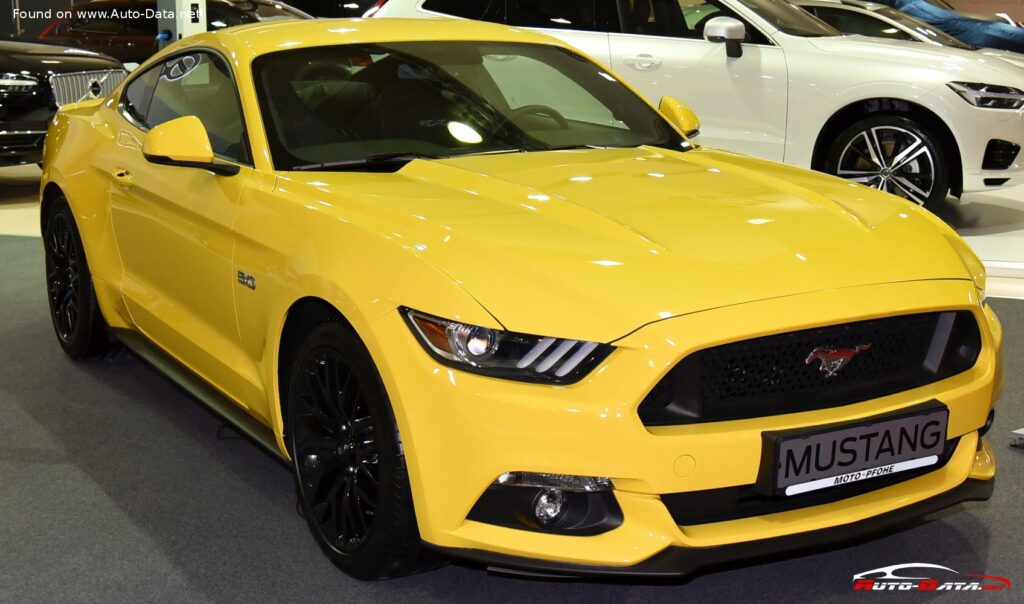
The sixth-generation Mustang, including the 3.7 V6 Fastback, represented a masterful evolution of the design language that has defined the car for decades. Its aggressive stance, long hood, short deck, and prominent ‘shark-bite’ front fascia immediately communicated its performance intent while paying homage to its heritage. The Fastback body type, with its sleek, sloping roofline, was undeniably the most popular and iconic silhouette, offering seating for four occupants in a 2-door configuration.
Exterior Aesthetics
Measuring 188.31 inches in length, 75.39 inches in width (81.89 inches with mirrors folded), and 54.41 inches in height, the S550 Mustang had a substantial road presence. The wheelbase of 107.09 inches contributed to its stable handling, while the front and rear tracks of 62.28 inches and 64.88 inches, respectively, further enhanced its athletic posture. The design was not merely aesthetic; it was also functional, boasting a drag coefficient (Cd) of 0.32, which aided in both stability at speed and fuel efficiency. Standard equipment included 17-inch wheel rims wrapped in 235/55 R17 tires, providing a good balance of grip and ride comfort.
Interior Comfort and Technology
Inside, the Mustang VI continued its blend of retro cues and modern amenities. The cockpit was driver-focused, with clear instrumentation and intuitive controls. While the 3.7 V6 was an entry-level model, it still offered a comfortable and engaging environment. The four-seat configuration, while typical for a pony car, meant the rear seats were best suited for occasional use or smaller passengers. The interior design was a significant upgrade from previous generations, utilizing higher-quality materials and improved ergonomics. Features such as electric power steering provided a customizable driving experience with selectable modes, allowing drivers to tailor steering feel to their preference.
Chassis and Safety
Perhaps the most significant engineering change for the S550 generation was the adoption of an independent rear suspension (IRS) across the board. This move replaced the long-standing solid rear axle, dramatically improving the Mustang’s ride quality over varied surfaces and its handling prowess through corners. The front and rear brakes consisted of ventilated discs, providing strong and consistent stopping power, augmented by an Anti-lock Braking System (ABS) for enhanced safety during emergency braking. The steering system utilized a rack and pinion setup with electric power steering, offering precise control and feedback. With a minimum turning circle of 36.48 feet, the Mustang Fastback was surprisingly maneuverable for its size. The curb weight of 3525.19 lbs (1599 kg) further underscored the car’s solid build and substantial feel on the road.
Technical Specifications
| Category | Specification | Value |
|---|---|---|
General Information |
||
| Brand | Ford | |
| Model | Mustang | |
| Generation | Mustang VI | |
| Type (Engine) | 3.7 V6 (304 Hp) | |
| Start of Production | 2015 year | |
| End of Production | 2017 year | |
| Powertrain Architecture | Internal Combustion engine | |
| Body Type | Fastback | |
| Seats | 4 | |
| Doors | 2 | |
Performance Specs |
||
| Fuel Consumption (Economy) – Urban | 17 US mpg (13.8 l/100 km) | |
| Fuel Consumption (Economy) – Extra Urban | 28 US mpg (8.4 l/100 km) | |
| Fuel Consumption (Economy) – Combined | 21 US mpg (11.2 l/100 km) | |
| Fuel Type | Petrol (Gasoline) | |
| Weight-to-Power Ratio | 5.3 kg/Hp, 190.1 Hp/tonne | |
| Weight-to-Torque Ratio | 4.4 kg/Nm, 228.9 Nm/tonne | |
Engine Specs |
||
| Power | 304 Hp @ 6500 rpm | |
| Power per Liter | 81.6 Hp/l | |
| Torque | 269.95 lb.-ft. @ 4000 rpm (366 Nm) | |
| Engine Layout | Front, Longitudinal | |
| Engine Model/Code | Duratec 37 | |
| Engine Displacement | 227.37 cu. in. (3726 cm3) | |
| Number of Cylinders | 6 | |
| Engine Configuration | V-engine | |
| Cylinder Bore | 3.76 in. (95.5 mm) | |
| Piston Stroke | 3.41 in. (86.7 mm) | |
| Compression Ratio | 10.5:1 | |
| Number of Valves per Cylinder | 4 | |
| Fuel Injection System | Multi-port manifold injection | |
| Engine Aspiration | Naturally aspirated engine | |
| Valvetrain | DOHC | |
| Engine Oil Capacity | 6.02 US qt (5.7 l) | |
| Coolant Capacity | 12.36 US qt (11.7 l) | |
Space, Volume and Weights |
||
| Kerb Weight | 3525.19 lbs (1599 kg) | |
| Fuel Tank Capacity | 15.85 US gal (60 l) | |
Dimensions |
||
| Length | 188.31 in. (4783 mm) | |
| Width | 75.39 in. (1915 mm) | |
| Width with Mirrors Folded | 81.89 in. (2080 mm) | |
| Height | 54.41 in. (1382 mm) | |
| Wheelbase | 107.09 in. (2720 mm) | |
| Front Track | 62.28 in. (1582 mm) | |
| Rear (Back) Track | 64.88 in. (1648 mm) | |
| Drag Coefficient (Cd) | 0.32 | |
| Minimum Turning Circle (Turning Diameter) | 36.48 ft (11.12 m) | |
Drivetrain, Brakes and Suspension Specs |
||
| Drivetrain Architecture | The Internal combustion engine (ICE) drives the rear wheels of the vehicle. | |
| Drive Wheel | Rear wheel drive | |
| Number of Gears and Type of Gearbox | 6 gears, manual transmission | |
| Front Brakes | Ventilated discs | |
| Rear Brakes | Ventilated discs | |
| Assisting Systems | ABS (Anti-lock braking system) | |
| Steering Type | Steering rack and pinion | |
| Power Steering | Electric Steering | |
| Tires Size | 235/55 R17 | |
| Wheel Rims Size | 17 | |
Legacy and Market Impact
The Ford Mustang VI, and particularly its 3.7 V6 variant, played a crucial role in ushering in a new era for the Mustang. The S550 generation was arguably the most significant evolutionary step for the Mustang since its inception, moving from a regional icon to a globally recognized and respected sports car. The decision to equip all models with independent rear suspension was a game-changer, finally allowing the Mustang to compete on a truly international stage against more sophisticated European and Japanese rivals in terms of handling dynamics.
The Ford Mustang VI 3.7 V6 (304 Hp) served as the accessible entry point into the Mustang lineup in the North American market, offering a robust 304 horsepower that was more than sufficient for most drivers. It provided a compelling alternative to its direct competitors, primarily the Chevrolet Camaro V6 and the Dodge Challenger SXT. While the Camaro’s V6 often boasted slightly higher horsepower figures, the Mustang offered a distinct driving feel and a more refined interior for its generation. The Challenger, on the other hand, leaned into its muscle car roots with a larger, more comfortable cruiser demeanor. The Mustang V6 carved out its niche by offering a balanced package: a powerful engine, improved handling, and iconic styling, all at a price point that made it attainable for a broader audience.
During its production run from 2015 to 2017, the 3.7 V6 model established a reputation as a performance bargain. It delivered the unmistakable Mustang experience, with its powerful naturally aspirated V6 soundtrack and classic rear-wheel-drive dynamics, without the higher cost or insurance premiums associated with the V8 GT models. While it was eventually phased out in favor of the more fuel-efficient and technologically advanced 2.3-liter EcoBoost four-cylinder engine as the base offering, the 3.7 V6 remains a celebrated part of the S550 Mustang’s initial success. Its legacy is that of a capable, enjoyable, and quintessential American pony car that helped solidify the Mustang’s position as a global automotive icon, proving that a V6-powered Mustang could still deliver a thrilling and authentic driving experience.