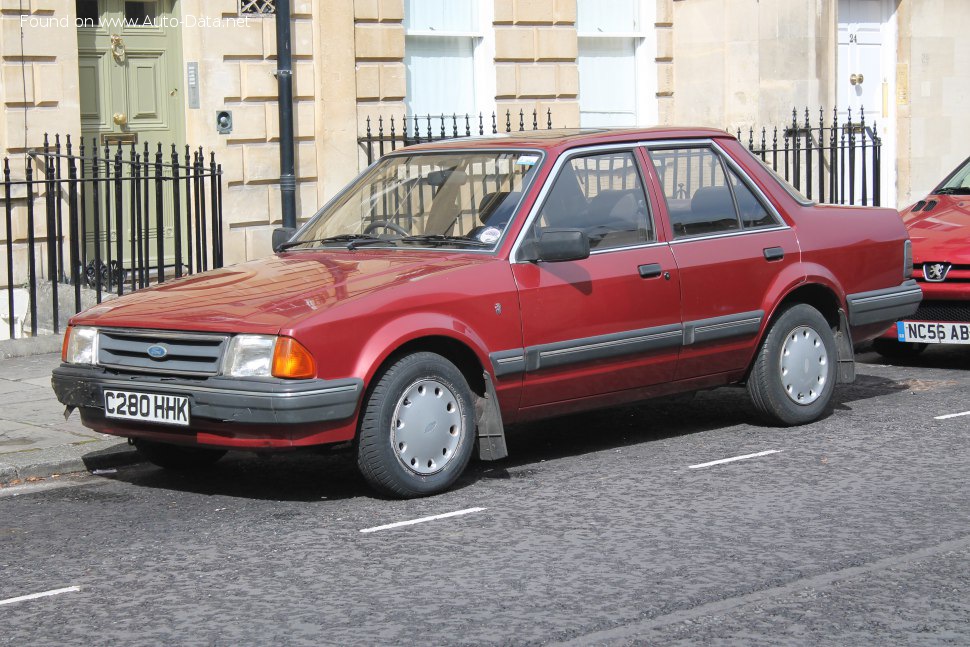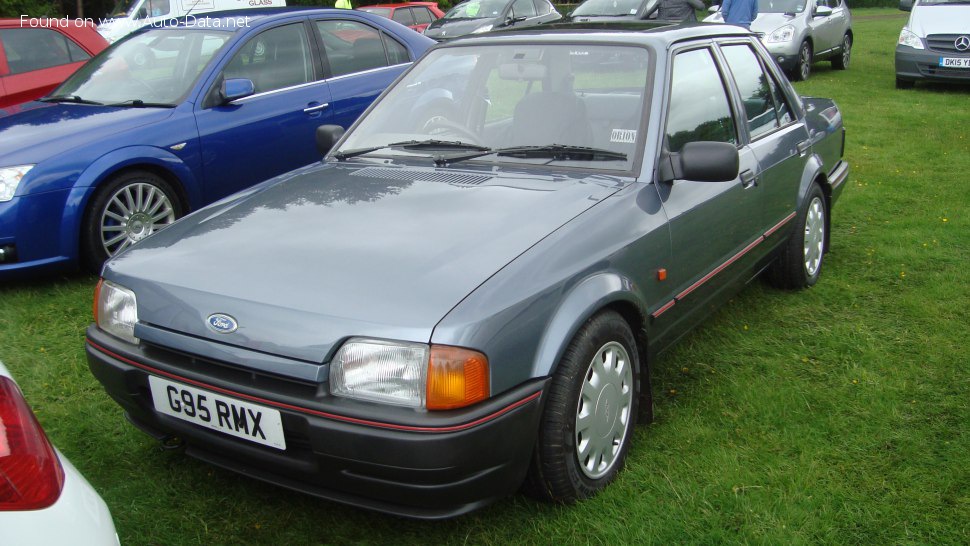
Introduction to the Ford Orion II (AFF)
The Ford Orion II (AFF) represents a significant chapter in Ford of Europe’s strategy to cater to a diverse range of consumer preferences within the highly competitive compact car segment. Launched in 1986, the Orion II (AFF) was essentially the second generation of Ford’s three-box sedan variant of the highly successful Escort platform. While the Escort was predominantly offered as a hatchback or station wagon, the Orion provided a more traditional, formal sedan alternative, appealing to buyers who prioritized conventional styling, a separate trunk, and a slightly more upscale perception than its hatchback sibling.
This particular iteration, the Ford Orion II (AFF), built upon the foundations laid by the first-generation Orion, which debuted in 1983. It shared its underpinnings and many body panels with the Mk4 Ford Escort, benefiting from its contemporary design and engineering advancements. The Orion II (AFF) was positioned to bridge the gap between the compact Escort and the larger, executive-oriented Sierra, offering a practical and economical family car with a touch more perceived sophistication. The focus of this article is the entry-level 1.3-liter variant, producing 60 horsepower, a powertrain choice that emphasized affordability and fuel efficiency for the European market. Production of the Orion II (AFF) ran from 1986 until 1990, firmly placing it within the classic car era and making it a key representative of European compact sedans of the late 1980s.
Engine & Performance: The Ford Orion II (AFF) 1.3 (60 Hp) Powertrain
The heart of the Ford Orion II (AFF) 1.3 (60 Hp) was a naturally aspirated gasoline engine, a testament to Ford’s commitment to producing reliable and economical powertrains for the mass market. At 1.3 liters, this inline-four cylinder engine was a staple in Ford’s European lineup, known for its robustness and ease of maintenance rather than its outright performance. With a modest output of 60 horsepower, the Orion 1.3 was clearly designed with practicality and efficiency in mind, catering to drivers who primarily navigated urban environments or required a dependable family vehicle without the need for high-speed capabilities.
This engine, likely a variant of Ford’s venerable Kent or Valencia (OHV) engine family, was a proven design that offered excellent fuel economy for its time, a crucial selling point in the European market where fuel prices were a constant consideration. While 60 horsepower might seem modest by today’s standards, it was entirely adequate for the Orion’s intended purpose. The engine delivered its power smoothly, if not rapidly, and was paired with a manual transmission (though specific transmission details are not provided, manual was standard for this class). This combination provided a predictable and accessible driving experience, making the Orion 1.3 a popular choice for first-time car buyers, small families, and fleet operators. The naturally aspirated induction meant simpler mechanics, contributing to the engine’s long-term reliability and lower running costs—a significant factor for buyers in the late 1980s. Its design focused on delivering consistent power throughout the rev range, ensuring that even with a full complement of passengers or luggage, the vehicle could perform its duties without excessive strain.
Design & Features of the Ford Orion II (AFF)
The design of the Ford Orion II (AFF) was a classic example of 1980s European automotive styling, characterized by its clean lines and functional aesthetic. As a sedan, it adopted the traditional “three-box” silhouette, distinguishing it from the more contemporary hatchback design of its Escort counterpart. This design choice gave the Orion a more conservative and arguably more mature appearance, appealing to a segment of buyers who preferred the conventional look of a separate trunk and a more defined rear end. The body type was, unequivocally, a sedan, offering a sense of formality and increased luggage security compared to an open-hatch design.
Externally, the Orion II (AFF) shared many visual cues with the Mk4 Escort, including its front fascia, headlights, and much of its side profile up to the C-pillar. However, the distinct rear deck and tailored trunk lid set it apart. The styling was aerodynamic for its era, featuring flush-fitting headlights and a relatively smooth body surface to reduce drag, contributing to both fuel efficiency and reduced wind noise. Depending on the trim level, features might have included body-colored bumpers, integrated side indicators, and optional alloy wheels, though the 1.3-liter model would typically have been equipped with more basic steel wheels and hubcaps.
Inside, the Ford Orion II (AFF) prioritized practicality, durability, and straightforward ergonomics. The cabin layout was typical of Ford vehicles of the period: functional, with controls logically placed and easy to operate. Materials were chosen for their hard-wearing properties, designed to withstand years of family use. Common features for an entry-level model like the 1.3 (60 Hp) would have included cloth upholstery, manual window winders, a basic AM/FM radio (often a cassette player was an upgrade), and a simple heating and ventilation system. Power steering was often an optional extra, especially on smaller-engined variants, meaning a more direct, albeit heavier, steering feel. Safety features, while rudimentary by modern standards, included three-point seatbelts for front occupants and increasingly for rear passengers, along with the inherent structural integrity designed into the Escort platform, offering passive protection in the event of a collision. The trunk space was a significant selling point, offering a generous and secure cargo area, which was a key advantage over the Escort hatchback for many buyers.
Technical Specifications
| Category | Specification |
|---|---|
| Brand | Ford |
| Model | Orion |
| Generation | Orion II (AFF) |
| Type (Engine) | 1.3 (60 Hp) |
| Start of production | 1986 year |
| End of production | 1990 year |
| Powertrain Architecture | Internal Combustion engine |
| Body type | Sedan |
| Fuel Type | Petrol (Gasoline) |
| Power | 60 Hp |
| Engine aspiration | Naturally aspirated engine |
Legacy & Market Impact of the Ford Orion II (AFF)
The Ford Orion II (AFF) played a crucial, if understated, role in Ford of Europe’s sales strategy during the late 1980s. While it never achieved the iconic status or sheer sales volume of its hatchback sibling, the Escort, the Orion successfully carved out its own niche in the highly competitive European compact sedan market. Its legacy is one of practicality, reliability, and a conservative appeal that resonated with a specific demographic of buyers.
In its primary markets, particularly the United Kingdom, Germany, and other parts of Western Europe, the Orion was seen as a solid, dependable family car. It competed directly with a host of other compact sedans, including the Vauxhall Cavalier Mk2 (known as the Opel Ascona in mainland Europe), the Volkswagen Jetta Mk2 (the sedan version of the Golf), the Renault 9/11 (and later the Renault 19), and the Peugeot 309. The Orion distinguished itself by offering the familiar Ford driving dynamics—a comfortable ride and predictable handling—combined with the traditional styling that many buyers still preferred over the burgeoning hatchback craze. The 1.3-liter variant, in particular, solidified its reputation as an economical and sensible choice, making it popular among budget-conscious private buyers and as a reliable option for company car fleets.
The Orion II (AFF)’s impact was primarily in its ability to broaden the appeal of the Escort platform. By offering a sedan, Ford could capture customers who might otherwise have looked towards rivals for a conventional three-box car. It was often perceived as a slightly more premium offering than the standard Escort hatchback, despite sharing much of its mechanicals. This positioning allowed Ford to cater to a wider spectrum of tastes and needs, ensuring that whether a buyer wanted a sporty hatch or a formal sedan, there was a Ford option available in the compact segment.
Historically, the Ford Orion II (AFF) represents a period of transition in automotive design and consumer preferences. While sedans remained popular, the hatchback was gaining significant ground, especially in Europe. The Orion, therefore, stands as a testament to Ford’s adaptive strategy, offering a traditional choice amidst evolving trends. Its solid engineering, derived from the ubiquitous Escort, ensured its longevity and contributed to its image as a trustworthy vehicle. Many examples served faithfully for well over a decade, highlighting the durability of its construction and mechanical components.
Upon its discontinuation in 1990, the Orion lineage continued with the Orion Mk3 (based on the Mk5 Escort). However, by the mid-1990s, Ford began to simplify its naming conventions, and the sedan versions of the Escort eventually became simply “Escort Saloon” or were gradually phased out in favor of the more globally unified Focus sedan. The Orion II (AFF) thus remains an important, if sometimes overlooked, piece of Ford’s European heritage, embodying the pragmatic and reliable family transport ideals of its era.