The Ford Orion II (AFF): A European Compact Sedan
The Ford Orion II (AFF) represents a significant chapter in Ford’s European automotive history, serving as the sedan variant of the highly successful Ford Escort. Introduced in 1985 as the second generation of the Orion nameplate, the Orion II built upon the foundation of its predecessor by offering a more conventional three-box sedan alternative to the popular Escort hatchback and estate models. Manufactured between 1985 and 1990, the Orion II (AFF) targeted buyers in the European market who desired the practicality and economy of a compact car but with the more traditional styling and enhanced trunk security offered by a separate trunk compartment. While the Ford Escort was a global phenomenon, the Orion was specifically tailored for European tastes and was not officially sold in the United States, making it a distinctive piece of Ford’s international portfolio.
Positioned slightly upmarket from its Escort hatchback siblings, the Orion aimed to attract a demographic seeking a more refined and mature aesthetic. It competed in a fiercely contested segment, vying for market share against rivals such as the Volkswagen Jetta, Opel Kadett sedan (sold as Vauxhall Astra in the UK), and various French and Italian compact sedans. The Orion II (AFF) 1.4 (75 Hp) variant, specifically, offered a balance of economical running costs and adequate performance for daily driving, embodying the pragmatic automotive philosophy prevalent in Europe during the mid to late 1980s.
Engine & Performance
Under the hood of the Ford Orion II (AFF) 1.4 (75 Hp) lay a naturally aspirated, gasoline-fed internal combustion engine. This 1.4-liter unit was a workhorse for Ford Europe, renowned for its simplicity, reliability, and ease of maintenance. Producing 75 horsepower, the engine provided sufficient power for the Orion’s intended purpose: economical and dependable transportation. While 75 horsepower might seem modest by today’s standards, for a compact sedan in the 1980s, it delivered respectable performance, particularly in urban environments and on secondary roads where the Orion was most commonly found.
The powertrain architecture of the Orion II was typical for its era and segment, featuring a front-engine, front-wheel-drive layout. This configuration maximized interior space and offered predictable handling characteristics, making it an accessible and user-friendly vehicle for a wide range of drivers. The naturally aspirated design meant a linear power delivery, without the sudden surge associated with turbocharged engines, contributing to a smooth and predictable driving experience. Fuel efficiency was a key selling point for such vehicles in Europe, and the 1.4-liter engine was designed with economy in mind, offering competitive mileage figures for its class. Its robust construction and widespread use across various Ford models ensured a ready supply of parts and expertise for servicing, further enhancing its appeal as a practical family car.
Design & Features
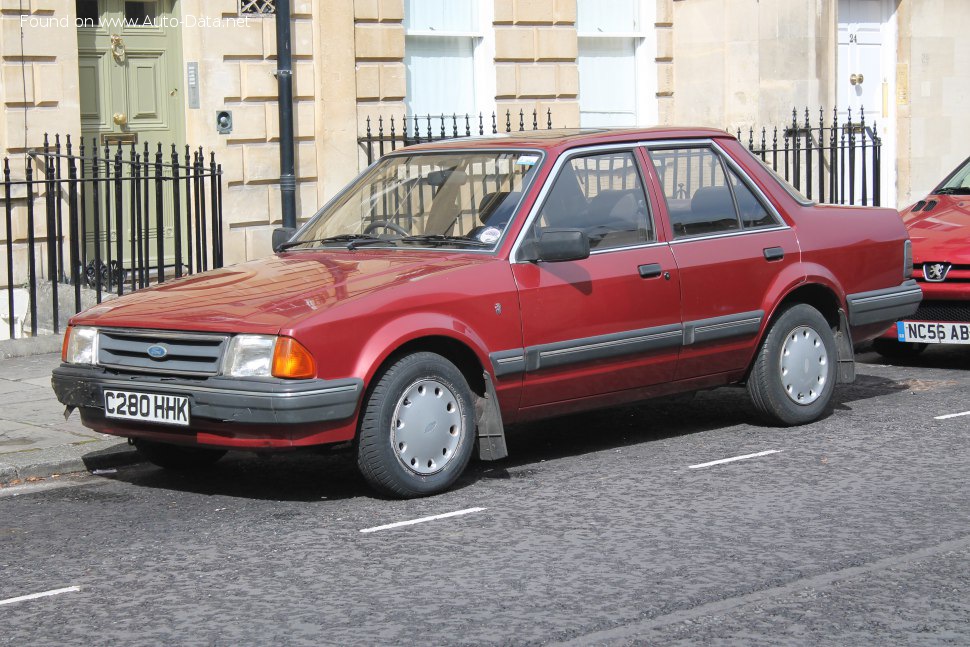
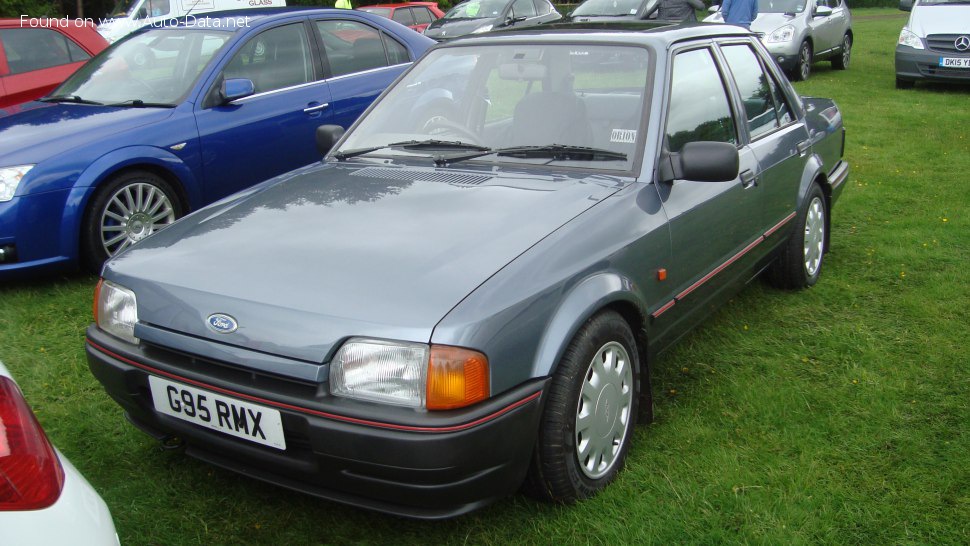
The Ford Orion II (AFF) was exclusively offered as a four-door sedan. Its design language was heavily influenced by the contemporary Escort, sharing much of its front-end styling, including headlights, grille, and hood. However, from the B-pillar rearward, the Orion distinguished itself with a distinct, elongated roofline that seamlessly transitioned into a conventional trunk. This design choice provided a more formal profile compared to the Escort hatchback, often perceived as more sophisticated or executive-like by European consumers. The trunk offered a larger and more secure cargo area, a significant advantage for families or business users who valued secure luggage storage.
Inside, the Orion II’s cabin was functional and straightforward, reflecting the pragmatic design philosophy of the era. Materials were durable, designed to withstand years of family use, though luxury was not a primary focus for this segment. Depending on the trim level, features might have included cloth upholstery, manual window winders, and a basic radio-cassette player. Air conditioning was typically an optional extra, if available at all, and power steering was also not standard on all models, particularly the lower-spec 1.4-liter variant. Safety features were rudimentary by modern standards, primarily consisting of seatbelts and a robust body structure. Anti-lock braking systems (ABS) and airbags were still futuristic concepts for most compact cars in the mid-1980s. Despite its basic nature, the interior was ergonomically sound, with controls easily accessible and a clear instrument cluster, prioritizing ease of use and driver comfort for long journeys.
Technical Specifications of the Ford Orion II (AFF) 1.4 (75 Hp)
| Category | Specification |
|---|---|
| Brand | Ford |
| Model | Orion |
| Generation | Orion II (AFF) |
| Type (Engine) | 1.4 (75 Hp) |
| Start of Production | 1985 year |
| End of Production | 1990 year |
| Powertrain Architecture | Internal Combustion engine |
| Drivetrain | Front-Wheel Drive |
| Body type | Sedan |
| Fuel Type | Petrol (Gasoline) |
| Power | 75 Hp |
| Engine aspiration | Naturally aspirated engine |
| Number of Cylinders | 4 (inferred) |
| Engine Displacement | 1.4 Liters (inferred) |
Legacy & Market Impact
The Ford Orion II (AFF) carved out a respectable niche for itself in the European compact car market. Its legacy is one of dependable, no-frills motoring that offered a more formal alternative to the ubiquitous hatchback. While perhaps not as iconic as its Escort brethren, the Orion was a strong seller for Ford, appealing to a segment of the market that valued tradition and practicality over sporty pretensions or cutting-edge technology. It successfully competed against direct rivals like the Volkswagen Jetta, which also offered a sedan version of a popular hatchback, and other European offerings from Opel/Vauxhall, Peugeot, and Renault.
The Orion’s reputation was built on its affordability, robust mechanicals, and widespread dealer network. It was often chosen by families and fleet buyers who needed a reliable vehicle that was easy to maintain and offered good value for money. Its shared platform with the Escort meant that parts were readily available and mechanics were familiar with its systems, contributing to lower ownership costs. In an era before significant globalization of automotive platforms, the Orion represented Ford’s astute understanding of regional market preferences, demonstrating a willingness to adapt its core products to specific consumer demands. Today, surviving examples of the Orion II are increasingly seen as modern classics, cherished by enthusiasts for their nostalgic appeal, straightforward engineering, and a connection to a bygone era of European everyday motoring.
The Orion nameplate continued for another generation before being absorbed back into the Escort range, but the Orion II (AFF) remains a quintessential representation of Ford’s European strategy in the 1980s: offering diverse body styles from a common platform to maximize market reach and cater to varied consumer needs across the continent. Its quiet competence and enduring practicality solidified its place in the automotive landscape, making it a memorable, if understated, contributor to Ford’s global success story.