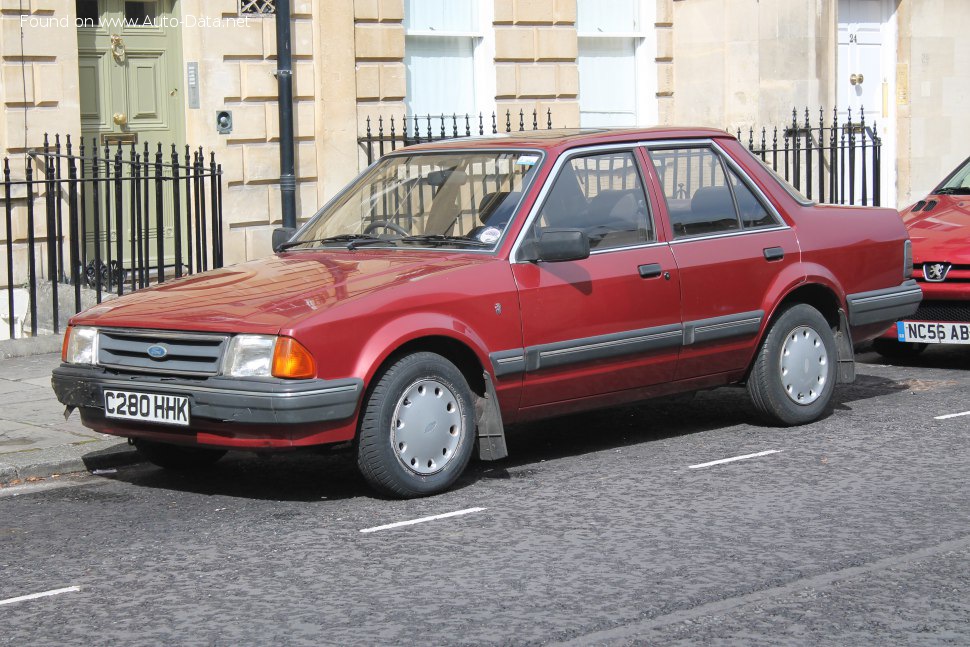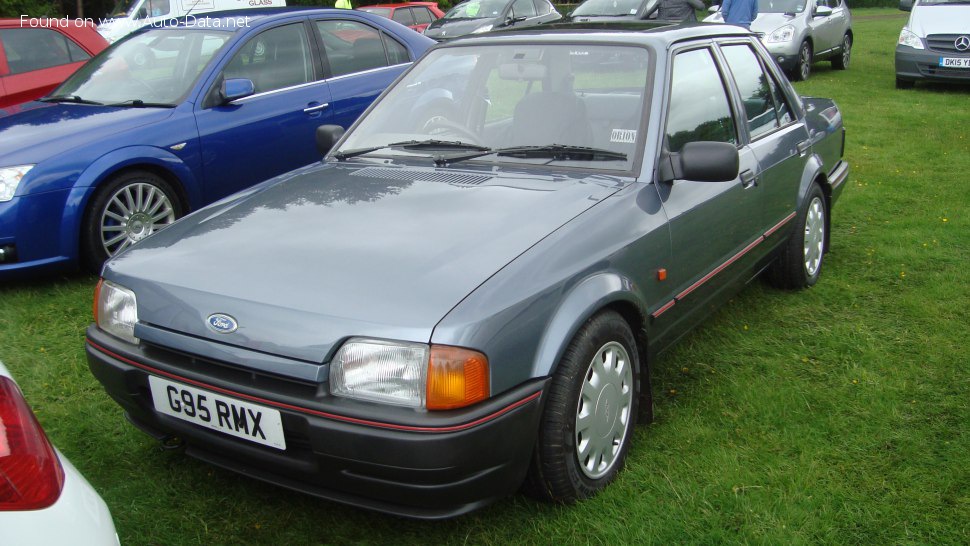
The Ford Orion II (AFF) 1.6 (102 Hp): A European Mainstay
The Ford Orion II (AFF) 1.6 (102 Hp) represents a significant chapter in Ford of Europe’s history, serving as a popular compact sedan within the European market during its brief production run from 1989 to 1990. Positioned as a more upscale, three-box sedan derivative of the immensely successful Ford Escort, the Orion was designed to appeal to buyers seeking a traditional sedan body style with enhanced practicality and a slightly more refined image than its hatchback sibling. The “AFF” designation refers to the internal chassis code for this generation, signifying its direct lineage and shared platform with the Escort Mark IV. While never officially sold in the United States, the Orion played a crucial role in Ford’s strategy to capture a broad spectrum of the European compact segment, competing fiercely against other European-designed sedans of its era. This particular iteration, powered by a 1.6-liter engine producing 102 horsepower, offered a compelling blend of performance and economy for the late 1980s.
Evolution and Market Placement of the Ford Orion II (AFF)
The Ford Orion first debuted in 1983, a response to a perceived gap in the market for a traditional sedan based on the Escort platform. Many European buyers, particularly those in Southern Europe and company car fleets, still preferred the security and formal appearance of a sedan over a hatchback. The Orion II (AFF) generation, launched in 1989, was essentially a facelifted version of the original Orion, coinciding with the Escort Mark IV update. While retaining much of the previous model’s underpinnings, the Orion II received subtle styling revisions, improved interior materials, and updated powertrains, making it a more competitive offering as the 1990s approached.
In its primary markets, the Ford Orion II (AFF) was positioned as a sensible, family-friendly vehicle that offered good value for money. It wasn’t intended to be a performance leader or a luxury statement, but rather a reliable and economical workhorse. Its close ties to the Escort meant a vast network of parts and serviceability, contributing to its appeal. The 1.6-liter engine with 102 horsepower was a mid-range offering, providing a good balance for everyday driving, whether navigating city streets or cruising on the Autobahn (though perhaps not at the highest speeds). This engine choice underscored Ford’s commitment to offering diverse options to cater to varying customer needs and local tax structures across Europe.
Engine and Performance: The 1.6 (102 Hp) Powertrain
At the heart of this specific Ford Orion II (AFF) model was a 1.6-liter (approximately 97.6 cubic inches) naturally aspirated petrol (gasoline) engine. This inline-four cylinder unit was a well-proven design from Ford’s European engine family, known for its reliability and straightforward maintenance. Producing a respectable 102 horsepower, it delivered adequate performance for a compact sedan of its time. The absence of forced induction (turbocharging or supercharging) meant a linear power delivery, characteristic of many engines from this era. This made the Orion 1.6 a predictable and easy-to-drive vehicle, suitable for a wide range of drivers.
While 102 horsepower might seem modest by today’s standards, in the late 1980s, it provided a competitive edge within its segment. It allowed for confident overtaking maneuvers on two-lane roads and comfortable cruising at highway speeds. The engine was typically paired with a five-speed manual transmission, maximizing fuel efficiency and driver engagement. An automatic transmission option may have been available, though manual was more common in Europe for this class of vehicle. The powertrain architecture, being a conventional internal combustion engine, reflected the prevailing technology of the period before widespread adoption of more complex emissions controls and direct injection systems. Its simplicity also contributed to lower manufacturing costs and, consequently, a more attractive price point for consumers.
Design and Features of the Ford Orion II (AFF)
The Ford Orion II (AFF) maintained the classic four-door sedan body type, a design choice that differentiated it from the Escort hatchback. Its styling was conservative and functional, prioritizing practicality and interior space over overt sportiness. The exterior featured a conventional three-box profile with a distinct trunk, providing a secure and separate cargo area – a key selling point for many buyers. The facelifted Orion II incorporated subtle updates to the grille, headlights, and taillights, aligning its aesthetics with Ford’s evolving design language of the late 1980s. These changes, though minor, helped to refresh its appearance and keep it competitive.
Inside, the Orion II offered an interior that was practical and user-friendly. While not luxurious, the cabin was designed for durability and ease of use. Features typical for a car of this segment in the late 1980s would have included manual windows, manual door locks, and perhaps an optional radio-cassette player. Higher trim levels might have offered power steering, central locking, and more comfortable seating materials. Safety features, by contemporary standards, were basic, generally limited to three-point seatbelts for front occupants and possibly for outboard rear passengers, along with a robust steel body structure. Airbags and advanced driver-assistance systems were still decades away from becoming standard in this segment. The emphasis was on straightforward functionality and providing a comfortable, albeit unpretentious, environment for occupants. The distinct trunk offered a larger and more secure cargo capacity than the Escort hatchback, a significant advantage for families or business users.
Technical Specifications: Ford Orion II (AFF) 1.6 (102 Hp)
The following table provides a detailed breakdown of the key technical specifications for the Ford Orion II (AFF) 1.6 (102 Hp) model:
| Category | Specification |
|---|---|
| General Information | |
| Brand | Ford |
| Model | Orion |
| Generation | Orion II (AFF) |
| Engine Type | 1.6 (102 Hp) |
| Start of Production | 1989 year |
| End of Production | 1990 year |
| Powertrain Architecture | Internal Combustion Engine |
| Body Type | Sedan |
| Performance Specifications | |
| Fuel Type | Petrol (Gasoline) |
| Power | 102 Hp |
| Engine Aspiration | Naturally aspirated engine |
| Engine Displacement | 1.6 Liters (approx. 97.6 cu in) |
| Drivetrain | Internal Combustion engine (typically Front-Wheel Drive) |
| Number of Cylinders | 4 (Inline) |
| Valvetrain | (Specifics not provided, typically SOHC or DOHC for this era) |
| Torque | (Specifics not provided, estimated around 100-110 lb-ft) |
| Top Speed | (Specifics not provided, estimated around 110-115 mph) |
| 0-60 mph (0-97 km/h) | (Specifics not provided, estimated around 10-12 seconds) |
| Transmission | (Typically 5-speed Manual, with optional Automatic) |
Legacy and Market Impact in Europe
The Ford Orion II (AFF) 1.6 (102 Hp), along with its other engine variants, carved out a significant niche for itself in the highly competitive European compact car market. Its primary rivals included other popular European sedans such as the Vauxhall Cavalier (Opel Vectra in mainland Europe), Renault 19 Sedan, Peugeot 309 Sedan, and Volkswagen Jetta. The Orion distinguished itself by offering a solid, dependable package based on the best-selling Escort, benefiting from Ford’s extensive dealer network and reputation for affordability and robust engineering.
Its reputation was largely built on reliability and practicality. It was a common sight in company fleets, rental agencies, and as a family car across various European countries. While it didn’t boast groundbreaking technology or exhilarating performance, it consistently delivered what its target audience expected: a comfortable, spacious, and economical means of transport. The 1.6-liter engine was a particularly popular choice, offering a good balance between fuel consumption and usable power for the average driver.
The Orion’s market impact was substantial, reinforcing Ford’s position as a dominant force in the European automotive landscape. It demonstrated Ford’s understanding of diverse market preferences, specifically the enduring demand for traditional sedans even as hatchbacks gained popularity. The Orion line eventually concluded production in 1993, when Ford integrated the sedan body style directly into the new Escort Mark V range, effectively absorbing the Orion’s identity. However, its legacy lives on as a testament to a specific era of European motoring, where straightforward engineering, practicality, and value for money were paramount. For many, the Ford Orion II remains a fondly remembered, unpretentious workhorse that reliably served millions of families and businesses throughout its tenure.