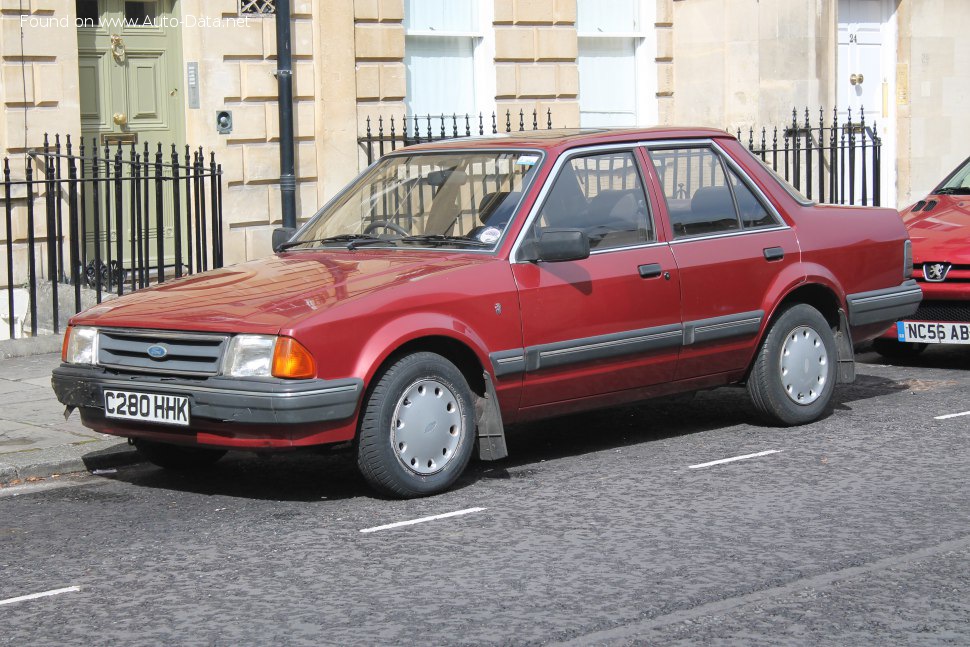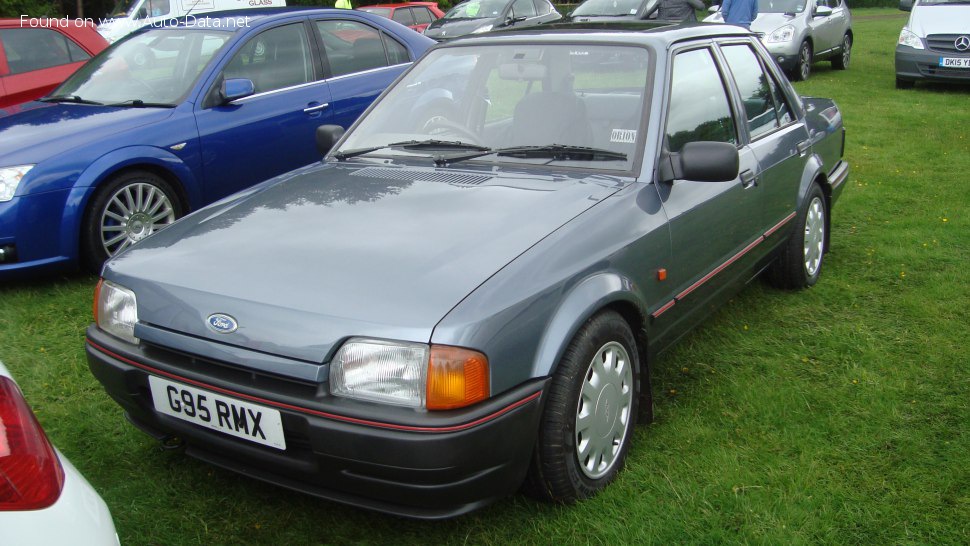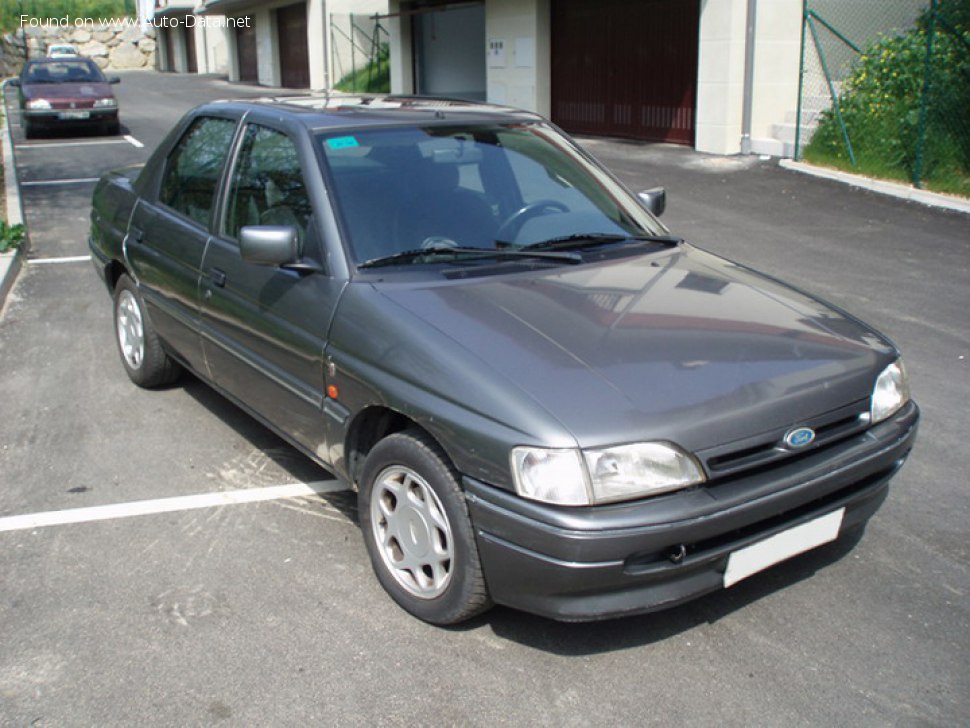
Introduction: The Ford Orion III (GAL)
The Ford Orion III (GAL) represents a significant chapter in Ford of Europe’s history, serving as the four-door sedan variant of the highly successful Escort Mk V. Launched in 1990, this generation of the Orion aimed to capture a segment of the European market that still favored the traditional sedan bodystyle over the increasingly popular hatchbacks. Produced until 1993, the Orion III (GAL) was designed as a practical, economical, and accessible family car, offering conventional styling and a separate trunk, distinguishing it from its Escort sibling.
Specifically, the 1.4 (71 Hp) model, which is the focus of this detailed analysis, was a cornerstone of the Orion lineup. It provided a balance of modest performance and commendable fuel efficiency, making it an attractive option for budget-conscious families and fleet operators across various European nations. While never officially sold in the United States, the Orion’s engineering and design philosophies reflect the global Ford approach to automotive manufacturing, adapted for regional preferences and market demands. It utilized the robust and widely adopted Ford GAL platform, sharing many components with the Escort, ensuring parts availability and ease of maintenance.
The Ford Orion III (GAL): A European Mainstay
Engineering and Performance of the Ford Orion III (GAL) 1.4
At the heart of the Ford Orion III (GAL) 1.4 model lay a naturally aspirated 1.4-liter gasoline engine, designated with the internal codes F6F or F6G. This powertrain was engineered for reliability, economical operation, and sufficient performance for everyday driving tasks within the European compact car segment of the early 1990s. Delivering a peak power output of 71 horsepower, this engine was not designed for exhilarating acceleration but rather for steady, predictable power delivery and decent fuel economy.
The engine’s design emphasized simplicity and durability, characteristics highly valued by consumers in this segment. As a naturally aspirated unit, it relied solely on atmospheric pressure for air intake, foregoing turbocharging or supercharging, which contributed to its lower manufacturing cost and straightforward maintenance. This made the 1.4-liter Orion an attractive proposition for those seeking a dependable vehicle without the complexities or higher running costs associated with more performance-oriented engines.
The powertrain architecture of the Ford Orion III (GAL) was an internal combustion engine, typical for the era. Power was transmitted to the front wheels, a configuration that Ford had widely adopted across its compact and mid-size range for its packaging efficiency, improved traction in adverse conditions, and generally lower manufacturing costs compared to rear-wheel-drive alternatives. The 71 Hp output provided adequate motivation for city driving, comfortable cruising on secondary roads, and capable highway travel, albeit without excessive reserves for rapid overtaking. Its engine oil capacity was 3.5 liters (3.7 US quarts), a standard volume for a four-cylinder engine of this displacement, ensuring proper lubrication and cooling for sustained operation.
Design and Features of the Ford Orion III (GAL)
Exterior and Interior Design
The Ford Orion III (GAL) adopted a classic three-box sedan silhouette, which was a deliberate choice to cater to a demographic that preferred the more formal styling and perceived security of a separate trunk over the hatchback’s versatility. Its design language was contemporary for the early 1990s, characterized by smooth, rounded lines that replaced the more angular aesthetics of previous generations. This “aerodynamic” styling, shared with the Escort Mk V, aimed to reduce drag and improve fuel efficiency, a growing concern even then. The front fascia featured integrated headlights and a modest grille, presenting a clean and understated appearance.
The body type, a sedan, offered a practical and spacious cabin for four to five occupants, alongside a generous trunk capacity, making it suitable for families and long journeys. While the Escort offered various body styles including hatchback and station wagon, the Orion remained exclusively a sedan, reinforcing its identity as a more traditional choice.
Inside, the Ford Orion III (GAL) reflected the pragmatic approach of Ford of Europe. The interior was designed with durability and functionality in mind, utilizing hard-wearing plastics and fabrics that could withstand the rigors of daily family use. The dashboard layout was straightforward and ergonomic, with controls logically placed and easily accessible to the driver. Standard features in the 1.4-liter model were typically basic, often including manual windows, a simple heating and ventilation system, and a basic radio or cassette player. Higher trim levels or optional extras could include features like power steering, central locking, and a sunroof, which were considered luxuries in this segment at the time. Safety features were rudimentary by modern standards, primarily consisting of three-point seatbelts for all occupants. Anti-lock braking systems (ABS) and airbags were either unavailable or optional on higher-tier models, not standard on the entry-level 1.4 variant.
Technical Specifications: Ford Orion III (GAL) 1.4 (71 Hp)
| Category | Specification |
|---|---|
| Brand | Ford |
| Model | Orion |
| Generation | Orion III (GAL) |
| Type (Engine) | 1.4 (71 Hp) |
| Start of Production | 1990 year |
| End of Production | 1993 year |
| Powertrain Architecture | Internal Combustion engine |
| Body Type | Sedan |
| Fuel Type | Petrol (Gasoline) |
| Power | 71 Hp |
| Engine Model/Code | F6F, F6G |
| Engine Aspiration | Naturally aspirated engine |
| Engine Oil Capacity | 3.5 L (3.7 US qt | 3.08 UK qt) |
| Drivetrain | Internal Combustion engine |
Legacy and Market Impact of the Ford Orion III (GAL)
The Ford Orion III (GAL) carved out a distinct niche within the highly competitive European compact car market of the early 1990s. Positioned as a more conservative and traditional alternative to its Escort hatchback counterpart, the Orion appealed to buyers who valued conventional styling, a secure trunk, and a slightly more ‘grown-up’ image. Its primary market was Europe, where it competed fiercely with other established compact sedans such as the Volkswagen Jetta, Opel Vectra (Vauxhall Cavalier in the UK), Renault 19 Sedan, and Peugeot 309/306 Sedan.
The reputation of the Orion III was largely built on its affordability, reliability, and ease of maintenance. The 1.4 (71 Hp) variant, in particular, was praised for its economical running costs and dependable performance, making it a popular choice for first-time car buyers, small families, and a significant player in various corporate and government fleets across the continent. While it wasn’t a car celebrated for its dynamic prowess or groundbreaking technology, its strength lay in its practicality and no-nonsense approach to motoring. It embodied the philosophy of providing accessible personal transportation that was robust and capable of enduring daily use.
The Orion played a crucial role in Ford’s overall market strategy in Europe, helping the company maintain a strong presence across multiple segments. Its shared platform and components with the Escort allowed for economies of scale in manufacturing and parts supply, benefiting both Ford and its customers. The Orion’s distinct identity as a sedan also helped Ford capture buyers who might otherwise have looked to competitors offering similar conventional models.
By the time its production concluded in 1993, the Orion nameplate had run its course as a separate model. Ford decided to integrate the sedan variant directly into the Escort lineup for its subsequent generation, effectively discontinuing the Orion as a distinct model. This move reflected a broader industry trend towards consolidating model lines and simplifying branding. However, the legacy of the Ford Orion III (GAL) endures as a testament to Ford’s ability to cater to diverse market tastes, offering a reliable and practical vehicle that served millions of European motorists during a pivotal era in automotive history. It remains a recognizable symbol of early 1990s European motoring, appreciated for its unpretentious utility and enduring mechanical impact.