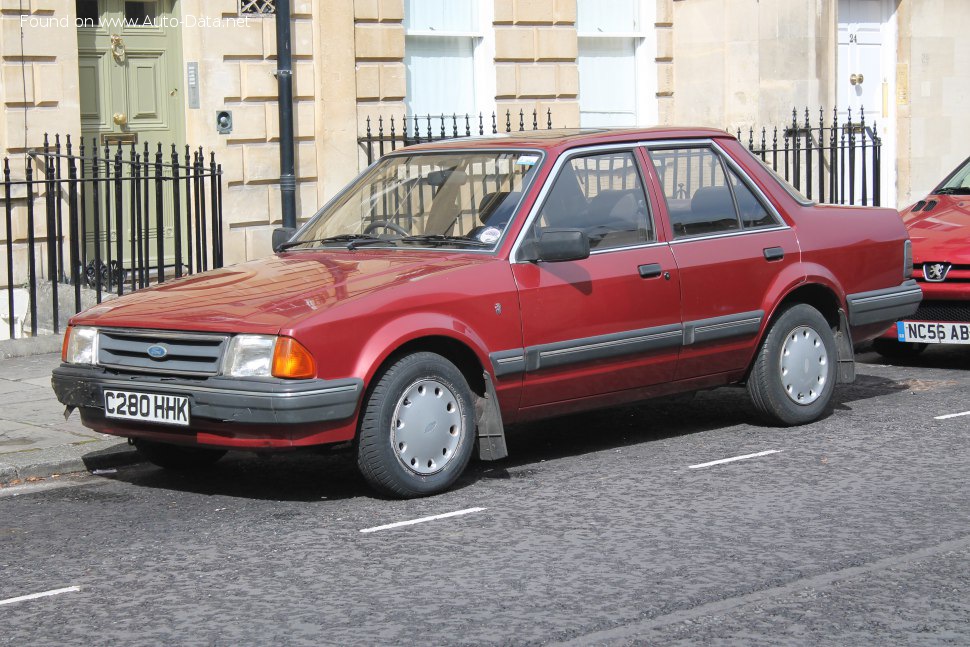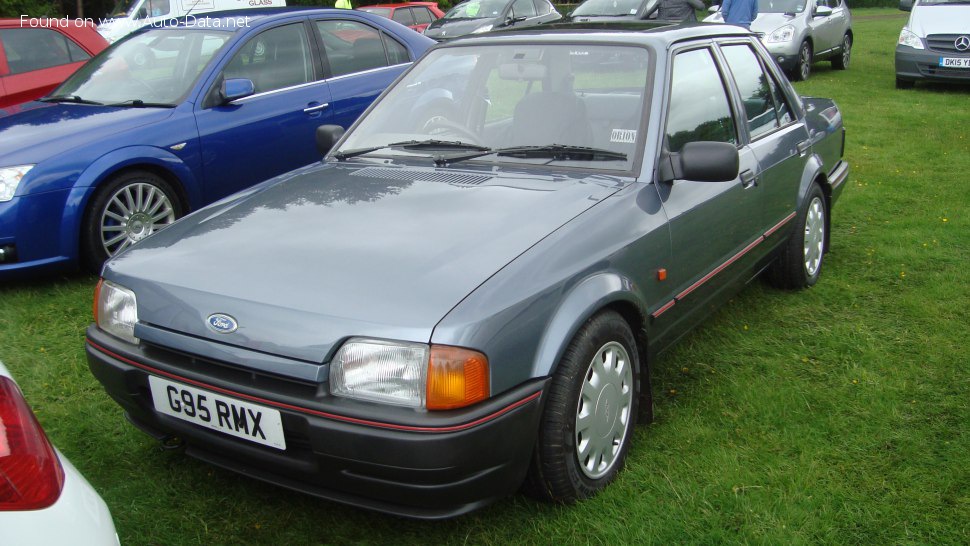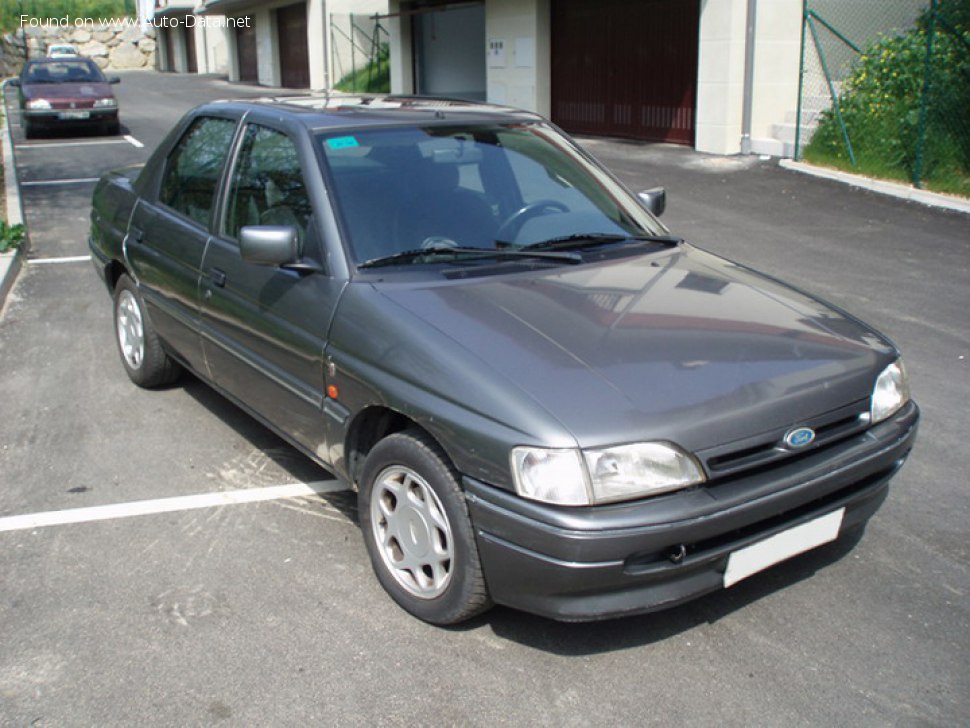
The Ford Orion III (GAL) 1.6 i 16V (105 Hp): A European Mainstay
The Ford Orion, a nameplate intrinsically linked to the European automotive landscape, served as Ford’s C-segment sedan offering for over a decade. Introduced in 1983 as a four-door sedan variant of the popular Ford Escort hatchback, the Orion aimed to capture buyers desiring more conventional styling and a traditional trunk over a hatchback’s versatility. The subject of this analysis, the Ford Orion III (GAL) 1.6 i 16V (105 Hp), represents the third and final generation of the Orion, produced from 1990 to 1992. This iteration, based on the fifth-generation Ford Escort (Mk5), marked a significant modernization for the model, incorporating contemporary design cues and a more refined powertrain lineup, including the relatively advanced 16-valve engine discussed here.
Primarily marketed across Europe, the Orion provided a more conservative, family-oriented alternative to its Escort sibling. While the Escort often appealed to a younger demographic or those prioritizing practicality, the Orion targeted buyers who valued a distinct three-box design, often perceived as more executive or mature. The Orion III (GAL) was a direct competitor to other popular European sedans of its era, such as the Opel Astra F sedan (Vauxhall Astra in the UK), Volkswagen Jetta Mk2 (and later Mk3), and the Renault 19 Chamade. Its discontinuation in 1993, when its sedan variant was simply rebadged as the Ford Escort sedan, signaled a shift in Ford’s marketing strategy, but the Orion III (GAL) remains a notable chapter in Ford Europe’s history.
Engine and Performance of the Ford Orion III (GAL) 1.6 i 16V (105 Hp)
At the heart of the Ford Orion III (GAL) 1.6 i 16V (105 Hp) lies a 1.6-liter (97.6 cubic inch) inline four-cylinder gasoline engine, designated with the internal code LJF. This particular engine was a significant upgrade for the Orion, representing Ford’s move towards multi-valve technology in its mainstream models. Unlike the simpler 8-valve units that dominated the segment for years, this 16-valve configuration allowed for improved volumetric efficiency, leading to better breathing characteristics for the engine. The result was a more potent and responsive power delivery compared to its 8-valve counterparts, without a significant increase in displacement.
The engine produced a respectable 105 horsepower (Hp), a healthy output for a naturally aspirated 1.6-liter unit in the early 1990s. This power, combined with the inherent efficiency benefits of multi-valve design, offered a good balance of performance for everyday driving. As a naturally aspirated engine, its power delivery was linear and predictable, appealing to the average family car buyer. While specific torque figures were not provided, a 16-valve engine of this era typically produced torque higher up in the RPM range, encouraging drivers to rev the engine for maximum performance. This powertrain was paired with a manual transmission, which was the standard offering for the segment, transmitting power to the front wheels – a conventional and cost-effective layout for C-segment cars.
The 1.6 i 16V engine was designed for reliability and ease of maintenance, crucial factors for a volume-selling family sedan. With an engine oil capacity of 3.5 liters (3.7 US quarts), it adhered to standard service intervals of the time. This engine contributed to the Orion’s reputation as a dependable workhorse, capable of long distances and daily commutes with reasonable fuel economy for its class. For its time, the 16-valve engine in the Orion III (GAL) was a modern and competitive choice, providing a noticeable performance edge over many of its contemporaries still relying on older 8-valve designs.
Design and Features
The Ford Orion III (GAL) adopted the design language introduced with the fifth-generation Escort, which marked a notable departure from the sharper, more angular lines of its predecessors. The Orion III featured softer, more rounded contours, aiming for a more aerodynamic and contemporary aesthetic. While the Escort hatchback embraced a somewhat polarizing “jelly mold” design, the Orion sedan maintained a more conservative and elegant profile, which was often preferred by its target demographic. The distinct three-box sedan silhouette was characterized by a clear separation of the engine bay, passenger cabin, and trunk, providing a sense of formality and tradition.
The body type remained a four-door sedan throughout its production run. Key design elements included integrated bumpers, a slightly sloping hood, and a more aerodynamic grille compared to previous generations. The rear end featured larger, horizontally oriented taillights that blended seamlessly into the trunk lid and rear fenders, contributing to a wider and more substantial appearance. Inside, the Orion III shared much of its cabin architecture with the Escort, offering a practical and functional layout. Features for the era, depending on the trim level, typically included amenities like power steering, central locking, power windows (on higher trims), and a rudimentary audio system. Safety features, while not as advanced as modern vehicles, would have included seatbelts for all occupants and a robust body structure designed to meet contemporary European safety standards. The generous trunk space was a significant selling point, offering practical cargo capacity for families and travelers, a distinct advantage over its hatchback sibling for those who preferred a secure, separate luggage compartment.
Technical Specifications
| Category | Specification |
|---|---|
| Brand | Ford |
| Model | Orion |
| Generation | Orion III (GAL) |
| Type (Engine) | 1.6 i 16V (105 Hp) |
| Start of Production | 1990 year |
| End of Production | 1992 year |
| Powertrain Architecture | Internal Combustion engine |
| Body Type | Sedan |
| Fuel Type | Petrol (Gasoline) |
| Power | 105 Hp |
| Engine Model/Code | LJF |
| Engine Aspiration | Naturally aspirated engine |
| Engine Oil Capacity | 3.5 l (3.7 US qt | 3.08 UK qt) |
Legacy and Market Impact
The Ford Orion III (GAL) played a crucial role in Ford’s European lineup during the early 1990s. While it never achieved the iconic status of its Escort hatchback brethren, it consistently delivered strong sales figures, particularly in markets where sedans were traditionally preferred, such as parts of Southern Europe and Ireland. Its primary competitors were well-established models like the Opel Astra F sedan, Volkswagen Jetta, and various sedan offerings from French manufacturers such as the Renault 19 Chamade and Peugeot 309/306 sedan. The Orion distinguished itself through its competitive pricing, widespread dealer network, and a reputation for solid, if unspectacular, reliability and ease of maintenance.
The Orion’s legacy is one of a dependable, no-frills family car that provided practical transportation for millions. It was often chosen by buyers who needed a sensible, affordable, and spacious vehicle without the stylistic flair or performance aspirations of more premium brands. The 1.6 i 16V (105 Hp) variant, in particular, offered a modern engine choice that kept the Orion competitive in terms of performance and efficiency against its rivals. Its conservative styling appealed to a broad demographic, from young families to older drivers, who appreciated its straightforward design and functional interior.
The model’s eventual discontinuation as a standalone nameplate in 1993, when it was integrated back into the Escort range as simply the “Escort sedan,” reflected a broader trend in the automotive industry. Manufacturers began streamlining their model lineups, and the distinction between a hatchback-derived sedan and its parent model became less commercially important. The Orion name, however, remains a familiar one to many European enthusiasts and former owners, symbolizing an era of practical, accessible motoring. Its impact was not in groundbreaking innovation but in its consistent delivery of core automotive values: affordability, reliability, and utility. The spirit of the Orion, as a practical and accessible sedan, was eventually carried forward by the Ford Focus sedan, which emerged later in the decade to redefine Ford’s C-segment offerings with a more dynamic and globally appealing platform.