Ford Orion III (GAL) 1.8 i 16V (105 Hp): A Detailed Overview
The Ford Orion, a compact sedan variant of the popular Ford Escort, carved out its own niche in the European automotive market from 1983 to 1998. The focus of this expert analysis is the Ford Orion III (GAL), specifically the 1.8 i 16V model producing 105 horsepower, which was manufactured for a concise period between 1992 and 1993. Positioned as a more traditional and arguably more upscale offering than its hatchback sibling, the Orion III aimed to capture buyers seeking the practicality of a four-door sedan with a conventional trunk, a common preference in many European markets. While never officially sold in the United States, the Orion played a significant role in Ford’s European strategy, providing a direct competitor to other compact sedans of its era.
The Orion III, also known by its internal Ford codename GAL, represented the final iteration of the Orion nameplate. It shared its fundamental platform and many components with the fifth-generation Ford Escort, which itself underwent a significant facelift in 1992. This generation of the Orion brought updated styling, improved interior ergonomics, and a range of more modern powertrains, including the advanced 1.8-liter, 16-valve gasoline engine that is the subject of this review. This particular engine variant offered a commendable balance of performance and fuel efficiency for its time, catering to a broad spectrum of family and business users across Europe.
Engine and Performance of the Ford Orion III (GAL)
At the heart of the Ford Orion III (GAL) 1.8 i 16V model was a naturally aspirated, inline four-cylinder gasoline engine. This 1.8-liter unit was a notable advancement for Ford in the early 1990s, featuring a multi-valve cylinder head design – specifically 16 valves (four per cylinder). This configuration allowed for improved airflow into and out of the combustion chambers, leading to more efficient combustion and, consequently, better power output and responsiveness compared to older 8-valve designs.
The engine generated a respectable 105 horsepower (Hp), a solid figure for a compact sedan in the early 1990s European market. This power was delivered smoothly across the rev range, thanks to the engine’s naturally aspirated design, which provided predictable throttle response without the lag associated with early turbochargers. The 105 Hp output was sufficient for daily commuting, comfortable highway cruising, and occasional spirited driving, making the Orion a versatile choice for its target demographic. Power was transmitted to the front wheels, a standard layout for compact Fords of this era, ensuring good traction and predictable handling characteristics.
Fueling the engine was standard unleaded gasoline (petrol), reflecting the increasing prevalence of catalytic converters and stricter emissions standards in Europe during this period. The engine’s oil capacity was specified at 4.25 liters, or approximately 4.49 US quarts, indicating a typical volume for a compact four-cylinder engine designed for everyday reliability and longevity. While specific acceleration figures and top speeds are not provided, an Orion with 105 Hp would have offered competitive performance against rivals like the Opel Astra sedan or Volkswagen Vento/Jetta of the same vintage, capable of reaching 60 mph in roughly 10-11 seconds and achieving a top speed in the range of 110-115 mph.
Design and Features of the Ford Orion III (GAL)
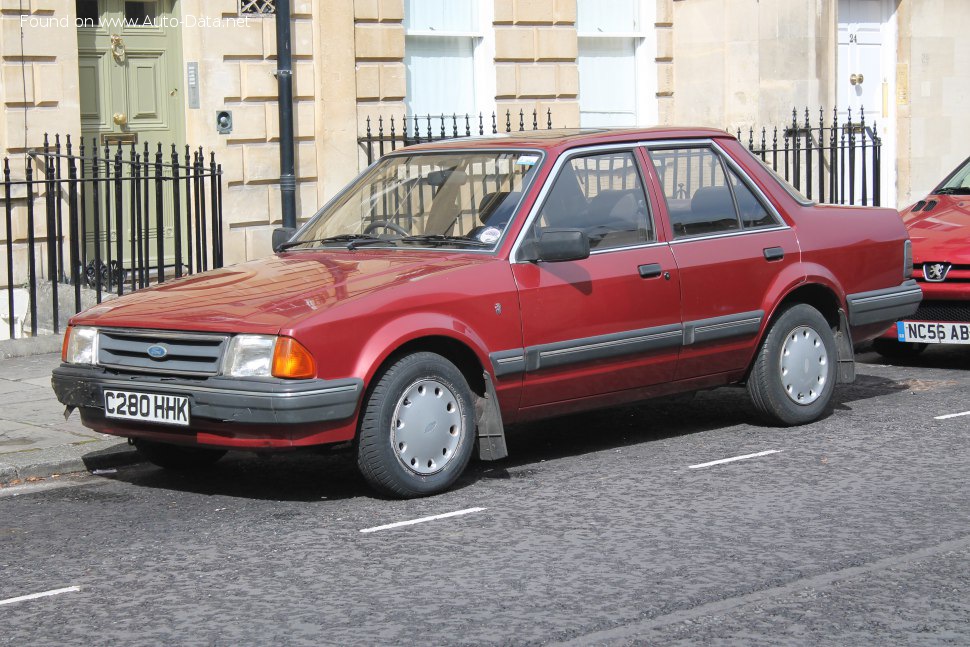
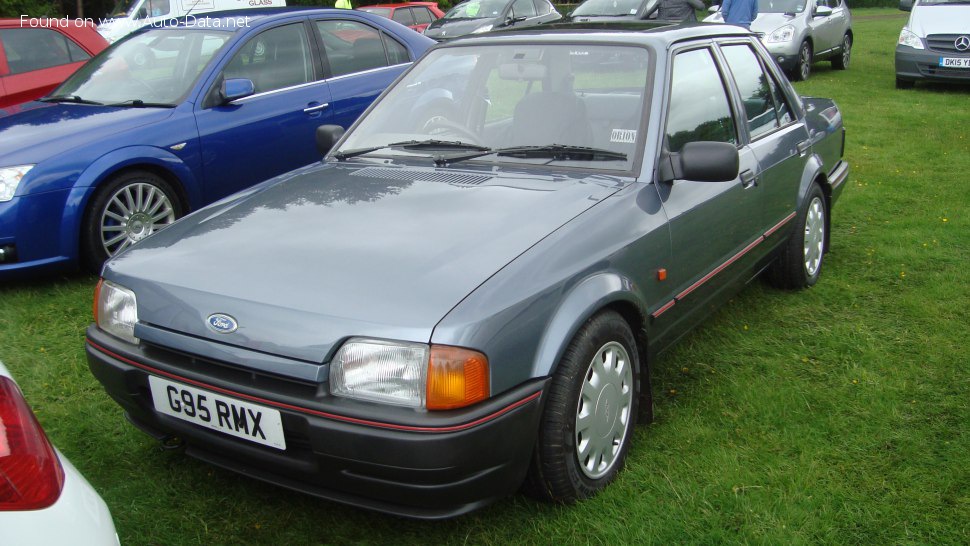
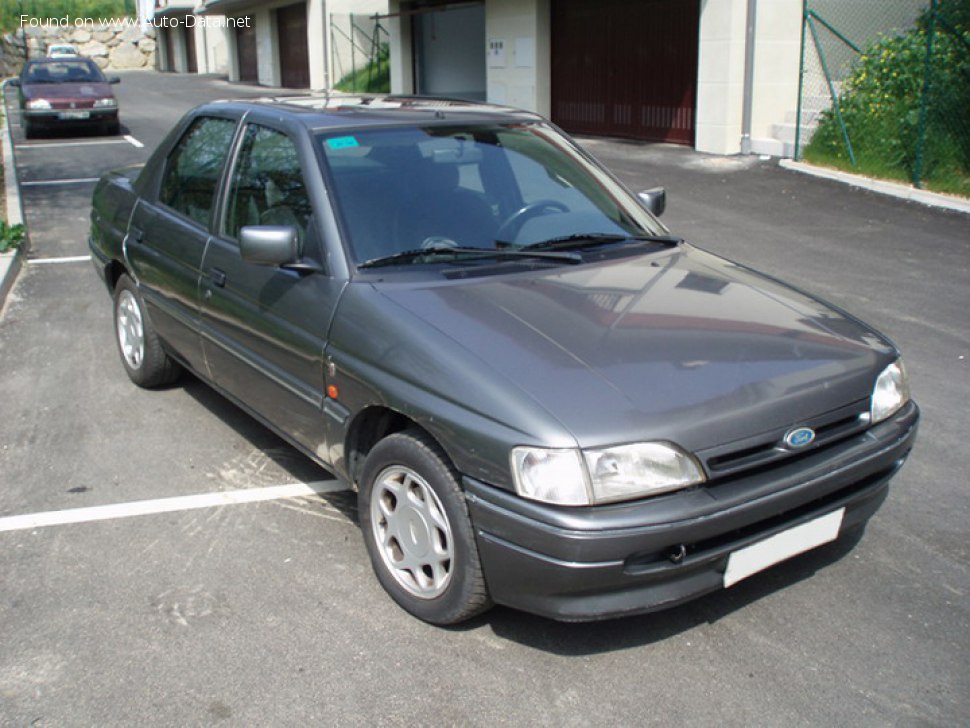
The Ford Orion III (GAL) was exclusively offered as a four-door sedan, distinguishing it from the Escort’s more varied body styles (hatchback, station wagon, convertible). Its design language was an evolution of the previous Orion generations, characterized by clean lines, a relatively upright stance, and a focus on practicality over overt sportiness. The 1992 facelift that brought about the Orion III (GAL) introduced subtle but effective changes, including redesigned headlights, grille, and bumpers, bringing it more in line with Ford’s evolving aesthetic for the mid-1990s. The overall look was conservative but pleasant, designed to appeal to a broad market segment that valued understated elegance and utility.
Inside, the Orion III offered a functional and straightforward cabin. The dashboard layout was logical, with easily accessible controls and clear instrumentation. While not luxurious, the interior materials were durable and designed to withstand the rigors of daily family use. Seating comfort was generally good for its class, with adequate space for four adults and a fifth for shorter journeys. A key selling point of the Orion sedan was its generous trunk capacity, which offered more secure and often larger storage space compared to the Escort hatchback, a significant advantage for families or those who frequently carried luggage.
Features, depending on the trim level, would have included power steering, central locking, and potentially power windows on higher specifications. Safety features for the early 1990s were more rudimentary than today, but the Orion III would have incorporated standard safety belts and a rigid passenger cell design. Anti-lock braking systems (ABS) were becoming more common as an option or standard on higher trims during this period, enhancing stopping performance. The Orion III represented a solid, no-nonsense proposition for buyers who needed a dependable and spacious compact car without unnecessary frills, emphasizing Ford’s commitment to delivering value and reliability in the mainstream European market.
Technical Specifications: Ford Orion III (GAL) 1.8 i 16V (105 Hp)
Below is a detailed table of the technical specifications for the Ford Orion III (GAL) 1.8 i 16V (105 Hp) model:
| Category | Specification |
|---|---|
| General Information | |
| Brand | Ford |
| Model | Orion |
| Generation | Orion III (GAL) |
| Engine Type | 1.8 i 16V (105 Hp) |
| Start of Production | 1992 year |
| End of Production | 1993 year |
| Powertrain Architecture | Internal Combustion engine |
| Body Type | Sedan |
| Performance Specifications | |
| Fuel Type | Petrol (Gasoline) |
| Power | 105 Hp |
| Engine Aspiration | Naturally aspirated engine |
| Engine Oil Capacity | 4.25 l (4.49 US qt | 3.74 UK qt) |
| Drivetrain | Internal Combustion engine (Front-Wheel Drive) |
Legacy and Market Impact
The Ford Orion III (GAL) marked the culmination of the Orion nameplate, which was ultimately absorbed back into the Escort range with the subsequent generation. Despite its relatively short production run for this specific iteration (1992-1993), the Orion III, particularly with the 1.8 i 16V engine, contributed to Ford’s strong presence in the European compact car segment. Its primary market was Europe, where compact sedans traditionally held a significant share, appealing to buyers who preferred the more formal styling and secure trunk space over the versatility of a hatchback.
In its heyday, the Orion competed fiercely with a host of European rivals. Key competitors included the Opel Astra sedan (and its predecessor, the Kadett E sedan), the Volkswagen Vento (known as the Jetta in some markets outside Europe), the Renault 19 Chamade, and the Peugeot 306 sedan. Against these adversaries, the Orion offered a competitive package of reliable mechanics, decent performance, and practical design. Its close ties to the hugely popular Escort meant it benefited from Ford’s extensive dealer network, readily available parts, and a reputation for affordability and ease of maintenance.
The 1.8 i 16V engine, with its 105 horsepower, was a particularly strong offering for the Orion, providing a good balance between economy and performance that satisfied a wide range of drivers. It helped the Orion maintain its relevance in a rapidly evolving market where engine technology was progressing quickly. While the Orion might not be remembered as a groundbreaking vehicle, its legacy lies in its role as a dependable, no-frills family sedan that served millions of European motorists faithfully. It epitomized the mainstream compact car segment of the early 1990s, offering honest transportation and contributing significantly to Ford of Europe’s sales volume and market share during its operational lifespan.
Today, the Ford Orion III (GAL) is primarily found on the used car market in Europe, often as an affordable and practical classic. Its simple mechanics and robust construction mean many examples have survived, though they are increasingly rare in pristine condition. For enthusiasts and historians of European automotive design, the Orion III represents an important chapter in Ford’s strategy to cater to diverse market preferences, demonstrating how a common platform could be adapted to meet distinct regional demands for body styles and vehicle character.