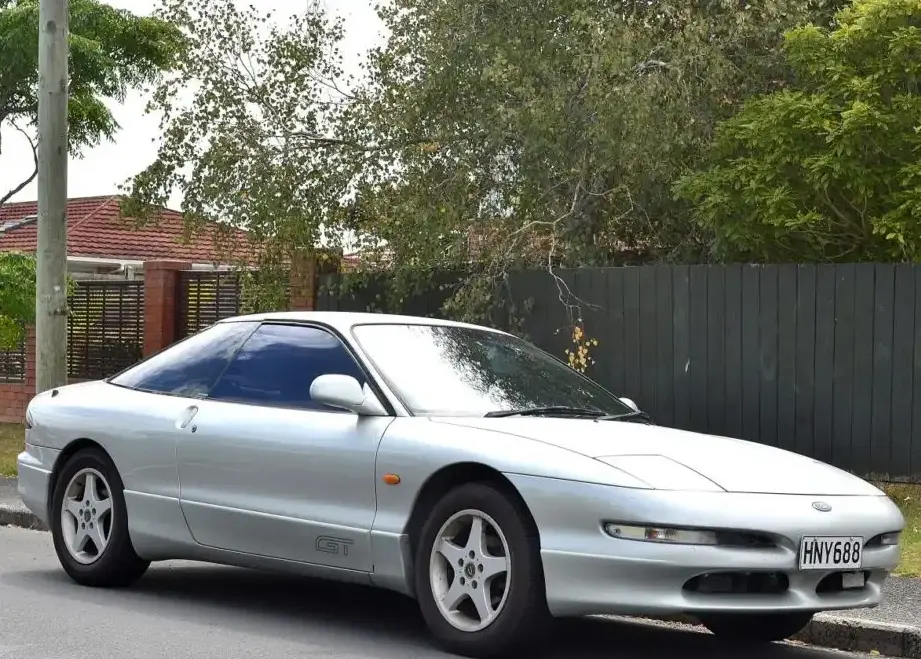
The Ford Probe I 2.2, producing 111 horsepower, was a front-wheel drive coupe manufactured between 1988 and 1992. It represented Ford’s attempt to create a sporty, technologically advanced vehicle aimed at capturing a segment of the market previously dominated by Japanese imports. The Probe I was a significant departure from Ford’s traditional designs, featuring a sleek, aerodynamic profile and a focus on driver engagement. It was built on a new platform, distinct from the existing Ford lineup, and served as a testbed for future technologies. This variant, with its 2.2-liter engine and five-speed manual transmission, occupied a middle ground in the Probe I range, offering a balance between performance and affordability.
Technical Specifications
| Brand | Ford |
| Model | Probe |
| Generation | Probe I |
| Type (Engine) | 2.2 (111 Hp) |
| Start of production | 1988 |
| End of production | 1992 |
| Powertrain Architecture | Internal Combustion engine |
| Body type | Coupe |
| Seats | 4 |
| Doors | 3 |
| Fuel consumption (urban) | 12 l/100 km (19.6 US mpg) |
| Fuel consumption (extra urban) | 8 l/100 km (29.4 US mpg) |
| Fuel Type | Petrol (Gasoline) |
| Maximum speed | 185 km/h (114.95 mph) |
| Weight-to-power ratio | 11.2 kg/Hp |
| Power | 111 Hp |
| Engine aspiration | Naturally aspirated |
| Kerb Weight | 1240 kg (2733.73 lbs) |
| Trunk (boot) space – minimum | 340 l (12.01 cu. ft.) |
| Trunk (boot) space – maximum | 1170 l (41.32 cu. ft.) |
| Fuel tank capacity | 57 l (15.06 US gal) |
| Length | 4495 mm (176.97 in) |
| Width | 1725 mm (67.91 in) |
| Height | 1320 mm (51.97 in) |
| Wheelbase | 2515 mm (99.02 in) |
| Front track | 1455 mm (57.28 in) |
| Rear track | 1465 mm (57.68 in) |
| Drivetrain | Front wheel drive |
| Number of gears | 5 |
| Gearbox type | Manual transmission |
| Front suspension | Coil spring |
| Rear suspension | Coil spring |
| Front brakes | Ventilated discs |
| Rear brakes | Drum |
| Assisting systems | ABS (Anti-lock braking system) |
| Steering type | Steering rack and pinion |
| Power steering | Hydraulic |
| Tires size | 205/60 R15 |
Powertrain & Engine Architecture
The Probe I 2.2 was powered by Ford’s 2.2-liter inline-four cylinder engine. This engine, internally designated as the 2.2L OHV, was a relatively simple design featuring a single overhead camshaft and two valves per cylinder. While not a particularly high-revving engine, it delivered a respectable 111 horsepower and 135 lb-ft of torque. Fuel delivery was managed by a multi-port fuel injection system, contributing to improved efficiency and responsiveness compared to earlier carbureted engines. The five-speed manual transmission offered precise shifts and allowed drivers to fully utilize the engine’s power band. The transmission’s gear ratios were tuned for a balance of acceleration and highway cruising, with a relatively tall fifth gear designed to improve fuel economy at higher speeds.
Driving Characteristics
The Probe I 2.2 offered a reasonably engaging driving experience for its time. The front-wheel drive configuration provided good traction, particularly in inclement weather. The suspension, consisting of coil springs and a stabilizer bar, offered a comfortable ride while maintaining decent handling characteristics. However, the Probe I wasn’t a true sports car. The 111 horsepower engine, while adequate, didn’t provide exhilarating acceleration. Zero to sixty mph times were typically in the 9-10 second range. Compared to the later Probe GT with its more powerful V6 engine, the 2.2-liter version felt noticeably slower. The manual transmission allowed for more driver control and a more connected feel compared to the optional automatic transmission.
Equipment & Trim Levels
The Probe I 2.2 typically came standard with features such as air conditioning, power steering, and an AM/FM stereo. The interior featured cloth upholstery and a relatively simple dashboard layout. Optional extras included a sunroof, upgraded sound system, and cruise control. The Probe I was positioned as a step up from more basic Ford models like the Escort and Tempo, offering a more refined interior and a more sophisticated driving experience. The trim level for the 2.2L engine was generally considered the base model, with the GT trim offering more luxurious appointments and a more powerful engine.
Chassis & Braking
The Probe I featured a unibody construction, contributing to its relatively light weight. The front suspension utilized independent coil springs, while the rear suspension employed a semi-independent twist beam setup. The braking system consisted of ventilated disc brakes at the front and drum brakes at the rear. Anti-lock brakes (ABS) were available as an option, enhancing safety by preventing wheel lockup during hard braking. The steering system was a rack-and-pinion design with hydraulic power assist, providing responsive and precise steering feel.
Market Reception & Comparison
The Ford Probe I received mixed reviews from automotive critics. While praised for its styling and technology, some reviewers criticized its performance and handling. The 2.2-liter engine was often considered underpowered, particularly when compared to competing models from Japan. Fuel economy was generally considered average for the time. In terms of reliability, the Probe I was generally considered to be reasonably dependable, although some owners reported issues with the electrical system and the automatic transmission. Compared to the Probe GT, the 2.2-liter version offered a lower price point but sacrificed performance. The 2.2L was a more economical choice for buyers prioritizing fuel efficiency and affordability.
Legacy
The Ford Probe I, despite its relatively short production run, left a lasting impression on the automotive landscape. It represented Ford’s willingness to experiment with new designs and technologies. While the Probe I didn’t achieve the sales success of some of its competitors, it paved the way for future Ford models. Today, the Probe I 2.2 is a relatively affordable classic car, appealing to enthusiasts who appreciate its unique styling and its connection to Ford’s automotive history. The 2.2-liter engine, while not known for its exceptional durability, is generally considered reliable with proper maintenance. Finding well-maintained examples can be challenging, but the Probe I 2.2 remains a distinctive and enjoyable vehicle for those seeking a taste of 1980s/early 1990s Ford engineering.