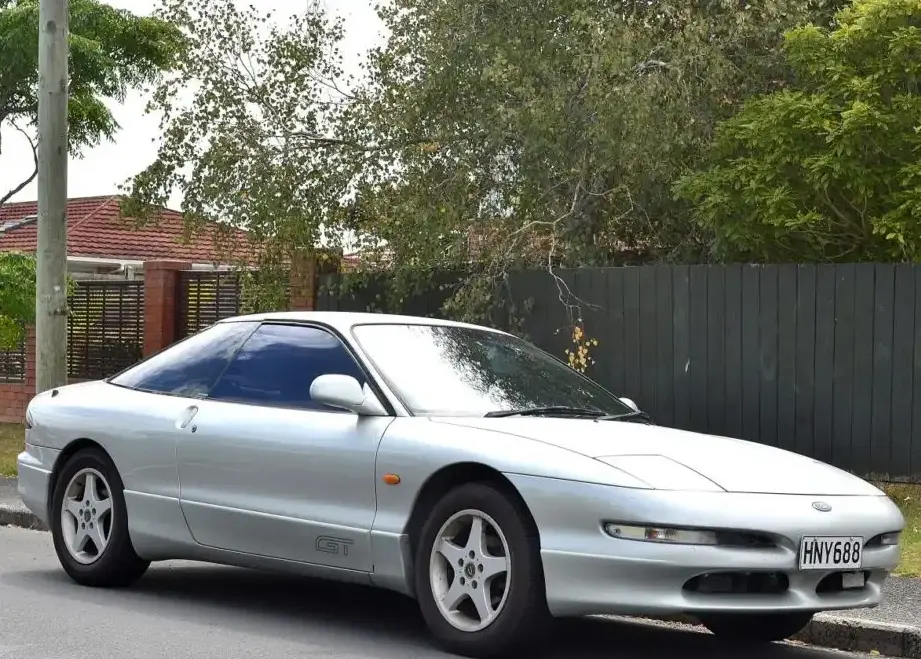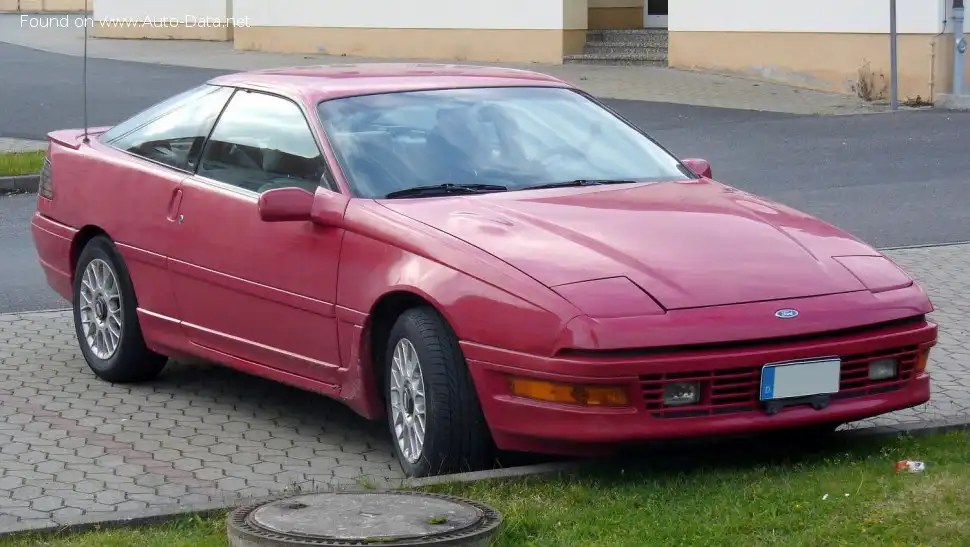
The Ford Probe I 3.0 V6, produced between 1988 and 1992, represented a significant departure for Ford, moving away from the traditional Mustang-based platform for its sporty coupe offering. Positioned as a more modern and technologically advanced alternative, the Probe I was intended to appeal to a buyer seeking a blend of performance and style. It was a key component of Ford’s attempt to capture a larger share of the compact sports coupe market, competing with vehicles like the Toyota Celica and Mazda MX-6. The Probe I was built on Ford’s MN12 platform, a front-wheel drive architecture that underpinned several other Ford models of the era.
Technical Specifications
| Brand | Ford |
| Model | Probe |
| Generation | Probe I |
| Type (Engine) | 3.0 V6 (147 Hp) |
| Start of production | 1988 |
| End of production | 1992 |
| Powertrain Architecture | Internal Combustion engine |
| Body type | Coupe |
| Seats | 4 |
| Doors | 3 |
| Fuel consumption (urban) | 15 l/100 km (15.7 US mpg, 18.8 UK mpg, 6.7 km/l) |
| Fuel consumption (extra urban) | 10 l/100 km (23.5 US mpg, 28.2 UK mpg, 10 km/l) |
| Fuel Type | Petrol (Gasoline) |
| Maximum speed | 205 km/h (127.38 mph) |
| Weight-to-power ratio | 9.4 kg/Hp (106.9 Hp/tonne) |
| Power | 147 Hp |
| Engine aspiration | Naturally aspirated |
| Kerb Weight | 1375 kg (3031.36 lbs) |
| Trunk (boot) space – minimum | 340 l (12.01 cu. ft.) |
| Trunk (boot) space – maximum | 1170 l (41.32 cu. ft.) |
| Fuel tank capacity | 57 l (15.06 US gal | 12.54 UK gal) |
| Length | 4495 mm (176.97 in) |
| Width | 1735 mm (68.31 in) |
| Height | 1320 mm (51.97 in) |
| Wheelbase | 2515 mm (99.02 in) |
| Front track | 1455 mm (57.28 in) |
| Rear track | 1465 mm (57.68 in) |
| Drivetrain Architecture | Front wheel drive, Internal Combustion Engine |
| Drive wheel | Front wheel drive |
| Number of gears and type of gearbox | 5 gears, manual transmission |
| Front suspension | Coil spring |
| Rear suspension | Coil spring |
| Front brakes | Ventilated discs |
| Rear brakes | Disc |
| Assisting systems | ABS (Anti-lock braking system) |
| Steering type | Steering rack and pinion |
| Power steering | Hydraulic |
| Tires size | 205/60 R15 |
Powertrain & Engine Architecture
The heart of the Probe I 3.0 V6 was the 3.0-liter Vulcan V6 engine. This engine, designated as the Ford 3.0L Vulcan, was a 60-degree V6 known for its relatively simple design and durability. It featured a cast iron block and aluminum cylinder heads. The 147 horsepower output was achieved through a multi-port fuel injection system and a 9.2:1 compression ratio. The engine utilized a single overhead camshaft (SOHC) valvetrain, operating with two valves per cylinder. The 3.0L Vulcan was paired exclusively with a five-speed manual transmission in the Probe I, offering drivers a more engaging driving experience. The engine’s design prioritized smooth power delivery over outright peak performance, making it well-suited for everyday driving.
Driving Characteristics
The Probe I 3.0 V6 offered a balanced driving experience. While not a high-performance sports car, the V6 engine provided ample power for confident acceleration and highway cruising. The five-speed manual transmission allowed drivers to fully utilize the engine’s powerband. The front-wheel drive configuration provided good traction in most conditions, although torque steer could be noticeable under hard acceleration. The suspension, featuring coil springs all around, was tuned for a comfortable ride without sacrificing handling. Steering was precise thanks to the rack-and-pinion system with hydraulic power assistance. The Probe I felt more refined and composed than some of its competitors, offering a more mature driving experience.
Equipment & Trim Levels
The Probe I 3.0 V6 was generally well-equipped for its price point. Standard features included air conditioning, power windows and locks, and an AM/FM stereo. Higher trim levels, such as the LX, added features like a premium sound system, upgraded upholstery, and alloy wheels. Interior upholstery was typically cloth, with leather options available on some trims. The dashboard featured a straightforward layout with easy-to-read gauges. Optional extras included a sunroof, cruise control, and a rear window defroster. The Probe I’s interior design emphasized ergonomics and functionality.
Chassis & Braking
The Probe I’s chassis was a monocoque construction, providing a rigid and lightweight platform. The front suspension utilized independent coil springs and MacPherson struts, while the rear suspension employed independent coil springs and a multi-link setup. This suspension configuration provided a good balance of ride comfort and handling. Braking duties were handled by ventilated discs at the front and solid discs at the rear. An anti-lock braking system (ABS) was standard, enhancing safety and control during hard braking. The Probe I’s braking system was considered effective for its time, providing confident stopping power.
Market Reception & Comparison
The Ford Probe I 3.0 V6 was generally well-received by automotive critics. It was praised for its stylish design, comfortable interior, and smooth-running V6 engine. However, some critics noted that it lacked the raw performance of some of its competitors, such as the Mazda MX-6 Turbo. Fuel economy was respectable for a V6-powered coupe, averaging around 15 mpg in the city and 23 mpg on the highway. Compared to the base model Probe I with the 2.2-liter four-cylinder engine, the 3.0 V6 offered a significant performance upgrade, but at a higher price point. Reliability was generally good, with the Vulcan V6 engine proving to be a durable and long-lasting powerplant.
Legacy
The Ford Probe I, particularly the 3.0 V6 variant, holds a nostalgic place in the hearts of many automotive enthusiasts. The Vulcan V6 engine became a mainstay in Ford’s lineup for many years, known for its reliability and affordability. While the Probe I was discontinued after the 1992 model year, it paved the way for the second-generation Probe, which continued to offer a sporty and technologically advanced coupe experience. Today, well-maintained Probe I 3.0 V6 models are becoming increasingly collectible, appealing to those seeking a unique and affordable classic coupe. The powertrain, while not cutting-edge by modern standards, remains relatively simple to maintain and repair, contributing to its continued appeal in the used car market.