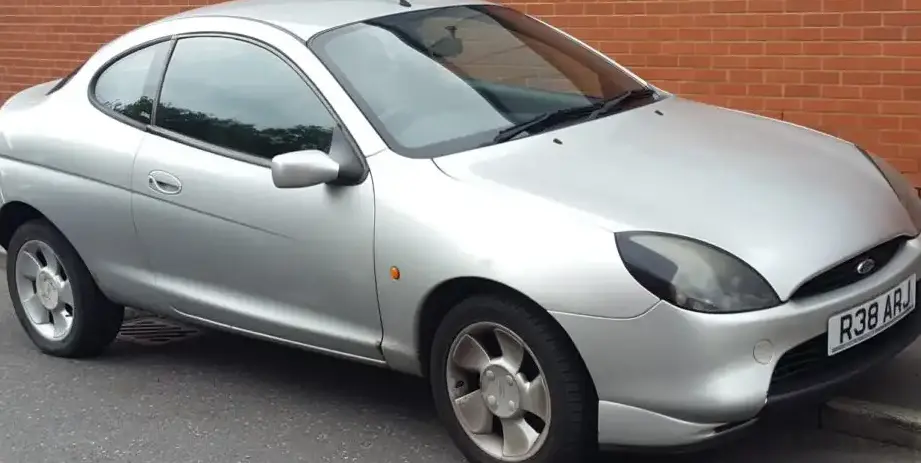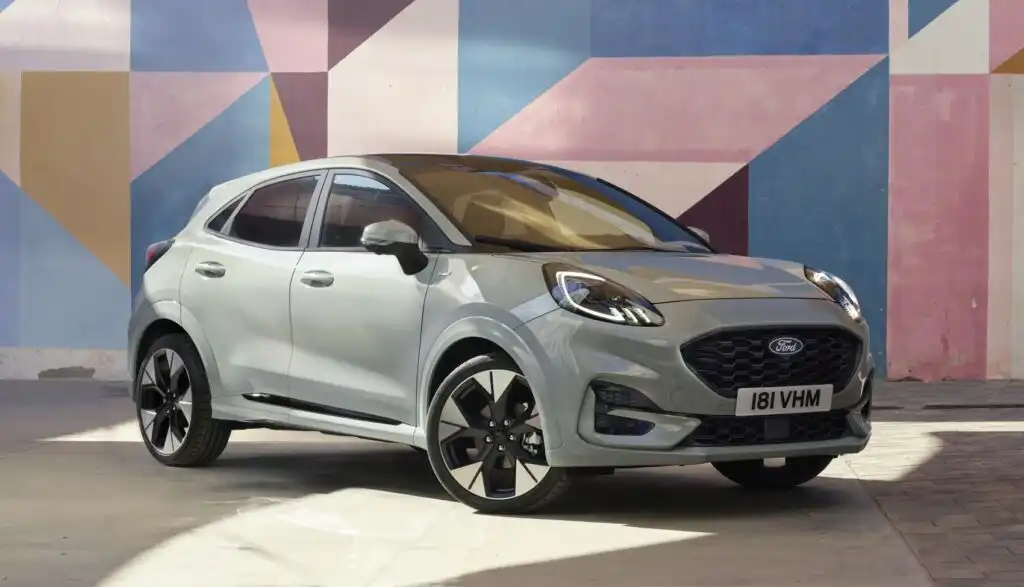
The Ford Puma 1.0 EcoBoost 125 hp Mild Hybrid, launched in September 2019 and produced through June 2020, represents an entry point into the revived Puma lineup. Positioned as a fuel-efficient and technologically modern subcompact SUV/crossover, it aimed to appeal to buyers seeking a practical and stylish vehicle with a degree of electrification. This variant was a key component of Ford’s strategy to introduce mild-hybrid technology across its European range, offering a balance between affordability and improved fuel economy. It falls within the broader Puma generation, built on the B2E platform, and served as a stepping stone to more powerful EcoBoost variants and, eventually, fully electric models.
Technical Specifications
| Brand | Ford |
| Model | Puma |
| Generation | Puma |
| Type (Engine) | 1.0 EcoBoost (125 Hp) Mild Hybrid |
| Start of production | September, 2019 |
| End of production | June, 2020 |
| Powertrain Architecture | MHEV (Mild Hybrid Electric Vehicle) |
| Body type | SUV, Crossover |
| Seats | 5 |
| Doors | 5 |
| Fuel consumption (urban) | 5 l/100 km (47 US mpg, 56.5 UK mpg, 20 km/l) |
| Fuel consumption (extra urban) | 4 l/100 km (58.8 US mpg, 70.6 UK mpg, 25 km/l) |
| Fuel consumption (combined) | 4.3 l/100 km (54.7 US mpg, 65.7 UK mpg, 23.3 km/l) |
| CO2 emissions | 99 g/km |
| Fuel Type | Petrol (Gasoline) |
| Acceleration 0 – 100 km/h | 9.8 sec |
| Acceleration 0 – 62 mph | 9.8 sec |
| Acceleration 0 – 60 mph | 9.3 sec |
| Maximum speed | 191 km/h (118.68 mph) |
| Emission standard | Euro 6d-TEMP-EVAP-ISC |
| Weight-to-power ratio | 9.6 kg/Hp |
| Weight-to-torque ratio | 5.7 kg/Nm |
| Electric motor power | 16 Hp |
| Power | 125 Hp @ 6000 rpm |
| Torque | 210 Nm @ 1750 rpm (154.89 lb.-ft. @ 1750 rpm) |
| Engine layout | Front, Transverse |
| Engine Model/Code | B7JA, B7JB |
| Number of cylinders | 3 |
| Engine configuration | Inline |
| Fuel injection system | Direct injection |
| Engine aspiration | Turbocharger, Intercooler |
| Engine oil capacity | 4.6 l (4.86 US qt, 4.05 UK qt) |
| Coolant capacity | 5.6 l (5.92 US qt, 4.93 UK qt) |
| Kerb Weight | 1205 kg (2656.57 lbs) |
| Max. weight | 1760-1765 kg (3880.14 – 3891.16 lbs) |
| Max load | 555-560 kg (1223.57 – 1234.59 lbs) |
| Trunk (boot) space – minimum | 468 l (16.53 cu. ft) |
| Trunk (boot) space – maximum | 1161 l (41 cu. ft) |
| Fuel tank capacity | 42 l (11.1 US gal, 9.24 UK gal) |
| Permitted trailer load with brakes (12%) | 1100 kg (2425.08 lbs) |
| Permitted trailer load without brakes | 640 kg (1410.96 lbs) |
| Permitted towbar download | 75 kg (165.35 lbs) |
| Length | 4207 mm (165.63 in) |
| Width | 1805 mm (71.06 in) |
| Width including mirrors | 1930 mm (75.98 in) |
| Height | 1537 mm (60.51 in) |
| Wheelbase | 2588 mm (101.89 in) |
| Minimum turning circle | 10.4 m (34.12 ft) |
| Drivetrain Architecture | Front wheel drive, MHEV |
| Drive wheel | Front wheel drive |
| Number of gears | 6 gears, manual transmission |
| Front brakes | Disc |
| Rear brakes | Disc |
| Assisting systems | ABS (Anti-lock braking system) |
| Tires size | 215/50 R18 |
| Wheel rims size | 7J x 18 |
Powertrain & Engine Architecture
The heart of the Puma 1.0 EcoBoost Mild Hybrid is the Ford EcoBoost 1.0-liter three-cylinder gasoline engine, specifically the B7JA or B7JB engine code. This engine utilizes a single-scroll turbocharger with direct fuel injection, contributing to its responsiveness and efficiency. The mild-hybrid system incorporates a 48-volt belt-driven integrated starter generator (BiSG). This BiSG acts as both a starter and a generator, allowing for regenerative braking – capturing energy normally lost during deceleration and storing it in a small 48-volt lithium-ion battery. This stored energy can then be used to assist the engine during acceleration, reducing the load on the engine and improving fuel economy. The engine’s valvetrain features variable camshaft timing (VCT) on both intake and exhaust sides, optimizing performance across the rev range. The six-speed manual transmission was standard, providing a relatively direct connection between the engine and the front wheels.
Driving Characteristics
The 125 hp EcoBoost Mild Hybrid Puma delivers a respectable, though not exhilarating, driving experience. Acceleration from 0-60 mph takes around 9.3 seconds, making it suitable for everyday commuting and urban driving. The mild-hybrid system provides a subtle boost during acceleration, smoothing out power delivery and reducing turbo lag. Compared to the more powerful 155 hp EcoBoost variant, this version feels less urgent, particularly when fully loaded or tackling steep inclines. The manual transmission offers precise shifts, but the gear ratios are tuned for fuel efficiency rather than outright performance. The BiSG system is largely transparent to the driver during normal operation, with the engine seamlessly switching between electric assist and conventional combustion. The overall driving experience is comfortable and refined, prioritizing practicality and fuel economy over sporty handling.
Equipment & Trim Levels
The 1.0 EcoBoost 125 hp Mild Hybrid Puma typically came equipped with a solid base level of features. Standard equipment included air conditioning, a Ford SYNC 3 infotainment system with an 8-inch touchscreen, Apple CarPlay and Android Auto compatibility, and a suite of driver-assistance technologies such as lane-keeping assist and pre-collision assist with pedestrian and cyclist detection. Interior upholstery was typically cloth, with a functional and durable design. Optional extras included a panoramic sunroof, heated front seats, a B&O premium sound system, and various styling packages. Trim levels varied slightly depending on the market, but generally offered progressive upgrades in terms of interior materials, exterior styling, and technology features.
Chassis & Braking
The Puma’s chassis is tuned for comfort and stability. The front suspension utilizes MacPherson struts, while the rear suspension employs a twist-beam setup. This configuration provides a good balance between ride quality and handling. Disc brakes are fitted on all four wheels, providing adequate stopping power for the vehicle’s weight and performance. Anti-lock Braking System (ABS) and Electronic Stability Control (ESC) are standard safety features. The suspension setup is generally softer than that of more performance-oriented vehicles, prioritizing ride comfort over sharp handling. Stabilizer bars are present on both axles, helping to reduce body roll during cornering.
Market Reception & Comparison
The Ford Puma 1.0 EcoBoost Mild Hybrid was generally well-received by automotive critics. It was praised for its fuel efficiency, comfortable ride, and well-equipped interior. However, some reviewers noted that the engine could feel strained when pushed hard, and the manual transmission, while competent, wasn’t particularly engaging. Compared to the 155 hp EcoBoost variant, the 125 hp version offered a more affordable entry point into the Puma range, but at the expense of performance. Against competitors like the Renault Captur and Peugeot 2008, the Puma offered a compelling combination of style, practicality, and technology. Its fuel economy figures were competitive within its segment, and the mild-hybrid system provided a tangible benefit in terms of reduced emissions.
Legacy
The Ford Puma 1.0 EcoBoost Mild Hybrid played a significant role in Ford’s transition towards electrification. It demonstrated the viability of mild-hybrid technology in a mainstream vehicle, paving the way for more advanced hybrid and electric models. The 1.0 EcoBoost engine itself has proven to be a reliable and durable unit, although regular maintenance is crucial. On the used car market, these Pumas represent a good value proposition, offering a well-rounded package with reasonable running costs. The mild-hybrid system, while not as impactful as a full hybrid, contributes to improved fuel economy and reduced emissions, making it an attractive option for environmentally conscious buyers.