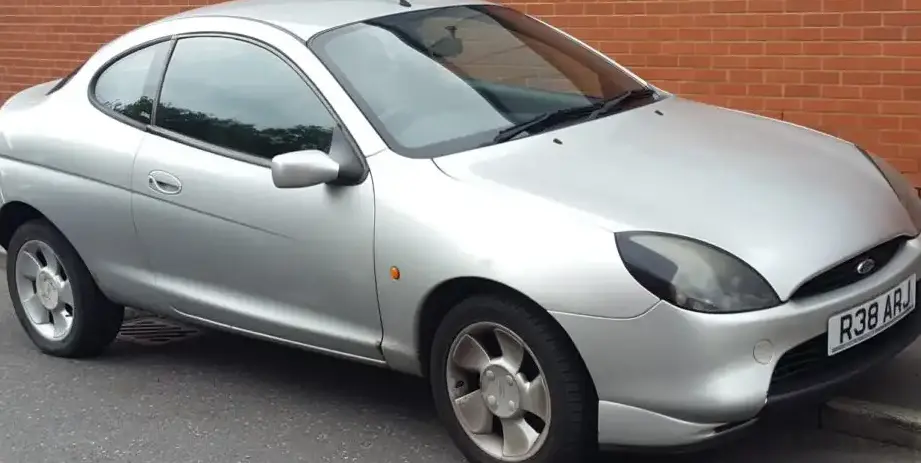
The Ford Puma Coupe, specifically the 1.4 16V variant producing 90 horsepower, represents an interesting chapter in Ford’s history of compact, sporty coupes. Produced from 1997 to 2003, this version of the Puma (internally designated ECT) occupied the entry-level position in the Coupe lineup, offering a more accessible price point than the higher-performance 1.7 and 1.8 models. It was primarily marketed in Europe as a stylish and affordable alternative to larger, more expensive coupes, appealing to younger drivers and those seeking a fun-to-drive, yet economical vehicle. The Puma Coupe itself was a unique offering, standing apart from Ford’s mainstream offerings with its distinctive New Edge design language.
Technical Specifications
| Brand | Ford |
| Model | Puma |
| Generation | Puma Coupe (ECT) |
| Type (Engine) | 1.4 16V (90 Hp) |
| Start of production | 1997 |
| End of production | 2003 |
| Powertrain Architecture | Internal Combustion engine |
| Body type | Coupe |
| Seats | 4 |
| Doors | 3 |
| Fuel consumption (urban) | 9.5 l/100 km (24.8 US mpg) |
| Fuel consumption (extra urban) | 5.9 l/100 km (39.9 US mpg) |
| Fuel Type | Petrol (Gasoline) |
| Acceleration 0 – 100 km/h | 11.9 sec |
| Acceleration 0 – 62 mph | 11.9 sec |
| Acceleration 0 – 60 mph | 11.3 sec |
| Maximum speed | 180 km/h (111.85 mph) |
| Weight-to-power ratio | 11.5 kg/Hp |
| Weight-to-torque ratio | 8.3 kg/Nm |
| Power | 90 Hp @ 5500 rpm |
| Power per litre | 64.8 Hp/l |
| Torque | 125 Nm @ 4500 rpm (92.2 lb.-ft. @ 4500 rpm) |
| Engine layout | Front, Transverse |
| Engine displacement | 1388 cm3 (84.7 cu. in.) |
| Number of cylinders | 4 |
| Engine configuration | Inline |
| Cylinder Bore | 76 mm (2.99 in.) |
| Piston Stroke | 76.5 mm (3.01 in.) |
| Compression ratio | 10.3:1 |
| Number of valves per cylinder | 4 |
| Fuel injection system | Multi-port manifold injection |
| Engine aspiration | Naturally aspirated engine |
| Valvetrain | DOHC |
| Kerb Weight | 1035 kg (2281.78 lbs.) |
| Max. weight | 1400 kg (3086.47 lbs.) |
| Max load | 365 kg (804.69 lbs.) |
| Trunk (boot) space – minimum | 240 l (8.48 cu. ft.) |
| Fuel tank capacity | 42 l (11.1 US gal | 9.24 UK gal) |
| Length | 3984 mm (156.85 in.) |
| Width | 1674 mm (65.91 in.) |
| Height | 1345 mm (52.95 in.) |
| Wheelbase | 2446 mm (96.3 in.) |
| Front track | 1450 mm (57.09 in.) |
| Rear (Back) track | 1411 mm (55.55 in.) |
| Drivetrain Architecture | Front wheel drive |
| Number of gears and type of gearbox | 5 gears, manual transmission |
| Front suspension | Spring Strut |
| Rear suspension | Coil spring |
| Front brakes | Ventilated discs |
| Rear brakes | Drum |
| Assisting systems | ABS (Anti-lock braking system) |
| Steering type | Steering rack and pinion |
| Power steering | Hydraulic Steering |
| Tires size | 195/50 R15 |
Powertrain & Engine Architecture
The heart of the 1.4 Puma Coupe is the Zetec-S engine, specifically the 1388cc inline-four cylinder unit. This engine, often referred to by its engine codes (typically HLD), features a double overhead camshaft (DOHC) valvetrain with four valves per cylinder, contributing to its relatively high specific output for its displacement. Fuel delivery is managed by a multi-port fuel injection system, providing precise fuel metering for improved efficiency and responsiveness. The engine’s 10.3:1 compression ratio further aids in maximizing power output. The 90 horsepower and 125 Nm (92.2 lb-ft) of torque are delivered at 5500 and 4500 rpm respectively. This engine was known for its willingness to rev, but also for its relatively narrow powerband. The standard transmission for this variant was a five-speed manual gearbox, although a four-speed automatic transmission was also offered, albeit less commonly. The automatic transmission, while providing convenience, did noticeably impact acceleration and fuel economy.
Driving Characteristics
The 1.4 Puma Coupe with the manual transmission offered a reasonably engaging driving experience. While not a performance car by any means, it was light and nimble, making it fun to drive on winding roads. The 0-60 mph time of around 11.3 seconds and a top speed of 111.85 mph were adequate for its intended market. The automatic transmission version, however, felt considerably slower and less responsive. The gear ratios were optimized for fuel economy rather than outright performance, resulting in a noticeable delay during acceleration. The suspension, while comfortable enough for everyday driving, wasn’t particularly sporty, leaning towards a more compliant ride quality. Steering was precise, but lacked significant feedback.
Equipment & Trim Levels
The 1.4 Puma Coupe typically came equipped with a reasonable level of standard features. This included power steering, central locking, electric front windows, and an adjustable steering column. Interior upholstery was typically cloth, with a relatively simple dashboard layout. Optional extras included air conditioning, alloy wheels, and a sunroof. The trim level was generally considered the base model, positioned below the 1.7 and 1.8 variants which offered more luxurious appointments and higher performance engines. The interior plastics, while durable, were not particularly high-quality, reflecting the car’s affordable price point.
Chassis & Braking
The Puma Coupe utilized a front-wheel-drive chassis with independent front suspension using MacPherson struts and a semi-independent coil spring rear suspension. The front brakes were ventilated discs, providing adequate stopping power, while the rear brakes were drums. This configuration was typical for cars in this weight class and price range during the late 1990s and early 2000s. ABS (Anti-lock Braking System) was standard, enhancing safety. The suspension setup prioritized ride comfort over handling precision, making it suitable for everyday driving conditions.
Market Reception & Comparison
The 1.4 Puma Coupe was generally well-received by critics as an affordable and stylish coupe. However, the 1.4 engine, particularly when paired with the automatic transmission, was often criticized for its lack of power. Compared to the 1.7 and 1.8 models, the 1.4 offered significantly less performance. The 1.7 offered a better balance of performance and economy, while the 1.8 provided a more exhilarating driving experience. Fuel economy for the 1.4 was respectable, averaging around 39.9 US mpg on the extra urban cycle. Reliability was generally good, although the automatic transmission was sometimes prone to issues.
Legacy
The Ford Puma Coupe, including the 1.4 16V variant, has developed a cult following among enthusiasts. The Zetec-S engine, while not the most powerful, is known for its durability and relative simplicity. Parts availability remains reasonably good, making it a relatively affordable classic car to maintain. The 1.4 automatic, while not the most desirable version, represents an accessible entry point into Puma ownership. Today, well-maintained examples of the 1.4 Puma Coupe are increasingly sought after by collectors and enthusiasts who appreciate its unique styling and affordable fun.