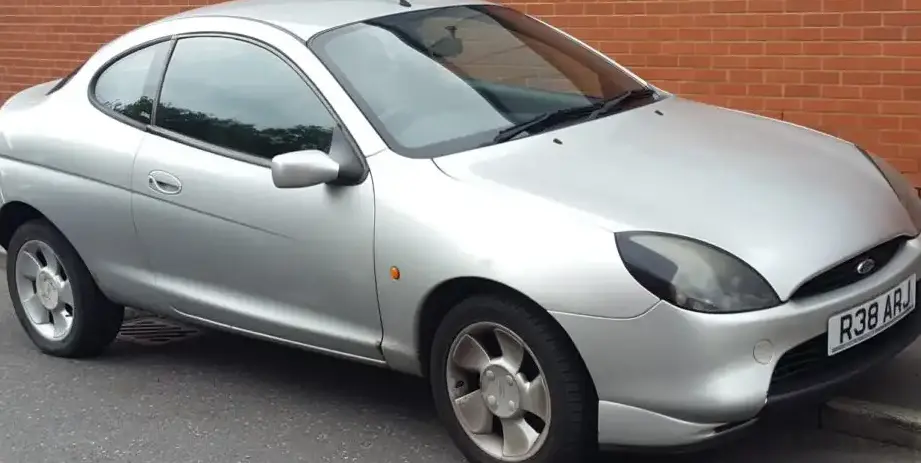
The Ford Puma Coupe, specifically the 1.6 i 16V (103 hp) variant produced between 2001 and 2003, represents a unique chapter in Ford’s European small car history. Positioned as a sporty coupe derivative of the larger Ford Fiesta platform (internally designated ECT), the Puma Coupe aimed to offer a more stylish and engaging driving experience than its hatchback sibling. This particular engine and transmission combination – the 1.6L Zetec-S engine paired with a manual 5-speed gearbox – served as a mid-range offering within the Puma Coupe lineup, bridging the gap between the base 1.4L model and the more potent 1.7L versions. It was primarily marketed towards younger drivers and those seeking a fashionable, affordable coupe.
Technical Specifications
| Brand | Ford |
| Model | Puma |
| Generation | Puma Coupe (ECT) |
| Type (Engine) | 1.6 i 16V (103 Hp) |
| Start of production | 2001 |
| End of production | 2003 |
| Powertrain Architecture | Internal Combustion engine |
| Body type | Coupe |
| Seats | 4 |
| Doors | 3 |
| Fuel consumption (urban) | 9.5 l/100 km (24.8 US mpg) |
| Fuel consumption (extra urban) | 6 l/100 km (39.2 US mpg) |
| Fuel Type | Petrol (Gasoline) |
| Acceleration 0 – 100 km/h | 10.4 sec |
| Acceleration 0 – 62 mph | 10.4 sec |
| Acceleration 0 – 60 mph | 9.9 sec |
| Maximum speed | 190 km/h (118.06 mph) |
| Weight-to-power ratio | 10 kg/Hp |
| Weight-to-torque ratio | 7.1 kg/Nm |
| Power | 103 Hp @ 6000 rpm |
| Torque | 145 Nm @ 4000 rpm (106.95 lb.-ft. @ 4000 rpm) |
| Engine layout | Front, Transverse |
| Engine Model/Code | L1W |
| Engine displacement | 1596 cm3 (97.39 cu. in.) |
| Number of cylinders | 4 |
| Engine configuration | Inline |
| Cylinder Bore | 79 mm (3.11 in.) |
| Piston Stroke | 81.4 mm (3.2 in.) |
| Compression ratio | 11:1 |
| Number of valves per cylinder | 4 |
| Fuel injection system | Multi-port manifold injection |
| Engine aspiration | Naturally aspirated engine |
| Valvetrain | DOHC |
| Engine oil capacity | 4.25 l (4.49 US qt | 3.74 UK qt) |
| Coolant capacity | 6 l (6.34 US qt | 5.28 UK qt) |
| Kerb Weight | 1035 kg (2281.78 lbs.) |
| Max. weight | 1400 kg (3086.47 lbs.) |
| Max load | 365 kg (804.69 lbs.) |
| Trunk (boot) space – minimum | 240 l (8.48 cu. ft.) |
| Trunk (boot) space – maximum | 725 l (25.6 cu. ft.) |
| Fuel tank capacity | 40 l (10.57 US gal | 8.8 UK gal) |
| Length | 3984 mm (156.85 in.) |
| Width | 1674 mm (65.91 in.) |
| Height | 1345 mm (52.95 in.) |
| Wheelbase | 2446 mm (96.3 in.) |
| Front track | 1450 mm (57.09 in.) |
| Rear track | 1411 mm (55.55 in.) |
| Drivetrain Architecture | Front wheel drive |
| Number of gears | 5 |
| Gearbox type | Manual transmission |
| Front suspension | Spring Strut |
| Rear suspension | Coil spring |
| Front brakes | Ventilated discs |
| Rear brakes | Disc |
| Assisting systems | ABS (Anti-lock braking system) |
| Steering type | Steering rack and pinion |
| Power steering | Hydraulic Steering |
| Tires size | 195/50 R15 |
Powertrain & Engine Architecture
The heart of this Puma Coupe variant is the Ford Zetec-S 1.6L inline-four cylinder engine, bearing the internal code L1W. This engine, a staple in many Ford models of the era, is known for its relatively simple yet effective design. It features a dual overhead camshaft (DOHC) valvetrain operating four valves per cylinder, contributing to its respectable power output for its displacement. Fuel delivery is managed by a multi-port fuel injection system, providing precise fuel metering for optimal combustion. The engine’s 103 horsepower at 6000 rpm and 145 Nm (107 lb-ft) of torque at 4000 rpm were considered adequate for the Puma Coupe’s weight, offering a balance between performance and fuel economy. The engine is transversely mounted, driving the front wheels through a smooth-shifting five-speed manual transmission. This transmission was chosen for its affordability and driver engagement, appealing to the target demographic.
Driving Characteristics
The 1.6L Puma Coupe offered a reasonably engaging driving experience, though it wasn’t a performance powerhouse. Acceleration from 0-60 mph took around 9.9 seconds, and top speed was approximately 118 mph. The engine felt responsive in the mid-range, making it suitable for everyday driving and occasional spirited runs. The five-speed manual transmission allowed drivers to keep the engine in its optimal power band. Compared to the 1.4L base model, the 1.6L provided noticeably more punch, while the higher-output 1.7L versions offered significantly greater performance. The Puma Coupe’s relatively lightweight construction and well-tuned suspension contributed to its nimble handling, making it enjoyable to drive on winding roads. The steering, while hydraulically assisted, lacked some of the feedback found in more focused sports coupes.
Equipment & Trim Levels
The 1.6L Puma Coupe typically came equipped with a reasonable level of standard features. Interior appointments included cloth upholstery, a basic stereo system, and power steering. Air conditioning was often an optional extra, as were alloy wheels and electric windows. The dashboard layout was functional and driver-focused, with clearly marked gauges and controls. Trim levels varied slightly depending on the market, but generally, the 1.6L model represented a step up from the base trim in terms of comfort and convenience features. Optional extras could include a sunroof, upgraded sound system, and metallic paint finishes.
Chassis & Braking
The Puma Coupe utilized a MacPherson strut front suspension and a coil spring rear suspension. This setup provided a good balance between ride comfort and handling. The front brakes were ventilated discs, offering good stopping power, while the rear brakes were solid discs. Anti-lock Braking System (ABS) was standard, enhancing safety. The chassis was relatively lightweight, contributing to the car’s agility. Stabilizer bars were fitted to both the front and rear axles to reduce body roll during cornering.
Market Reception & Comparison
The Ford Puma Coupe, and specifically the 1.6L variant, was generally well-received by automotive critics. It was praised for its stylish design, engaging handling, and affordability. However, some critics noted that the interior was somewhat basic and that the engine, while adequate, wasn’t particularly powerful. Compared to rivals like the Peugeot 206 CC and the Renault Megane Coupe, the Puma Coupe offered a more sporty driving experience but lacked some of the refinement of its competitors. Fuel economy was respectable for its class, and reliability was generally good, although some owners reported minor electrical issues.
Legacy
The Ford Puma Coupe, while discontinued in 2003, has gained a cult following among enthusiasts. The 1.6L Zetec-S engine is known for its durability and relatively straightforward maintenance. Parts availability remains reasonably good, making it a viable option for those seeking an affordable and stylish coupe. Today, well-maintained examples of the 1.6L Puma Coupe are sought after by collectors and enthusiasts who appreciate its unique blend of style, handling, and affordability. The Puma Coupe represents a distinctive period in Ford’s history, showcasing the company’s ability to create appealing and engaging small cars.