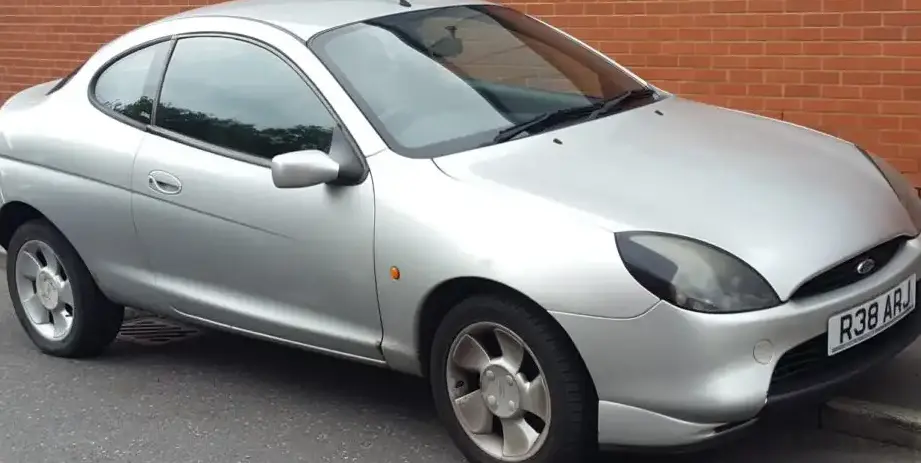
The Ford Puma Coupe, specifically the 1.7 16V variant produced between 1997 and 2003, represents a unique chapter in Ford’s history. Positioned as a sporty and affordable coupe, the Puma was primarily aimed at the European market, offering a stylish alternative to more mainstream hatchbacks. This particular engine and transmission combination – the 1.7 liter, 16-valve engine paired with a five-speed manual gearbox – served as a mid-range offering within the Puma lineup, bridging the gap between the base 1.4 liter model and the more potent 1.7 liter with increased horsepower. The Puma Coupe (ECT) was built on Ford’s aging but reliable platform, offering a blend of practicality and driving enjoyment.
Technical Specifications
| Brand | Ford |
| Model | Puma |
| Generation | Puma Coupe (ECT) |
| Type (Engine) | 1.7 16V (125 Hp) |
| Start of production | 1997 |
| End of production | 2003 |
| Powertrain Architecture | Internal Combustion engine |
| Body type | Coupe |
| Seats | 4 |
| Doors | 3 |
| Fuel consumption (urban) | 9.7 l/100 km (24.2 US mpg) |
| Fuel consumption (extra urban) | 6.1 l/100 km (38.6 US mpg) |
| Fuel consumption (combined) | 7.5 l/100 km (31.4 US mpg) |
| Fuel Type | Petrol (Gasoline) |
| Acceleration 0 – 100 km/h | 9.2 sec |
| Acceleration 0 – 62 mph | 9.2 sec |
| Acceleration 0 – 60 mph | 8.7 sec |
| Maximum speed | 203 km/h (126.14 mph) |
| Weight-to-power ratio | 8.3 kg/Hp |
| Weight-to-torque ratio | 6.6 kg/Nm |
| Power | 125 Hp @ 6300 rpm |
| Power per litre | 74.4 Hp/l |
| Torque | 157 Nm @ 4500 rpm (115.8 lb.-ft. @ 4500 rpm) |
| Engine layout | Front, Transverse |
| Engine displacement | 1679 cm3 (102.46 cu. in.) |
| Number of cylinders | 4 |
| Engine configuration | Inline |
| Cylinder Bore | 80 mm (3.15 in.) |
| Piston Stroke | 83.5 mm (3.29 in.) |
| Compression ratio | 10.3:1 |
| Number of valves per cylinder | 4 |
| Fuel injection system | Multi-port manifold injection |
| Engine aspiration | Naturally aspirated engine |
| Valvetrain | DOHC |
| Kerb Weight | 1040 kg (2292.81 lbs.) |
| Max. weight | 1400 kg (3086.47 lbs.) |
| Max load | 360 kg (793.66 lbs.) |
| Trunk (boot) space – minimum | 240 l (8.48 cu. ft.) |
| Fuel tank capacity | 42 l (11.1 US gal | 9.24 UK gal) |
| Length | 3984 mm (156.85 in.) |
| Width | 1674 mm (65.91 in.) |
| Height | 1345 mm (52.95 in.) |
| Wheelbase | 2446 mm (96.3 in.) |
| Front track | 1450 mm (57.09 in.) |
| Rear (Back) track | 1411 mm (55.55 in.) |
| Drivetrain Architecture | Front wheel drive |
| Number of gears and type of gearbox | 5 gears, manual transmission |
| Front suspension | Independent type McPherson |
| Rear suspension | Coil spring |
| Front brakes | Ventilated discs |
| Rear brakes | Drum |
| Assisting systems | ABS (Anti-lock braking system) |
| Steering type | Steering rack and pinion |
| Power steering | Hydraulic Steering |
| Tires size | 195/50 R15 |
Powertrain & Engine Architecture
The heart of the Puma Coupe 1.7 16V is the Ford Zetec-E engine, a 1.7-liter inline-four cylinder powerplant. This engine, designated with codes such as RHP, was a significant improvement over earlier Ford engines, featuring a double overhead camshaft (DOHC) design with four valves per cylinder. This configuration allowed for improved breathing and higher revs, contributing to the engine’s 125 horsepower output at 6300 rpm and 157 Nm (115.8 lb-ft) of torque at 4500 rpm. Fuel delivery is managed by a multi-port fuel injection system, providing precise fuel metering for optimal performance and efficiency. The engine’s relatively high compression ratio of 10.3:1 further enhances its power output. The five-speed manual transmission offered a good balance between acceleration and fuel economy, with gear ratios tailored to maximize the engine’s torque curve.
Driving Characteristics
The 1.7 16V Puma Coupe offered a surprisingly engaging driving experience. While not a high-performance machine, the engine provided adequate power for spirited driving, with a 0-60 mph time of around 8.7 seconds. The five-speed manual transmission allowed drivers to keep the engine in its sweet spot, maximizing acceleration. Compared to the base 1.4 liter model, the 1.7 offered a noticeable improvement in performance, particularly in mid-range acceleration. However, it didn’t possess the outright punch of the later, more powerful 1.7 liter versions. The Puma’s relatively lightweight construction contributed to its nimble handling, making it enjoyable on winding roads. The steering was precise and well-weighted, providing good feedback to the driver.
Equipment & Trim Levels
The Puma Coupe 1.7 16V typically came equipped with a reasonable level of standard features. Interior appointments included cloth upholstery, a basic stereo system, and power steering. Air conditioning was often an optional extra, as were features like alloy wheels and electric windows. Trim levels varied depending on the market, but generally, the 1.7 16V sat in the middle of the range, offering a step up in terms of performance and features compared to the entry-level models. The interior design was functional and relatively modern for its time, although it lacked the sophistication of some of its competitors.
Chassis & Braking
The Puma Coupe utilized a McPherson strut front suspension and a coil spring rear suspension. This setup provided a good balance between ride comfort and handling. The front brakes were ventilated discs, offering good stopping power, while the rear brakes were drums. Anti-lock Braking System (ABS) was standard, enhancing safety. The chassis was relatively lightweight, contributing to the car’s agility. Stabilizer bars were fitted to both the front and rear axles to reduce body roll during cornering.
Market Reception & Comparison
The Ford Puma Coupe was generally well-received by automotive critics. It was praised for its stylish design, engaging handling, and affordability. The 1.7 16V engine was considered a good compromise between performance and fuel economy. Compared to other coupes in its class, such as the Peugeot 306 Coupe or the Renault Megane Coupe, the Puma offered a more sporty driving experience. Fuel economy was respectable, averaging around 31.4 US mpg in combined driving. Reliability was generally good, although some owners reported minor issues with the electrical system.
Legacy
The Ford Puma Coupe, and specifically the 1.7 16V variant, has developed a loyal following among enthusiasts. The Zetec-E engine is known for its durability and tunability, making it a popular choice for modifications. Today, well-maintained examples of the Puma Coupe are becoming increasingly collectible. The car’s combination of style, affordability, and driving enjoyment has ensured its place in automotive history. While not a groundbreaking vehicle, the Puma Coupe represented a refreshing alternative in a market dominated by more conventional hatchbacks and sedans. The 1.7 16V engine, in particular, is regarded as a reliable and capable unit, contributing to the Puma’s enduring appeal in the used car market.