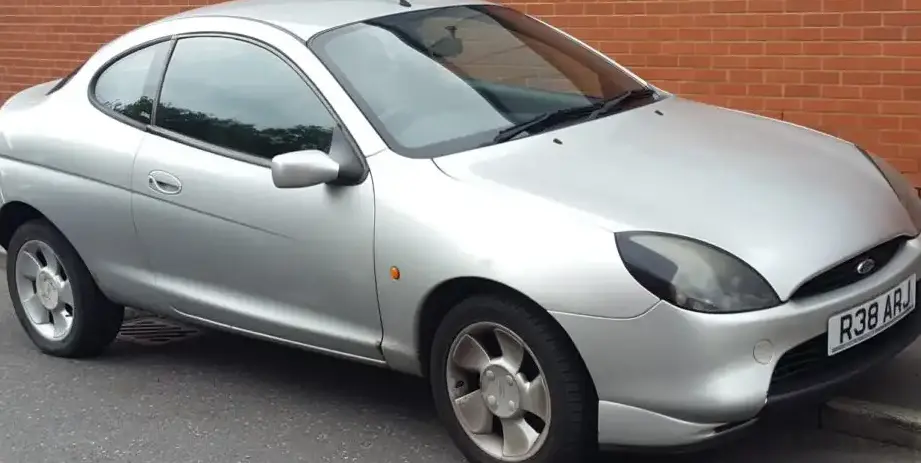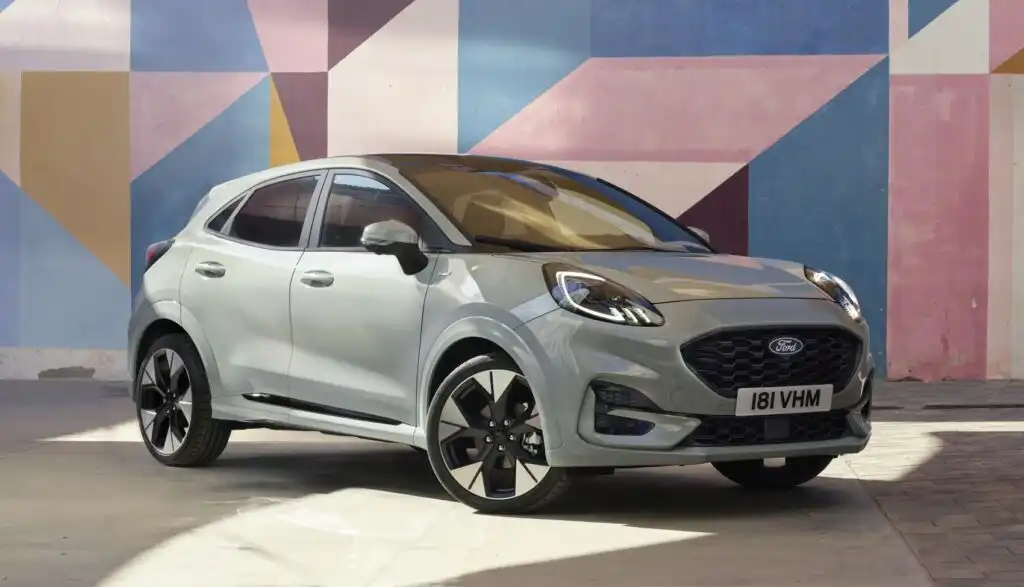
The Ford Puma, revived in 2019, represents Ford’s entry into the highly competitive subcompact SUV/crossover market in Europe. The 2024 facelift brought styling updates and technological enhancements, continuing the model’s focus on practicality and fuel efficiency. Among the engine options available, the 1.0 EcoBoost 125 hp Mild Hybrid variant occupies a significant position as a balance between affordability, performance, and economy. Production of this specific configuration began in February 2024, and it’s primarily aimed at buyers seeking a well-equipped and efficient crossover without the higher costs associated with more powerful engines or trim levels.
Technical Specifications
| Brand | Ford |
| Model | Puma |
| Generation | Puma (facelift 2024) |
| Type (Engine) | 1.0 EcoBoost (125 Hp) Mild Hybrid |
| Start of production | February, 2024 |
| Powertrain Architecture | MHEV (Mild Hybrid Electric Vehicle) |
| Body type | SUV, Crossover |
| Seats | 5 |
| Doors | 5 |
| Combined fuel consumption (WLTP) | 5.3-6 l/100 km (44.4 – 39.2 US mpg, 53.3 – 47.1 UK mpg, 18.9 – 16.7 km/l) |
| CO2 emissions (WLTP) | 119-135 g/km |
| Fuel Type | Petrol (Gasoline) |
| Acceleration 0 – 100 km/h | 9.8 sec |
| Acceleration 0 – 62 mph | 9.8 sec |
| Acceleration 0 – 60 mph | 9.3 sec |
| Maximum speed | 191 km/h (118.68 mph) |
| Emission standard | Euro 6d |
| Weight-to-power ratio | 9.9 kg/Hp, 100.7 Hp/tonne |
| Weight-to-torque ratio | 5.9 kg/Nm, 169.2 Nm/tonne |
| Battery voltage | 48 V |
| Battery technology | Lithium-ion (Li-Ion) |
| Battery location | Under the front seats |
| Electric motor power | 16 Hp |
| Electric motor location | Front, Transverse |
| Power | 125 Hp @ 6000 rpm |
| Power per litre | 125.1 Hp/l |
| Torque | 210 Nm @ 1750 rpm (154.89 lb.-ft. @ 1750 rpm) |
| Engine layout | Front, Transverse |
| Engine displacement | 999 cm3 (60.96 cu. in.) |
| Number of cylinders | 3 |
| Engine configuration | Inline |
| Cylinder Bore | 71.9 mm (2.83 in.) |
| Piston Stroke | 82 mm (3.23 in.) |
| Compression ratio | 10.5:1 |
| Number of valves per cylinder | 4 |
| Fuel injection system | Direct injection |
| Engine aspiration | Turbocharger, Intercooler |
| Valvetrain | DOHC, Ti-VCT |
| Engine systems | Start & Stop System, Particulate filter |
| Kerb Weight | 1241 kg (2735.94 lbs.) |
| Max. weight | 1785 kg (3935.25 lbs.) |
| Max load | 544 kg (1199.31 lbs.) |
| Trunk (boot) space – minimum | 456 l (16.1 cu. ft.) |
| Trunk (boot) space – maximum | 1216 l (42.94 cu. ft.) |
| Fuel tank capacity | 42 l (11.1 US gal | 9.24 UK gal) |
| Max. roof load | 50 kg (110.23 lbs.) |
| Permitted trailer load with brakes (12%) | 1100 kg (2425.08 lbs.) |
| Permitted trailer load without brakes | 640 kg (1410.96 lbs.) |
| Permitted towbar download | 75 kg (165.35 lbs.) |
| Length | 4186 mm (164.8 in.) |
| Width with mirrors folded | 1805 mm (71.06 in.) |
| Width including mirrors | 1930 mm (75.98 in.) |
| Height | 1550 mm (61.02 in.) |
| Wheelbase | 2588 mm (101.89 in.) |
| Front track | 1567 mm (61.69 in.) |
| Rear (Back) track | 1526 mm (60.08 in.) |
| Front overhang | 850 mm (33.46 in.) |
| Rear overhang | 748 mm (29.45 in.) |
| Ride height (ground clearance) | 163 mm (6.42 in.) |
| Minimum turning circle (turning diameter) | 10.4 m (34.12 ft.) |
| Approach angle | 17.5° |
| Departure angle | 26.6° |
| Drivetrain Architecture | ICE and electric motor drive the front wheels in mixed mode. |
| Drive wheel | Front wheel drive |
| Number of gears and type of gearbox | 6 gears, manual transmission |
| Front suspension | Independent, McPherson with coil spring and anti-roll bar |
| Rear suspension | Coil spring, Elastic beam |
| Front brakes | Ventilated discs, 278×25 mm |
| Rear brakes | Drum, 228×40 mm |
| Assisting systems | ABS (Anti-lock braking system) |
| Steering type | Steering rack and pinion |
| Power steering | Electric Steering |
| Tires size | 215/55 R17; 215/50 R18; 225/40 R19 |
| Wheel rims size | 7J x 17; 7J x 18; 7.5J x 19 |
INTRODUCTION
The 2024 Ford Puma 1.0 EcoBoost 125 hp Mild Hybrid is a front-wheel-drive subcompact SUV positioned as a mainstream offering within the Puma lineup. It builds upon the foundation of the Puma platform (developed from the Ford B-segment vehicle architecture), which also underpins the Fiesta. Introduced as part of the facelift, this variant aims to provide a compelling blend of fuel efficiency, reasonable performance, and modern features. The mild-hybrid system is a key component, contributing to reduced emissions and improved fuel economy without the complexity or cost of a full hybrid powertrain. This trim level typically serves as a sweet spot for buyers prioritizing value and practicality.
Powertrain & Engine Architecture
At the heart of this Puma variant lies the Ford 1.0 EcoBoost engine, specifically the three-cylinder turbocharged unit. This engine, known internally by codes such as M1DA, is a member of the EcoBoost family, renowned for its combination of small displacement, turbocharging, and direct fuel injection. The 125 hp version utilizes a single scroll turbocharger and direct injection to deliver a balance of power and efficiency. The mild-hybrid system incorporates a 48-volt electrical architecture and a belt-driven integrated starter generator (BISG). This BISG allows for regenerative braking, capturing energy during deceleration and storing it in a small lithium-ion battery (located under the front seats) to provide a power boost during acceleration and enable extended start-stop functionality. The engine features a DOHC (Double Overhead Camshaft) valvetrain with Ti-VCT (Twin Independent Variable Camshaft Timing), optimizing valve timing for improved performance and fuel economy. The standard transmission is a 6-speed manual gearbox, carefully geared to maximize the engine’s torque output and provide acceptable acceleration.
Driving Characteristics
The 1.0 EcoBoost 125 hp Puma offers a generally pleasant driving experience, particularly in urban and suburban environments. While not a performance-oriented vehicle, the turbocharger provides a noticeable boost in power when needed, making overtaking and merging onto highways manageable. The 9.8-second 0-62 mph acceleration time reflects its modest power output. The manual transmission is well-matched to the engine, with gear ratios designed to keep the engine within its optimal torque band. Compared to higher-output Puma variants (like the 155 hp version), this model feels less eager to accelerate, but it compensates with improved fuel economy. The mild-hybrid system provides a subtle but noticeable assist during acceleration, smoothing out power delivery. The steering is light and precise, making it easy to maneuver in tight spaces. Overall, the driving experience is geared towards comfort and efficiency rather than outright sportiness.
Equipment & Trim Levels
The 1.0 EcoBoost 125 hp Mild Hybrid Puma typically comes equipped with a respectable level of standard features. These generally include air conditioning, a touchscreen infotainment system with Apple CarPlay and Android Auto compatibility, Ford’s SYNC 3 system, alloy wheels, and a suite of driver-assistance technologies such as lane-keeping assist and automatic emergency braking. Interior upholstery is typically cloth, with options for upgraded materials available. Higher trim levels within the Puma range (Titanium, ST-Line) add features like larger alloy wheels, a digital instrument cluster, a panoramic sunroof, and more premium interior trim. Optional extras for this variant often include parking sensors, a rear-view camera, and a premium sound system.
Chassis & Braking
The Puma’s chassis utilizes a McPherson strut front suspension and an elastic beam rear suspension. This setup provides a good balance between ride comfort and handling. The front suspension incorporates a stabilizer bar to reduce body roll during cornering. Braking duties are handled by ventilated discs at the front and drum brakes at the rear. ABS (Anti-lock Braking System) is standard, providing enhanced braking performance and stability. The relatively lightweight nature of the vehicle contributes to its agility and responsiveness. The suspension tuning is geared towards providing a comfortable ride, absorbing bumps and imperfections in the road surface effectively.
Market Reception & Comparison
The Ford Puma, and specifically the 1.0 EcoBoost 125 hp Mild Hybrid variant, has been well-received in the European market. Critics have praised its fuel efficiency, practicality, and stylish design. Compared to other subcompact SUVs like the Renault Captur, Peugeot 2008, and Volkswagen T-Cross, the Puma offers a competitive combination of features and value. The mild-hybrid system gives it an edge in terms of fuel economy and emissions. The 125 hp engine strikes a good balance between performance and running costs, making it an attractive option for buyers who don’t require the extra power of the higher-output variants. Reliability reports suggest that the EcoBoost engine is generally reliable, although regular maintenance is crucial to ensure optimal performance.
Legacy
The 1.0 EcoBoost engine has become a mainstay in Ford’s lineup, and its continued use in the Puma demonstrates its versatility and efficiency. The mild-hybrid technology represents a step towards electrification, helping Ford meet increasingly stringent emissions regulations. In the used car market, the 2024 Puma 1.0 EcoBoost 125 hp Mild Hybrid is expected to hold its value reasonably well, thanks to its fuel efficiency, practicality, and the growing demand for crossovers. The long-term reliability of the powertrain is expected to be good, provided that the vehicle receives regular servicing and maintenance. This variant represents a practical and efficient choice for buyers seeking a well-rounded subcompact SUV.