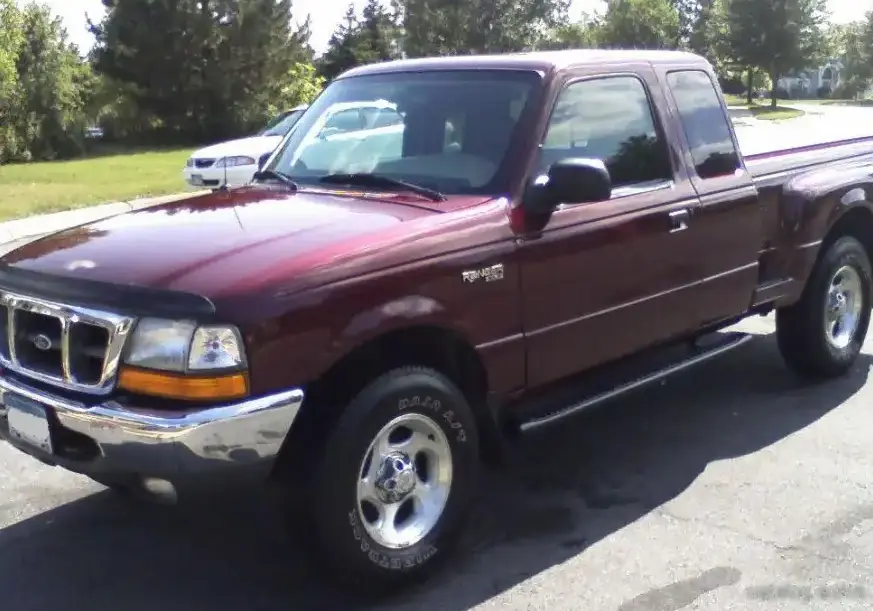
The Ford Ranger I Double Cab 2.5 TDCi 4×4 Automatic, produced between 1998 and 2006, represents a significant iteration of Ford’s globally successful Ranger compact pickup truck. This particular variant was primarily aimed at the European and Australian markets, offering a blend of practicality, off-road capability, and a more comfortable, family-oriented double-cab configuration. It slotted into the Ranger lineup as a mid-range offering, providing a balance between the more basic work-oriented models and the higher-specification trims. The Ranger I series, based on the global Ford P1 platform, was a crucial model for Ford, establishing a strong presence in the burgeoning compact pickup segment.
Technical Specifications
| Brand | Ford |
| Model | Ranger |
| Generation | Ranger I Double Cab |
| Type | 2.5 TDCi (109 Hp) 4×4 Automatic |
| Start of production | 1998 |
| End of production | 2006 |
| Powertrain Architecture | Internal Combustion engine |
| Body type | Pick-up |
| Seats | 5 |
| Doors | 4 |
| Fuel Type | Diesel |
| Maximum speed | 145 km/h (90.1 mph) |
| Power | 109 Hp @ 3500 rpm |
| Power per litre | 43.6 Hp/l |
| Torque | 266 Nm @ 2000 rpm (196.19 lb.-ft. @ 2000 rpm) |
| Engine layout | Front, Longitudinal |
| Engine Model/Code | WL-T |
| Engine displacement | 2499 cm3 (152.5 cu. in.) |
| Number of cylinders | 4 |
| Engine configuration | Inline |
| Cylinder Bore | 93 mm (3.66 in.) |
| Piston Stroke | 92 mm (3.62 in.) |
| Number of valves per cylinder | 3 |
| Fuel injection system | Diesel Commonrail |
| Engine aspiration | Turbocharger, Intercooler |
| Engine oil capacity | 6.3 l (6.66 US qt | 5.54 UK qt) |
| Coolant | 9.4 l (9.93 US qt | 8.27 UK qt) |
| Max. weight | 2825 kg (6228.06 lbs.) |
| Fuel tank capacity | 70 l (18.49 US gal | 15.4 UK gal) |
| Length | 5020 mm (197.64 in.) |
| Width | 1695 mm (66.73 in.) |
| Height | 1750 mm (68.9 in.) |
| Wheelbase | 3000 mm (118.11 in.) |
| Front track | 1430 mm (56.3 in.) |
| Rear track | 1420 mm (55.91 in.) |
| Ride height (ground clearance) | 200 mm (7.87 in.) |
| Drive wheel | All wheel drive (4×4) |
| Number of gears and type of gearbox | 5 gears, automatic transmission |
| Front suspension | Independent torsion bar, double wishbone |
| Rear suspension | Dependent suspension of two longitudinal semi-elliptic leaf springs |
| Front brakes | Ventilated discs |
| Rear brakes | Drum |
| Assisting systems | ABS (Anti-lock braking system) |
| Steering type | Steering rack and pinion |
| Tires size | 235/75 R15 |
| Wheel rims size | 15 |
Powertrain & Engine Architecture
The heart of the Ranger I Double Cab 2.5 TDCi Automatic is the WL-T 2.5-liter inline-four cylinder diesel engine. This engine, a product of Ford’s collaboration with PSA Peugeot Citroën, utilized a direct injection common rail system, a significant advancement over earlier diesel designs. The common rail system allowed for more precise fuel delivery, resulting in improved fuel efficiency, reduced emissions, and a quieter engine operation. The engine featured a turbocharger with an intercooler, boosting power output to 109 horsepower at 3500 rpm and 266 Nm (196 lb-ft) of torque at 2000 rpm. The automatic transmission was a five-speed unit, chosen for its ease of use and suitability for both on-road and off-road driving. While not known for blistering acceleration, the transmission was generally reliable and provided smooth shifts.
Driving Characteristics
The 2.5 TDCi Automatic Ranger Double Cab offered a comfortable, if not particularly sporty, driving experience. The automatic transmission, while convenient, did slightly diminish the engine’s responsiveness compared to the available manual transmission. Acceleration was adequate for everyday driving, but overtaking maneuvers required careful planning. The 4×4 system, selectable via a rotary dial, provided enhanced traction on loose surfaces, making it a capable off-road vehicle. The suspension, featuring independent torsion bars at the front and leaf springs at the rear, provided a reasonable ride quality, although the rear suspension could feel somewhat stiff when unladen. The gear ratios were optimized for torque delivery, making it well-suited for hauling loads or navigating challenging terrain.
Equipment & Trim Levels
The Ranger I Double Cab 2.5 TDCi Automatic typically came equipped with features such as air conditioning, power steering, central locking, and an AM/FM radio. Higher trim levels offered options like alloy wheels, upgraded interior upholstery, and a more comprehensive audio system. The double-cab configuration provided seating for five passengers, making it a practical choice for families or work crews. Interior materials were generally durable and functional, reflecting the truck’s work-oriented origins. Safety features included ABS brakes, although airbags were not standard equipment on all models.
Chassis & Braking
The Ranger I Double Cab utilized a body-on-frame construction, providing a robust and durable chassis. The front suspension employed independent torsion bars and double wishbones, offering a degree of ride comfort and handling precision. The rear suspension, consisting of two longitudinal semi-elliptic leaf springs, was designed to handle heavier loads. The braking system featured ventilated discs at the front and drum brakes at the rear. While adequate for most driving conditions, the rear drum brakes were a point of criticism compared to the all-disc setups found on some competitors.
Market Reception & Comparison
The Ranger I Double Cab 2.5 TDCi Automatic was generally well-received in its target markets. Critics praised its practicality, off-road capability, and comfortable double-cab configuration. However, the automatic transmission was sometimes criticized for its slightly sluggish performance compared to the manual gearbox. Compared to other trims in the Ranger lineup, such as the higher-output 2.5 TDCi versions, the 109 hp variant offered a more economical option, appealing to buyers who prioritized fuel efficiency and ease of driving over outright performance. It also offered a more affordable entry point into the Ranger Double Cab range.
Legacy
The Ford Ranger I Double Cab 2.5 TDCi Automatic has proven to be a relatively reliable vehicle, with many examples still on the road today. The WL-T engine, while not without its quirks, is generally considered durable and capable of high mileage with proper maintenance. Common issues include wear and tear on the turbocharger and potential problems with the fuel injection system. In the used car market, these Rangers are often sought after for their practicality, affordability, and off-road capability. They represent a solid choice for buyers looking for a dependable and versatile pickup truck, though potential buyers should be aware of the age-related maintenance requirements.