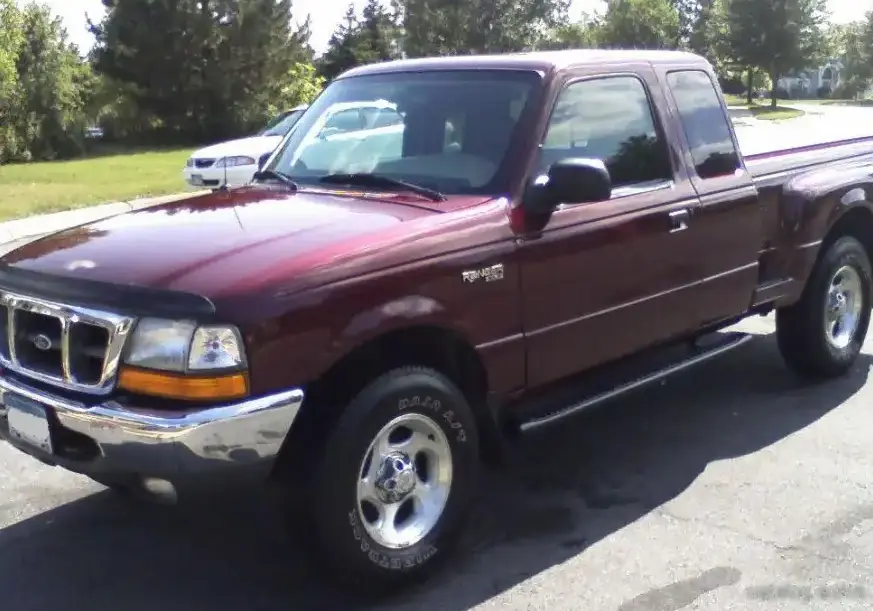
The Ford Ranger I Super Cab 2.3, produced from 2001 to 2006, represented a key offering in Ford’s compact pickup truck lineup. Positioned as a versatile and affordable option, this variant served as a popular choice for both personal and commercial use in North America. It was part of the first generation of the Ranger, which underwent several updates during its production run, and the Super Cab configuration offered extended passenger space compared to the standard cab models. This particular 2.3-liter engine and five-speed manual transmission combination aimed to balance fuel efficiency with adequate power for everyday tasks.
Technical Specifications
| Brand | Ford |
| Model | Ranger |
| Generation | Ranger I Super Cab |
| Type (Engine) | 2.3 (143 Hp) |
| Start of production | 2001 |
| End of production | 2006 |
| Powertrain Architecture | Internal Combustion engine |
| Body type | Pick-up |
| Seats | 4 |
| Doors | 2 |
| Fuel Type | Petrol (Gasoline) |
| Weight-to-power ratio | 9.8 kg/Hp, 102.4 Hp/tonne |
| Weight-to-torque ratio | 6.7 kg/Nm, 149.6 Nm/tonne |
| Power | 143 Hp @ 5250 rpm |
| Power per litre | 63.4 Hp/l |
| Torque | 209 Nm @ 3750 rpm (154.15 lb.-ft. @ 3750 rpm) |
| Engine layout | Front, Longitudinal |
| Engine displacement | 2255 cm3 (137.61 cu. in.) |
| Number of cylinders | 4 |
| Engine configuration | Inline |
| Number of valves per cylinder | 4 |
| Fuel injection system | Multi-port manifold injection |
| Engine aspiration | Naturally aspirated engine |
| Engine oil capacity | 3.8 l (4.02 US qt | 3.34 UK qt) |
| Kerb Weight | 1397 kg (3079.86 lbs) |
| Max. weight | 1969 kg (4340.9 lbs) |
| Max load | 572 kg (1261.04 lbs) |
| Fuel tank capacity | 62 l (16.38 US gal | 13.64 UK gal) |
| Length | 4763 mm (187.52 in) |
| Width | 1786 mm (70.31 in) |
| Height | 1648 mm (64.88 in) |
| Wheelbase | 2835 mm (111.61 in) |
| Front track | 1488 mm (58.58 in) |
| Rear (Back) track | 1455 mm (57.28 in) |
| Drivetrain Architecture | The Internal combustion engine (ICE) drives the rear wheels of the vehicle. |
| Drive wheel | Rear wheel drive |
| Number of gears and type of gearbox | 5 gears, manual transmission |
| Front suspension | Independent torsion bar, double wishbone |
| Rear suspension | Dependent suspension of two longitudinal semi-elliptic leaf springs |
| Front brakes | Disc |
| Rear brakes | Drum |
| Assisting systems | ABS (Anti-lock braking system) |
| Steering type | Steering rack and pinion |
| Tires size | 225/70 R15 |
| Wheel rims size | 15 |
Powertrain & Engine Architecture
The heart of the Ranger I Super Cab 2.3 was the 2.3-liter inline-four cylinder engine. This engine, internally designated as the 2.3L Duratec, was a relatively simple and robust design. It featured a cast iron block and an aluminum cylinder head, utilizing a single overhead camshaft (SOHC) design with four valves per cylinder. Fuel delivery was managed by a multi-port fuel injection system, providing adequate atomization for efficient combustion. The engine produced 143 horsepower at 5250 rpm and 209 Nm (154.15 lb-ft) of torque at 3750 rpm. This output was considered sufficient for typical light-duty pickup truck tasks, such as hauling smaller loads and commuting. The engine’s longitudinal mounting allowed for a rear-wheel-drive configuration, which was standard for the Ranger.
The five-speed manual transmission paired with the 2.3L engine offered a relatively direct driving experience. Gear ratios were tuned for a balance of acceleration and fuel economy. While not particularly sporty, the transmission was durable and reliable. The rear-wheel-drive layout contributed to the truck’s simplicity and lower weight, enhancing its overall efficiency.
Driving Characteristics
The Ranger I Super Cab 2.3 with the five-speed manual transmission provided a functional, if not exhilarating, driving experience. Acceleration was adequate for most situations, but the engine lacked the low-end grunt of larger displacement engines. The five-speed manual allowed drivers to keep the engine in its optimal power band, but frequent shifting was often required, especially when climbing hills or carrying a load. Compared to the optional 3.0-liter V6 engine, the 2.3L felt noticeably less powerful. However, the 2.3L offered better fuel economy and a lighter front end, which improved handling and steering feel. The rear leaf spring suspension provided a comfortable ride when unloaded, but could become harsh when the bed was heavily loaded.
Equipment & Trim Levels
The Ranger I Super Cab 2.3 typically came with a fairly basic level of standard equipment. This included features like air conditioning, an AM/FM radio, and cloth upholstery. The Super Cab configuration offered extended rear seating, providing more passenger space than the standard cab. Optional extras included power windows and locks, a CD player, and upgraded interior trim. The 2.3L trim generally represented the entry-level offering in the Super Cab lineup, making it an attractive option for budget-conscious buyers. Higher trim levels, such as the XLT and Edge, offered more luxurious features and were typically paired with the more powerful V6 engine.
Chassis & Braking
The Ranger I Super Cab utilized a body-on-frame construction, providing a robust and durable platform. The front suspension consisted of an independent torsion bar setup with double wishbone components, offering a reasonable level of ride comfort and handling. The rear suspension employed a traditional leaf spring design, which was well-suited for carrying loads. Braking duties were handled by disc brakes at the front and drum brakes at the rear. An anti-lock braking system (ABS) was available as an option, enhancing safety and control during emergency braking situations. The steering system utilized a rack-and-pinion setup, providing precise and responsive steering feel.
Market Reception & Comparison
The Ford Ranger I Super Cab 2.3 was generally well-received by critics and consumers alike. It was praised for its affordability, versatility, and reliability. However, some reviewers noted that the 2.3L engine lacked the power and refinement of larger engines. Compared to the V6-powered Rangers, the 2.3L offered better fuel economy, achieving around 18-22 mpg in combined driving. The 2.3L also had a lower purchase price, making it an attractive option for buyers on a budget. In terms of reliability, the 2.3L Duratec engine proved to be a durable and long-lasting powerplant, with relatively few reported issues.
Legacy
The Ford Ranger I Super Cab 2.3 has become a popular choice among used car buyers, particularly those seeking an affordable and reliable pickup truck. The 2.3L Duratec engine is known for its longevity and relatively low maintenance costs. While not as powerful or refined as some of its competitors, the Ranger I Super Cab 2.3 remains a capable and versatile vehicle. Its simple design and readily available parts make it an easy truck to maintain and repair. Today, well-maintained examples of the Ranger I Super Cab 2.3 can still be found on the road, serving as a testament to its durability and enduring appeal.