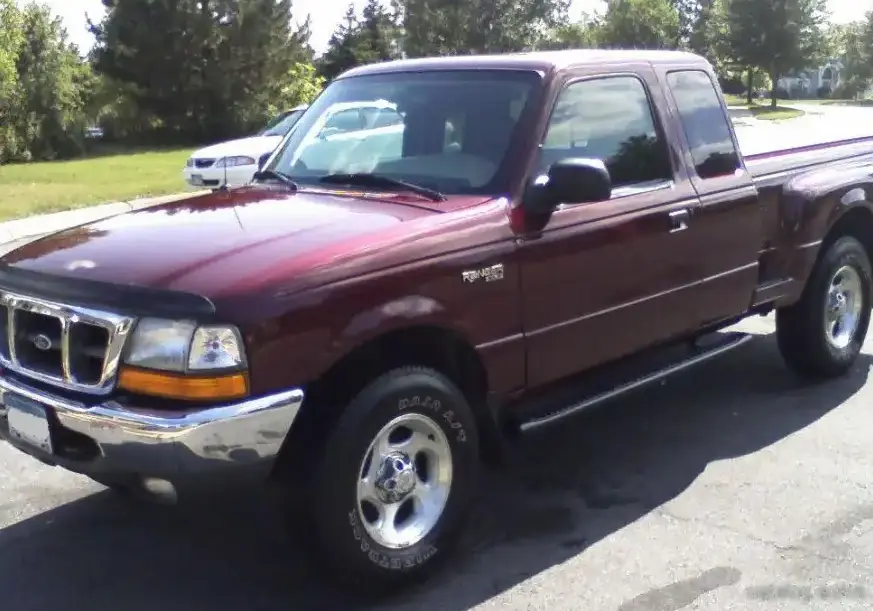
The Ford Ranger I Super Cab 2.5 TDCi Automatic, produced from 1998 to 2006, was a significant offering in the mid-size pickup truck segment, particularly in European and Australian markets. This variant, powered by the WL-T 2.5-liter turbocharged diesel engine paired with a five-speed automatic transmission, aimed to provide a balance of utility, comfort, and fuel efficiency. It occupied a middle ground within the Ranger I Super Cab lineup, positioned below the more powerful 3.0-liter TDCi models and above the base 2.5-liter non-turbocharged options. The Super Cab configuration, offering limited rear seating, broadened the Ranger’s appeal to both commercial and family users.
Technical Specifications
| Brand | Ford |
| Model | Ranger |
| Generation | Ranger I Super Cab |
| Type (Engine) | 2.5 TDCi (109 Hp) Automatic |
| Start of production | 1998 |
| End of production | 2006 |
| Powertrain Architecture | Internal Combustion engine |
| Body type | Pick-up |
| Seats | 4 |
| Doors | 2 |
| Fuel Type | Diesel |
| Power | 109 Hp @ 3500 rpm |
| Power per litre | 43.6 Hp/l |
| Torque | 266 Nm @ 2000 rpm (196.19 lb.-ft. @ 2000 rpm) |
| Engine layout | Front, Longitudinal |
| Engine Model/Code | WL-T |
| Engine displacement | 2499 cm3 (152.5 cu. in.) |
| Number of cylinders | 4 |
| Engine configuration | Inline |
| Cylinder Bore | 93 mm (3.66 in.) |
| Piston Stroke | 92 mm (3.62 in.) |
| Number of valves per cylinder | 3 |
| Fuel injection system | Diesel Commonrail |
| Engine aspiration | Turbocharger, Intercooler |
| Engine oil capacity | 6.3 l (6.66 US qt | 5.54 UK qt) |
| Coolant | 9.4 l (9.93 US qt | 8.27 UK qt) |
| Max. weight | 2087 kg (4601.05 lbs.) |
| Fuel tank capacity | 70 l (18.49 US gal | 15.4 UK gal) |
| Length | 4998 mm (196.77 in.) |
| Width | 1695 mm (66.73 in.) |
| Height | 1740 mm (68.5 in.) |
| Wheelbase | 3000 mm (118.11 in.) |
| Front track | 1450 mm (57.09 in.) |
| Rear (Back) track | 1440 mm (56.69 in.) |
| Ride height (ground clearance) | 200 mm (7.87 in.) |
| Drivetrain Architecture | Rear wheel drive |
| Number of gears and type of gearbox | 5 gears, automatic transmission |
| Front suspension | Independent torsion bar, double wishbone |
| Rear suspension | Dependent suspension of two longitudinal semi-elliptic leaf springs |
| Front brakes | Ventilated discs |
| Rear brakes | Drum |
| Assisting systems | ABS (Anti-lock braking system) |
| Steering type | Steering rack and pinion |
| Tires size | 235/75 R15 |
| Wheel rims size | 15 |
Powertrain & Engine Architecture
The heart of this Ranger variant is the Ford WL-T 2.5-liter inline-four cylinder diesel engine. This engine utilized a direct injection common rail system, a significant advancement over older diesel injection technologies. The common rail system allowed for higher injection pressures and more precise fuel delivery, resulting in improved combustion efficiency, reduced noise, and increased power output. A turbocharger with an intercooler further enhanced performance by forcing more air into the cylinders. The engine featured three valves per cylinder (two intake, one exhaust), contributing to improved breathing and torque characteristics. The five-speed automatic transmission, while providing convenience, was a conventional hydraulic unit, not offering the quick shifting or fuel efficiency of modern electronically controlled automatics. It was chosen for its robustness and suitability for the truck’s intended workload.
Driving Characteristics
The 109 horsepower and 266 Nm (196 lb-ft) of torque delivered by the 2.5 TDCi engine, when coupled with the automatic transmission, resulted in a driving experience focused on usability rather than outright performance. Acceleration was adequate for everyday driving and moderate towing, but it lacked the responsiveness of the higher-output 3.0-liter TDCi models or even the manual transmission versions of the 2.5 TDCi. The automatic transmission’s gear ratios were geared towards maximizing fuel economy and providing smooth shifts, sometimes at the expense of immediate power delivery. Uphill climbs, especially when loaded, required the transmission to downshift frequently, and passing maneuvers needed careful planning. Compared to the manual transmission, the automatic offered less engine braking, which could be a consideration when descending steep hills with a load.
Equipment & Trim Levels
The 2.5 TDCi Automatic Super Cab typically came with a reasonable level of standard equipment. This included power steering, central locking, an AM/FM radio, and basic interior trim. Air conditioning was often an optional extra, as were power windows and upgraded audio systems. The interior generally featured durable, hard-wearing plastics and cloth upholstery. Higher trim levels, if available, might have added features like alloy wheels, a more comprehensive instrument cluster, and improved interior finishes. The Super Cab configuration offered limited rear seating, best suited for occasional passengers or short trips. The bed liner was a popular factory or dealer-installed option, protecting the cargo area from damage.
Chassis & Braking
The Ranger I Super Cab utilized a body-on-frame construction, providing a robust and durable platform for hauling and towing. The front suspension consisted of an independent torsion bar setup with double wishbones, offering a reasonable level of ride comfort and handling. The rear suspension employed a traditional leaf spring arrangement, prioritizing load-carrying capacity over refinement. Braking duties were handled by ventilated discs at the front and drum brakes at the rear. ABS (Anti-lock Braking System) was standard, enhancing safety during emergency braking situations. The steering system was a rack and pinion setup, providing precise and responsive steering feel.
Market Reception & Comparison
The Ford Ranger I Super Cab 2.5 TDCi Automatic was generally well-received as a practical and reliable workhorse. Critics acknowledged its fuel efficiency and comfortable ride, but noted its lack of outright performance compared to its more powerful siblings. The automatic transmission was seen as a convenience feature, but some reviewers preferred the greater control and fuel economy offered by the manual gearbox. Compared to the 3.0-liter TDCi models, the 2.5 TDCi Automatic offered a lower purchase price and better fuel economy, making it an attractive option for buyers who didn’t require maximum towing capacity or performance. The 2.5 TDCi manual transmission version provided a better balance of performance and fuel economy, appealing to drivers who preferred a more engaging driving experience.
Legacy
The Ford Ranger I Super Cab 2.5 TDCi Automatic has proven to be a relatively durable and reliable vehicle, particularly when properly maintained. The WL-T engine, while not without its quirks, is generally considered robust. Common issues include wear and tear on the turbocharger, potential fuel injector problems, and occasional issues with the automatic transmission. In the used car market, these Rangers are often sought after as affordable and capable work trucks. Their simplicity and relatively low maintenance costs make them appealing to budget-conscious buyers. However, potential buyers should be aware of the vehicle’s age and mileage and thoroughly inspect it for signs of wear and tear before making a purchase. The Ranger I series, in general, laid the groundwork for the continued success of the Ranger nameplate in the global pickup truck market.