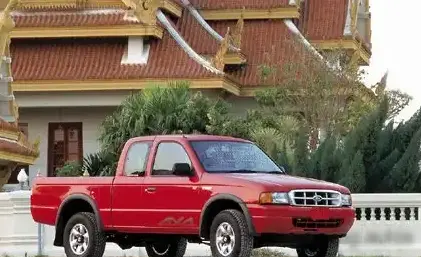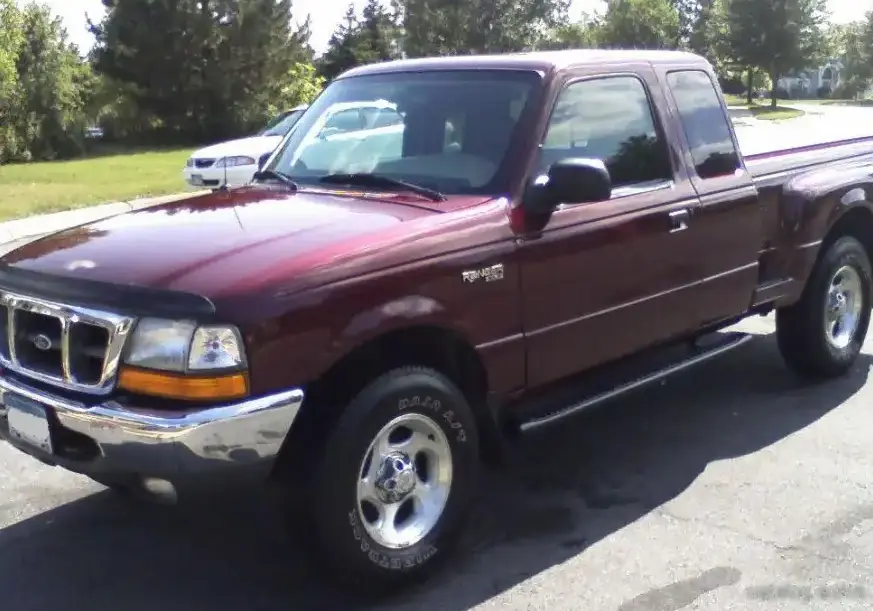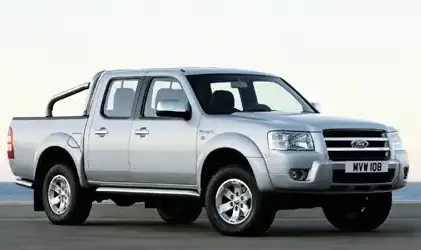
The Ford Ranger II Double Cab 2.3 (143 hp) 4×4, produced between 2006 and 2010, represents a significant iteration of Ford’s globally successful Ranger compact pickup truck. This variant was primarily aimed at the North American market, where the demand for versatile, mid-sized trucks with four-door capability was growing. Positioned as a mid-range offering within the Ranger II Double Cab lineup, it provided a balance between affordability, practicality, and four-wheel-drive capability. It sat below the higher-powered V6 options and above the base 2.3L rear-wheel-drive models, appealing to buyers needing passenger space alongside utility.
Technical Specifications
| Brand | Ford |
| Model | Ranger |
| Generation | Ranger II Double Cab |
| Type (Engine) | 2.3 (143 Hp) 4×4 |
| Start of production | 2006 |
| End of production | 2010 |
| Powertrain Architecture | Internal Combustion engine |
| Body type | Pick-up |
| Seats | 5 |
| Doors | 4 |
| Fuel Type | Petrol (Gasoline) |
| Power | 143 Hp @ 5250 rpm |
| Power per litre | 63.4 Hp/l |
| Torque | 209 Nm @ 3750 rpm / 154.15 lb.-ft. @ 3750 rpm |
| Engine layout | Front, Longitudinal |
| Engine displacement | 2255 cm3 / 137.61 cu. in. |
| Number of cylinders | 4 |
| Engine configuration | Inline |
| Compression ratio | 9.7:1 |
| Number of valves per cylinder | 4 |
| Fuel injection system | Multi-port manifold injection |
| Engine aspiration | Naturally aspirated engine |
| Valvetrain | DOHC |
| Engine oil capacity | 3.8 l / 4.02 US qt | 3.34 UK qt |
| Coolant | 10 l / 10.57 US qt | 8.8 UK qt |
| Fuel tank capacity | 64 l / 16.91 US gal | 14.08 UK gal |
| Length | 4800 mm / 188.98 in. |
| Width | 2057 mm / 80.98 in. |
| Height | 1676 mm / 65.98 in. |
| Drive wheel | All wheel drive (4×4) |
| Number of gears and type of gearbox | 5 gears, manual transmission |
| Front suspension | Independent torsion bar, double wishbone |
| Rear suspension | Dependent suspension of two longitudinal semi-elliptic leaf springs |
| Front brakes | Ventilated discs |
| Rear brakes | Drum |
| Assisting systems | ABS (Anti-lock braking system) |
| Steering type | Steering rack and pinion |
| Tires size | 235/75 R15; 245/70 R16 |
| Wheel rims size | 15; 16 |
Powertrain & Engine Architecture
The heart of the Ranger II Double Cab 2.3 4×4 is the 2.3-liter inline-four cylinder engine. This engine, part of Ford’s Duratec family, utilizes a single overhead camshaft (SOHC) design with four valves per cylinder, operated by hydraulic lifters. The engine employs multi-port fuel injection, delivering fuel directly into the intake ports for improved combustion efficiency. The 9.7:1 compression ratio strikes a balance between performance and fuel economy. The engine’s longitudinal mounting allowed for a traditional front-engine, rear-wheel-drive layout with a transfer case providing four-wheel-drive capability. The 5-speed manual transmission was the standard offering for this trim, providing drivers with direct control over gear selection. While an automatic transmission was available on other Ranger trims, it wasn’t offered with the 2.3L 4×4 configuration.
Driving Characteristics
The 143 horsepower and 154 lb-ft of torque produced by the 2.3-liter engine provided adequate, though not exhilarating, performance for the Ranger II Double Cab 4×4. Acceleration was modest, with a focus on providing sufficient power for everyday driving and light-duty hauling. The manual transmission allowed drivers to maximize the engine’s output, particularly when navigating hilly terrain or carrying a load. The gear ratios were tuned for a balance of fuel efficiency and usability, with a relatively low first gear for off-road situations and a higher fifth gear for highway cruising. Compared to the optional 3.0-liter V6, the 2.3L engine offered less power and torque, resulting in slower acceleration and reduced towing capacity. However, the 2.3L was generally considered more fuel-efficient and simpler to maintain.
Equipment & Trim Levels
The Ranger II Double Cab 2.3 4×4 typically came standard with features such as air conditioning, a basic audio system, and cloth upholstery. Power windows and locks were often included, though sometimes as optional extras. The interior design was functional and durable, prioritizing practicality over luxury. Optional equipment included upgraded audio systems, alloy wheels, and a sliding rear window. The Double Cab configuration provided seating for five passengers, making it a versatile option for families or crews. The 4×4 system was typically engaged via a rotary dial, allowing drivers to switch between two-wheel drive, four-wheel drive high, and four-wheel drive low for enhanced traction in challenging conditions.
Chassis & Braking
The Ranger II Double Cab utilized a body-on-frame construction, providing a robust and durable platform. The front suspension consisted of an independent torsion bar setup with double wishbone components, offering a comfortable ride and good handling characteristics. The rear suspension employed a traditional leaf spring design, providing a stable platform for hauling and towing. Braking duties were handled by ventilated discs at the front and drum brakes at the rear. Anti-lock braking system (ABS) was standard, enhancing safety by preventing wheel lockup during hard braking. Steering was accomplished via a rack-and-pinion system, providing precise and responsive handling.
Market Reception & Comparison
The Ranger II Double Cab 2.3 4×4 was generally well-received by critics and consumers alike. It was praised for its versatility, affordability, and four-wheel-drive capability. However, some reviewers noted that the 2.3-liter engine was underpowered for certain tasks, particularly when hauling heavy loads or driving in challenging terrain. Compared to the V6-powered Ranger models, the 2.3L 4×4 offered better fuel economy, with EPA estimates typically ranging from 18-22 mpg combined. Reliability was generally good, with the 2.3L engine proving to be a durable and dependable powerplant. Maintenance costs were relatively low, making it an attractive option for budget-conscious buyers.
Legacy
The Ford Ranger II Double Cab 2.3 4×4 has established a reputation as a reliable and capable mid-size pickup truck. The 2.3L engine, while not known for its blistering performance, has proven to be remarkably durable, with many examples still on the road today. In the used car market, these Rangers are often sought after for their affordability and practicality. They represent a sweet spot for buyers needing a versatile truck without the higher price tag of newer models or the more powerful V6 options. The Ranger II Double Cab, in all its configurations, helped solidify Ford’s position as a leader in the compact and mid-size pickup truck segment, paving the way for the redesigned Ranger that returned to the North American market in recent years.