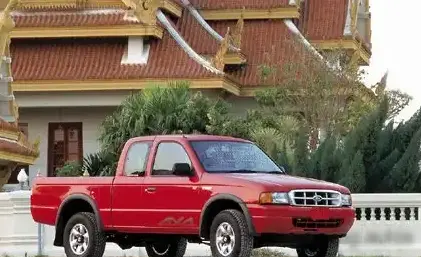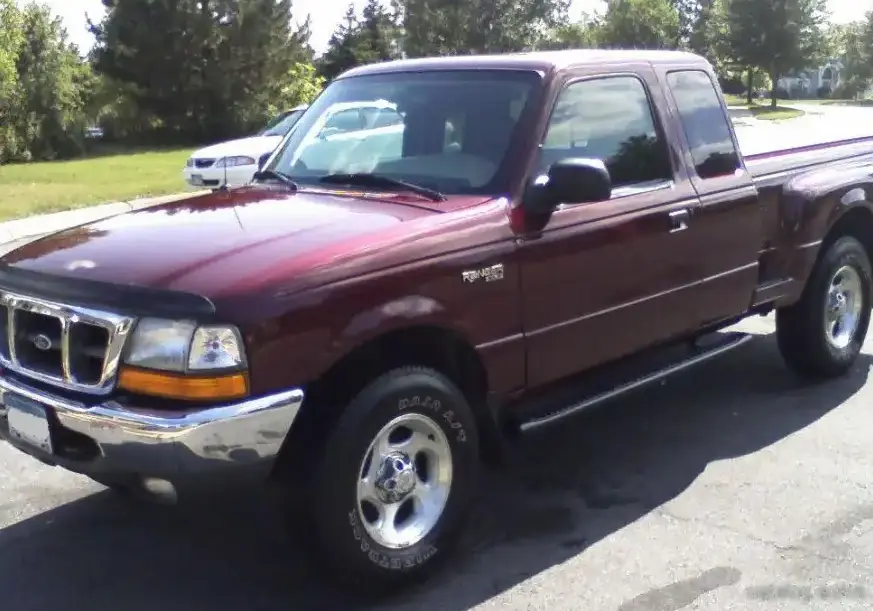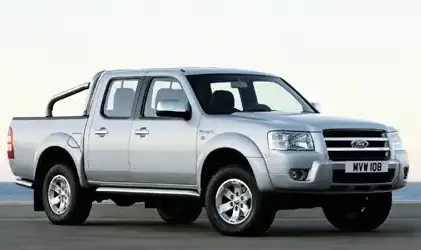
The Ford Ranger II Double Cab 2.3 (143 hp) 4×4 Automatic, produced between 2006 and 2010, represented a significant offering in the mid-size pickup truck segment for the North American market. This variant occupied a middle ground within the Ranger II lineup, providing a balance between capability, comfort, and affordability. It was built on the global Ford Ranger platform (often referred to as the Ranger II), which aimed to provide a versatile and practical vehicle for both work and family use. The Double Cab configuration, combined with the 2.3-liter engine and automatic transmission, broadened the Ranger’s appeal to buyers seeking a more passenger-friendly pickup.
Technical Specifications
| Brand | Ford |
| Model | Ranger |
| Generation | Ranger II Double Cab |
| Type (Engine) | 2.3 (143 Hp) 4×4 Automatic |
| Start of production | 2006 |
| End of production | 2010 |
| Powertrain Architecture | Internal Combustion engine |
| Body type | Pick-up |
| Seats | 5 |
| Doors | 4 |
| Fuel Type | Petrol (Gasoline) |
| Power | 143 Hp @ 5250 rpm |
| Power per litre | 63.4 Hp/l |
| Torque | 209 Nm @ 3750 rpm / 154.15 lb.-ft. @ 3750 rpm |
| Engine layout | Front, Longitudinal |
| Engine displacement | 2255 cm3 / 137.61 cu. in. |
| Number of cylinders | 4 |
| Engine configuration | Inline |
| Compression ratio | 9.7:1 |
| Number of valves per cylinder | 4 |
| Fuel injection system | Multi-port manifold injection |
| Engine aspiration | Naturally aspirated engine |
| Valvetrain | DOHC |
| Engine oil capacity | 3.8 l / 4.02 US qt | 3.34 UK qt |
| Coolant | 9.7 l / 10.25 US qt | 8.53 UK qt |
| Fuel tank capacity | 64 l / 16.91 US gal | 14.08 UK gal |
| Length | 4800 mm / 188.98 in. |
| Width | 2057 mm / 80.98 in. |
| Height | 1676 mm / 65.98 in. |
| Drive wheel | All wheel drive (4×4) |
| Number of gears and type of gearbox | 5 gears, automatic transmission |
| Front suspension | Independent torsion bar, double wishbone |
| Rear suspension | Dependent suspension of two longitudinal semi-elliptic leaf springs |
| Front brakes | Ventilated discs |
| Rear brakes | Drum |
| Assisting systems | ABS (Anti-lock braking system) |
| Steering type | Steering rack and pinion |
| Tires size | 235/75 R15; 245/70 R16 |
| Wheel rims size | 15; 16 |
Powertrain & Engine Architecture
The heart of the Ranger II Double Cab 2.3 was the 2.3-liter inline-four cylinder engine. This engine, internally designated within Ford’s engine family, featured a durable cast-iron block and an aluminum cylinder head. The engine utilized a dual overhead camshaft (DOHC) valvetrain with four valves per cylinder, contributing to improved breathing and efficiency. Fuel delivery was managed by a multi-port fuel injection system, providing precise fuel metering for optimal combustion. The 9.7:1 compression ratio was a compromise between performance and the ability to run on readily available gasoline grades. Paired with this engine was a five-speed automatic transmission, designed to provide smooth and convenient shifting. This transmission was chosen to appeal to buyers who preferred the ease of use of an automatic over a manual gearbox, particularly in everyday driving situations.
Driving Characteristics
The 143 horsepower and 209 Nm (154 lb-ft) of torque produced by the 2.3-liter engine provided adequate, though not exhilarating, performance for the Ranger II Double Cab. Acceleration was modest, and the vehicle was best suited for moderate loads and typical daily driving. The automatic transmission, while offering convenience, did impact performance somewhat compared to the available five-speed manual. The gear ratios were tuned for fuel economy and drivability rather than outright speed. In real-world conditions, the 4×4 system provided enhanced traction in slippery conditions, making it suitable for light off-road use and inclement weather. Compared to the higher-output 3.0-liter and 4.0-liter V6 options, the 2.3-liter engine offered a more economical driving experience, but at the expense of towing capacity and overall power.
Equipment & Trim Levels
The Ranger II Double Cab 2.3 4×4 Automatic typically came standard with features such as air conditioning, power steering, and an AM/FM stereo. The Double Cab configuration offered seating for five passengers, making it a more practical option for families or those needing to transport multiple occupants. Interior upholstery was typically cloth, with a durable and functional design. Optional extras included features like alloy wheels, a CD player, cruise control, and upgraded interior trim packages. The specific trim level (XL, XLT, etc.) determined the level of standard equipment and available options. The XLT trim, for example, often included additional comfort and convenience features compared to the base XL model.
Chassis & Braking
The Ranger II Double Cab utilized a body-on-frame construction, providing a robust and durable platform. The front suspension consisted of an independent torsion bar setup with double wishbone components, offering a reasonable ride quality. The rear suspension employed a traditional leaf spring design, which was well-suited for carrying loads. Braking duties were handled by ventilated discs at the front and drum brakes at the rear. An Anti-lock Braking System (ABS) was standard, enhancing safety by preventing wheel lockup during hard braking. Steering was provided by a rack and pinion system, offering responsive and precise handling.
Market Reception & Comparison
The Ranger II Double Cab 2.3 4×4 Automatic was generally well-received by consumers seeking a versatile and affordable pickup truck. Critics noted its practicality and comfortable interior, particularly for a mid-size truck. However, the 2.3-liter engine was sometimes criticized for its lack of power, especially when compared to the larger V6 engines offered in the Ranger lineup. Fuel economy was a strong point, making it an attractive option for buyers concerned about operating costs. Compared to competitors like the Toyota Tacoma and Nissan Frontier, the Ranger II offered a competitive price point and a spacious interior, but often lagged behind in terms of refinement and overall performance.
Legacy
The Ford Ranger II Double Cab 2.3 4×4 Automatic has proven to be a relatively reliable vehicle, with the 2.3-liter engine generally considered durable and long-lasting. Common maintenance items include regular oil changes, timing belt replacements (if applicable, depending on the specific engine variant), and inspection of the suspension and braking components. In the used car market today, these Rangers are often sought after as affordable and practical work trucks or family vehicles. While not as highly sought after as some of the higher-performance trims, the 2.3-liter automatic version remains a viable option for buyers looking for a dependable and economical pickup truck.