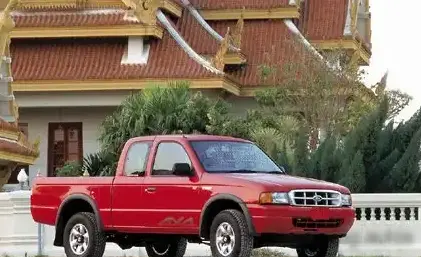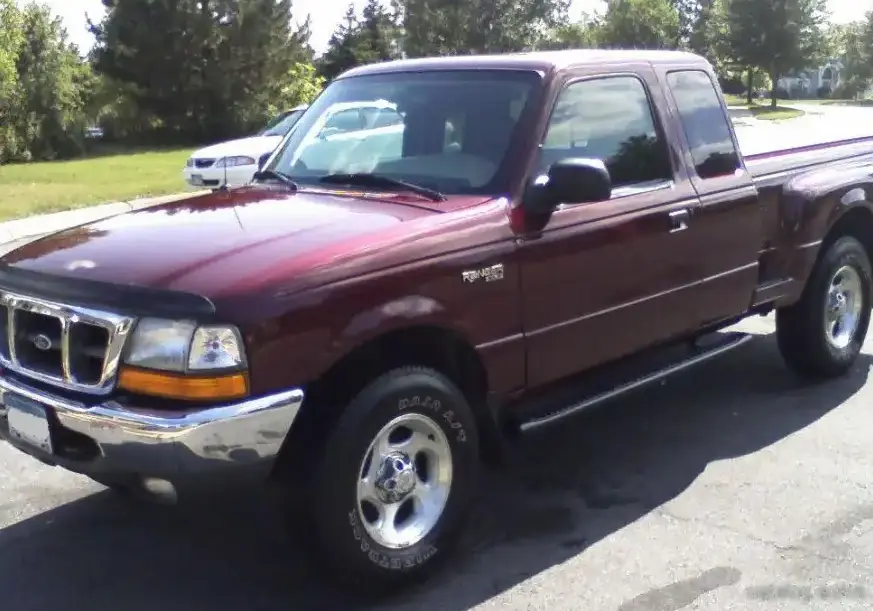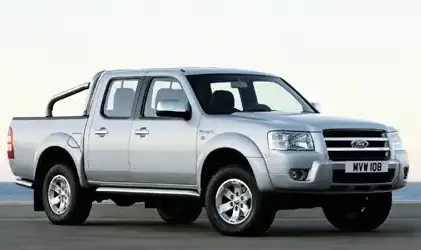
The Ford Ranger II Double Cab 2.3 (143 Hp) Automatic, produced between 2006 and 2010, represented a significant offering in the mid-size pickup truck segment, particularly in markets outside of North America where the Ranger continued to be sold after its discontinuation in the US in 2012. This variant occupied a middle ground within the Ranger II Double Cab lineup, providing a balance between affordability, practicality, and reasonable performance. It was built on the 1HX0 platform, sharing components with the Mazda B-Series pickup, a result of the Ford-Mazda partnership at the time. The Double Cab configuration offered increased passenger space compared to the standard cab models, making it suitable for families or crews needing both work capabilities and passenger transport.
Technical Specifications
| Brand | Ford |
| Model | Ranger |
| Generation | Ranger II Double Cab |
| Type (Engine) | 2.3 (143 Hp) Automatic |
| Start of production | 2006 |
| End of production | 2010 |
| Powertrain Architecture | Internal Combustion engine |
| Body type | Pick-up |
| Seats | 5 |
| Doors | 4 |
| Fuel Type | Petrol (Gasoline) |
| Power | 143 Hp @ 5250 rpm |
| Power per litre | 63.4 Hp/l |
| Torque | 209 Nm @ 3750 rpm / 154.15 lb.-ft. @ 3750 rpm |
| Engine layout | Front, Longitudinal |
| Engine displacement | 2255 cm3 / 137.61 cu. in. |
| Number of cylinders | 4 |
| Engine configuration | Inline |
| Compression ratio | 9.7:1 |
| Number of valves per cylinder | 4 |
| Fuel injection system | Multi-port manifold injection |
| Engine aspiration | Naturally aspirated engine |
| Engine oil capacity | 3.8 l / 4.02 US qt | 3.34 UK qt |
| Coolant | 9.7 l / 10.25 US qt | 8.53 UK qt |
| Trunk (boot) space – minimum | 1500 l / 52.97 cu. ft. |
| Fuel tank capacity | 70 l / 18.49 US gal | 15.4 UK gal |
| Length | 5075 mm / 199.8 in. |
| Width | 1805 mm / 71.06 in. |
| Height | 1745 mm / 68.7 in. |
| Wheelbase | 3000 mm / 118.11 in. |
| Front track | 1488 mm / 58.58 in. |
| Rear (Back) track | 1455 mm / 57.28 in. |
| Ride height (ground clearance) | 203 mm / 7.99 in. |
| Drivetrain Architecture | The Internal combustion engine (ICE) drives the rear wheels of the vehicle. |
| Drive wheel | Rear wheel drive |
| Number of gears and type of gearbox | 5 gears, automatic transmission |
| Front suspension | Independent torsion bar, double wishbone |
| Rear suspension | Dependent suspension of two longitudinal semi-elliptic leaf springs |
| Front brakes | Ventilated discs |
| Rear brakes | Drum |
| Assisting systems | ABS (Anti-lock braking system) |
| Steering type | Steering rack and pinion |
| Tires size | 235/75 R15; 245/70 R16 |
| Wheel rims size | 15; 16 |
Powertrain & Engine Architecture
The heart of the Ranger II Double Cab 2.3 Automatic is the 2.3-liter inline-four cylinder gasoline engine. This engine, while not a high-performance unit, was known for its relative durability and ease of maintenance. The engine code varied by market, but it generally falls within the Duratec family. It utilized a multi-port fuel injection system, providing adequate fuel delivery for its intended purpose. The engine featured a single overhead camshaft (SOHC) design with four valves per cylinder, a common configuration for engines of this era. The 5-speed automatic transmission was a crucial component of this variant, offering convenience and ease of use, particularly in urban environments. This transmission was designed to provide smooth shifts and acceptable acceleration, though it wasn’t known for its sportiness. The longitudinal engine layout was typical for rear-wheel-drive trucks, allowing for a more efficient drivetrain configuration.
Driving Characteristics
The 143 horsepower and 209 Nm (154 lb-ft) of torque delivered by the 2.3-liter engine and automatic transmission resulted in a driving experience geared towards practicality rather than performance. Acceleration was adequate for everyday driving, but hauling heavy loads or navigating steep inclines required careful throttle management. Compared to the higher-output 2.5-liter or 3.0-liter engines offered in other Ranger II variants, the 2.3 Automatic felt noticeably less powerful. The automatic transmission’s gear ratios were optimized for fuel efficiency and smooth cruising, rather than quick acceleration. While a manual transmission was available on some Ranger II models, the automatic was favored by buyers prioritizing convenience. The rear-wheel-drive configuration provided a traditional truck feel, with predictable handling characteristics.
Equipment & Trim Levels
The Ranger II Double Cab 2.3 Automatic typically came with a reasonable level of standard equipment. This included power steering, air conditioning, and a basic audio system. Interior upholstery was generally cloth, with durable plastic trim. Depending on the market and optional packages, features like power windows, power door locks, and an upgraded audio system were available. Higher trim levels might have included alloy wheels, fog lights, and a more refined interior finish. The Double Cab configuration itself was a key feature, offering significantly more rear passenger space than the standard cab models. The dashboard layout was functional and straightforward, prioritizing usability over aesthetics.
Chassis & Braking
The Ranger II Double Cab utilized a body-on-frame construction, providing a robust and durable platform. The front suspension consisted of an independent torsion bar and double wishbone setup, offering a reasonable level of ride comfort. The rear suspension employed a traditional leaf spring design, which was well-suited for carrying loads. Braking duties were handled by ventilated discs at the front and drum brakes at the rear. While adequate for normal driving conditions, the braking system wasn’t particularly powerful. Anti-lock Braking System (ABS) was a standard feature, enhancing safety by preventing wheel lockup during hard braking. The ride height of 203mm (8 inches) provided good ground clearance for off-road use.
Market Reception & Comparison
The Ranger II Double Cab 2.3 Automatic was generally well-received as a practical and affordable pickup truck. Critics noted its comfortable ride, spacious interior (for a mid-size truck), and reasonable fuel economy. However, the engine’s lack of power was a common criticism, particularly when compared to larger or more powerful pickup trucks. In terms of reliability, the 2.3-liter engine proved to be relatively dependable, although regular maintenance was essential. Compared to the higher-trim Ranger II models with larger engines, the 2.3 Automatic offered a more budget-friendly option, appealing to buyers who prioritized practicality and affordability over performance.
Legacy
The Ford Ranger II Double Cab 2.3 Automatic has established a reputation as a reliable and durable workhorse in the used car market. While not a collector’s item, well-maintained examples continue to be sought after by buyers looking for an affordable and practical pickup truck. The 2.3-liter engine, while not particularly exciting, is known for its longevity and relatively low maintenance costs. The automatic transmission, while not the most sophisticated, has proven to be reasonably durable. Today, these Rangers represent a simpler era of pickup truck design, offering a blend of functionality and affordability that remains appealing to many buyers.