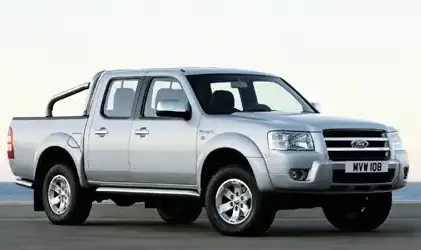
The Ford Ranger II Double Cab 2.5 TDCi, produced between 2006 and 2010, represented a significant evolution of Ford’s popular mid-size pickup truck. This variant, powered by the WLAA 2.5-liter turbocharged diesel engine producing 143 horsepower, occupied a middle ground in the Ranger II lineup, offering a balance between capability, fuel efficiency, and practicality for both work and family use. It was primarily marketed in Europe and other international markets, where the demand for diesel-powered pickups remained strong. The Double Cab configuration expanded the Ranger’s appeal by providing seating for five passengers, making it a viable option for families or crews needing both hauling capacity and passenger space.
Technical Specifications
| Brand | Ford |
| Model | Ranger |
| Generation | Ranger II Double Cab |
| Type (Engine) | 2.5 TDCi (143 Hp) |
| Start of production | 2006 |
| End of production | 2010 |
| Powertrain Architecture | Internal Combustion engine |
| Body type | Pick-up |
| Seats | 5 |
| Doors | 4 |
| Fuel Type | Diesel |
| Power | 143 Hp @ 3500 rpm |
| Power per litre | 57.2 Hp/l |
| Torque | 330 Nm @ 1800 rpm / 243.4 lb.-ft. @ 1800 rpm |
| Engine layout | Front, Longitudinal |
| Engine Model/Code | WLAA |
| Engine displacement | 2499 cm3 / 152.5 cu. in. |
| Number of cylinders | 4 |
| Engine configuration | Inline |
| Number of valves per cylinder | 4 |
| Fuel injection system | Diesel Commonrail |
| Engine aspiration | Turbocharger, Intercooler |
| Engine oil capacity | 7 l / 7.4 US qt | 6.16 UK qt |
| Coolant | 9.4 l / 9.93 US qt | 8.27 UK qt |
| Trunk (boot) space – minimum | 1500 l / 52.97 cu. ft. |
| Fuel tank capacity | 70 l / 18.49 US gal | 15.4 UK gal |
| Length | 5075 mm / 199.8 in. |
| Width | 1805 mm / 71.06 in. |
| Height | 1745 mm / 68.7 in. |
| Wheelbase | 3000 mm / 118.11 in. |
| Front track | 1488 mm / 58.58 in. |
| Rear (Back) track | 1455 mm / 57.28 in. |
| Ride height (ground clearance) | 203 mm / 7.99 in. |
| Drivetrain Architecture | The Internal combustion engine (ICE) drives the rear wheels of the vehicle. |
| Drive wheel | Rear wheel drive |
| Number of gears and type of gearbox | 5 gears, manual transmission |
| Front suspension | Independent torsion bar, double wishbone |
| Rear suspension | Dependent suspension of two longitudinal semi-elliptic leaf springs |
| Front brakes | Ventilated discs |
| Rear brakes | Drum |
| Assisting systems | ABS (Anti-lock braking system) |
| Steering type | Steering rack and pinion |
| Tires size | 235/75 R15; 245/70 R16 |
| Wheel rims size | 15; 16 |
Powertrain & Engine Architecture
The heart of the Ranger II Double Cab 2.5 TDCi is the WLAA engine, a 2.5-liter inline-four cylinder diesel. This engine utilized a common rail direct injection system, delivering fuel at extremely high pressure for improved combustion efficiency and reduced emissions. A turbocharger with an intercooler further enhanced performance by forcing more air into the cylinders. The WLAA engine featured four valves per cylinder, contributing to its relatively high output for its displacement. The 5-speed manual transmission was the standard offering, providing a balance between fuel economy and usability. The engine’s longitudinal mounting allowed for a more efficient drivetrain layout, maximizing cargo space in the bed. The WLAA engine, while sharing a displacement with earlier Ford diesel engines, represented a significant upgrade in terms of refinement and power delivery thanks to the common rail injection system. This system allowed for more precise control over fuel delivery, resulting in smoother operation and reduced noise levels compared to older mechanical injection systems.
Driving Characteristics
The 143 horsepower and 330 Nm (243 lb-ft) of torque provided by the 2.5 TDCi engine offered adequate performance for everyday driving and moderate hauling tasks. While not as quick as the higher-output versions of the Ranger II, the 2.5 TDCi delivered a usable powerband, with peak torque available from 1800 rpm. This made it well-suited for towing and navigating challenging terrain. The 5-speed manual transmission offered precise shifts, but the gear ratios were geared more towards fuel economy than outright acceleration. Compared to the more powerful 3.2-liter TDCi engine, the 2.5 TDCi felt less strained during highway cruising, but lacked the same level of responsiveness when accelerating. The gearing prioritized maintaining momentum on inclines rather than providing rapid acceleration. The suspension, tuned for a balance between comfort and load-carrying capacity, provided a reasonably compliant ride even when the vehicle was lightly loaded, though it could become somewhat bouncy when empty on rough roads.
Equipment & Trim Levels
The Ranger II Double Cab 2.5 TDCi typically came equipped with features such as air conditioning, power steering, and an AM/FM radio. Higher trim levels offered upgrades like alloy wheels, electric windows, central locking, and a more sophisticated audio system. Interior upholstery was generally vinyl or cloth, with the option for leather seats on some models. Safety features included ABS brakes and, depending on the market, airbags. The Double Cab configuration provided ample space for five passengers, with a usable rear seat area. Optional extras included a tow hitch, bed liner, and various accessories to enhance the truck’s functionality. Trim levels often denoted by designations like ‘XL’, ‘XLT’, and ‘Limited’ offered progressively more features and cosmetic enhancements. The ‘Limited’ trim, for example, often included features like chrome exterior accents and upgraded interior materials.
Chassis & Braking
The Ranger II Double Cab featured a robust chassis designed to withstand the rigors of pickup truck use. The front suspension utilized an independent torsion bar and double wishbone setup, providing a comfortable ride and good handling characteristics. The rear suspension employed a traditional dependent leaf spring design, offering a high load-carrying capacity. Front brakes were ventilated discs, providing ample stopping power, while rear brakes were drums. The steering system was a rack and pinion setup, offering precise and responsive steering. Tire sizes varied depending on the trim level, with 235/75 R15 and 245/70 R16 being common options. The leaf spring rear suspension, while providing good load capacity, did contribute to a somewhat less refined ride quality compared to fully independent rear suspension systems found on some competitors.
Market Reception & Comparison
The Ford Ranger II Double Cab 2.5 TDCi was generally well-received by critics and buyers alike. It was praised for its practicality, fuel efficiency, and comfortable ride. Compared to other pickups in its class, the Ranger II offered a good balance of features and value. The 2.5 TDCi engine was considered reliable and relatively easy to maintain. However, some critics noted that the engine lacked the power of its larger counterparts. Fuel economy was a strong point, with the 2.5 TDCi achieving respectable mileage for a pickup truck. In terms of reliability, the 2.5 TDCi engine proved to be durable, although regular maintenance was essential to prevent issues with the fuel injection system and turbocharger. Compared to competitors like the Toyota Hilux and Nissan Navara, the Ranger II often offered a more affordable price point, making it an attractive option for budget-conscious buyers.
Legacy
The Ford Ranger II Double Cab 2.5 TDCi remains a popular choice in the used car market, particularly in Europe and other regions where it was originally sold. Its reputation for reliability and practicality has ensured its continued demand. While newer pickup trucks offer more advanced features and technology, the Ranger II Double Cab 2.5 TDCi provides a simple, rugged, and affordable option for those seeking a capable workhorse. The WLAA engine, when properly maintained, can provide many years of reliable service. Parts availability is generally good, making it relatively easy to keep these trucks on the road. The Ranger II Double Cab 2.5 TDCi represents a significant chapter in Ford’s pickup truck history, offering a versatile and dependable vehicle for a wide range of users. Its enduring appeal lies in its ability to provide a practical and affordable solution for those needing a capable pickup without the complexity and cost of more modern vehicles.