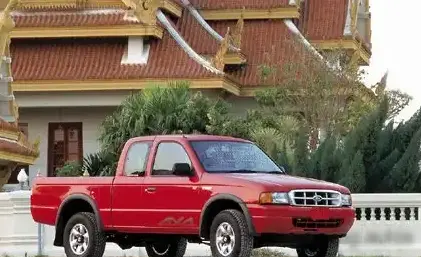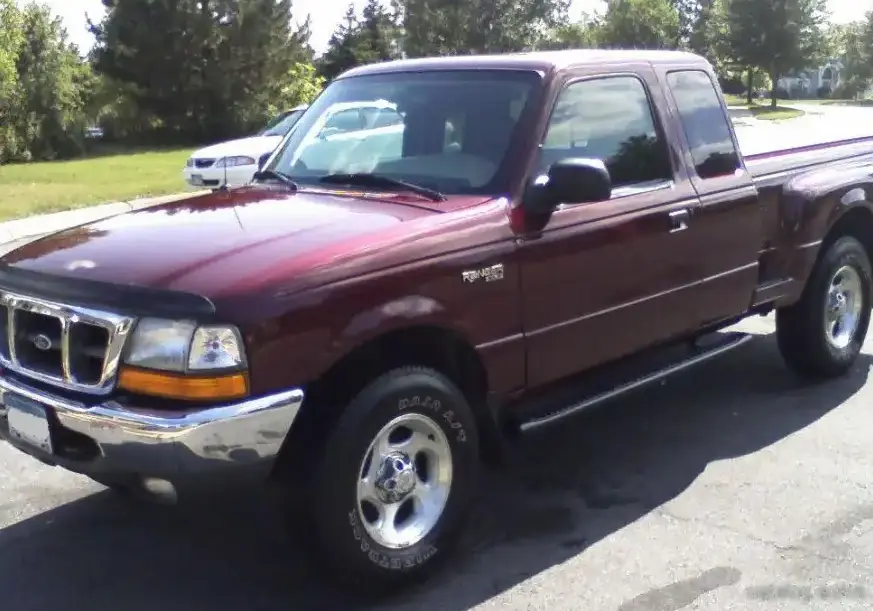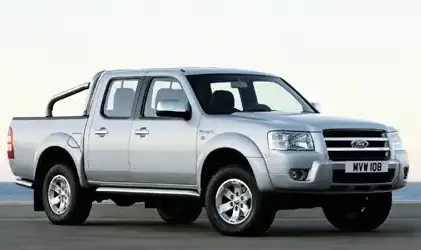
The Ford Ranger II Double Cab 3.0 TDCi 4×4, produced between 2006 and 2010, represented a significant offering in the mid-size pickup truck segment, particularly in European and Australian markets. Positioned as a versatile vehicle catering to both commercial and family needs, this variant combined the practicality of a double cab with the capability of a four-wheel-drive system and a relatively fuel-efficient turbodiesel engine. It was part of the larger Ranger II series (produced 1998-2012), which itself was based on the Mazda B-Series platform, a collaboration between Ford and Mazda. This specific 3.0 TDCi engine and 4×4 drivetrain combination aimed to provide a balance between power, economy, and off-road performance.
Technical Specifications
| Brand | Ford |
| Model | Ranger |
| Generation | Ranger II Double Cab |
| Type (Engine) | 3.0 TDCi (156 Hp) 4×4 |
| Start of production | 2006 |
| End of production | 2010 |
| Powertrain Architecture | Internal Combustion engine |
| Body type | Pick-up |
| Seats | 5 |
| Doors | 4 |
| Fuel consumption (urban) | 11.3 l/100 km (20.8 US mpg, 25 UK mpg, 8.8 km/l) |
| Fuel consumption (extra urban) | 8 l/100 km (29.4 US mpg, 35.3 UK mpg, 12.5 km/l) |
| Fuel consumption (combined) | 9.2 l/100 km (25.6 US mpg, 30.7 UK mpg, 10.9 km/l) |
| Fuel Type | Diesel |
| Acceleration 0 – 100 km/h | 13.7 sec |
| Acceleration 0 – 62 mph | 13.7 sec |
| Acceleration 0 – 60 mph | 13 sec |
| Maximum speed | 170 km/h (105.63 mph) |
| Emission standard | Euro 4 |
| Power | 156 Hp @ 3200 rpm |
| Power per litre | 52.8 Hp/l |
| Torque | 380 Nm @ 1800 rpm (280.27 lb.-ft. @ 1800 rpm) |
| Engine layout | Front, Longitudinal |
| Engine Model/Code | WEC |
| Engine displacement | 2953 cm3 (180.2 cu. in.) |
| Number of cylinders | 4 |
| Engine configuration | Inline |
| Compression ratio | 9.7:1 |
| Number of valves per cylinder | 4 |
| Fuel injection system | Diesel Commonrail |
| Engine aspiration | Turbocharger, Intercooler |
| Valvetrain | DOHC |
| Engine oil capacity | 7 l (7.4 US qt, 6.16 UK qt) |
| Coolant capacity | 9.4 l (9.93 US qt, 8.27 UK qt) |
| Trunk (boot) space (minimum) | 1500 l (52.97 cu. ft.) |
| Fuel tank capacity | 70 l (18.49 US gal, 15.4 UK gal) |
| Length | 5075 mm (199.8 in.) |
| Width | 1805 mm (71.06 in.) |
| Height | 1745 mm (68.7 in.) |
| Wheelbase | 3000 mm (118.11 in.) |
| Front track | 1488 mm (58.58 in.) |
| Rear track | 1455 mm (57.28 in.) |
| Ride height (ground clearance) | 205 mm (8.07 in.) |
| Drive wheel | All wheel drive (4×4) |
| Number of gears and type of gearbox | 5 gears, manual transmission |
| Front suspension | Independent torsion bar, double wishbone |
| Rear suspension | Dependent suspension of two longitudinal semi-elliptic leaf springs |
| Front brakes | Ventilated discs |
| Rear brakes | Drum |
| Assisting systems | ABS (Anti-lock braking system) |
| Steering type | Steering rack and pinion |
| Power steering | Hydraulic Steering |
| Tires size | 245/70 R16 |
| Wheel rims size | 16 |
INTRODUCTION
The Ford Ranger II Double Cab 3.0 TDCi 4×4, launched in 2006, was a key model in Ford’s European and Australasian pickup truck lineup. It built upon the success of the original Ranger (a rebadged Mazda B-Series) by offering a more modern and refined package. The Double Cab configuration, with its four doors and five-seat capacity, broadened the Ranger’s appeal beyond traditional commercial users, attracting families and individuals seeking a versatile vehicle for work and leisure. The 3.0-liter TDCi engine, a common-rail direct injection diesel, was a relatively new addition to the Ranger range, offering improved performance and fuel efficiency compared to older engine options. This particular variant, with its manual transmission and four-wheel drive, was positioned as a mid-range offering, balancing capability with affordability.
Powertrain & Engine Architecture
The heart of the Ranger II Double Cab 3.0 TDCi 4×4 is the WEC engine, a 2.953-liter inline-four cylinder diesel. This engine utilizes a common-rail direct injection system, delivering fuel at extremely high pressure for improved combustion efficiency and reduced emissions. The TDCi (Turbo Diesel Common Injection) technology, developed by Ford, incorporates a variable geometry turbocharger and an intercooler to optimize power and torque across a wide RPM range. The engine features a double overhead camshaft (DOHC) valvetrain with four valves per cylinder, further enhancing its breathing and performance. The 5-speed manual transmission was the standard offering for this variant, providing a direct connection between the engine and the wheels. The 4×4 system employs an electronically controlled transfer case, allowing the driver to switch between two-wheel drive (2H), four-wheel drive high range (4H), and four-wheel drive low range (4L) depending on the terrain and driving conditions.
Driving Characteristics
The 156 horsepower and 380 Nm (280 lb-ft) of torque produced by the 3.0 TDCi engine provided adequate, though not exceptional, performance for the Ranger II Double Cab. Acceleration from 0-100 km/h (0-62 mph) took around 13.7 seconds, and the top speed was limited to 170 km/h (105.6 mph). The engine’s torque curve was relatively flat, delivering strong pulling power from low RPMs, making it well-suited for towing and hauling. The manual transmission offered precise gear changes, allowing the driver to maintain optimal engine speed for various driving conditions. Compared to the higher-output 3.2-liter TDCi engine offered in later Ranger models, the 3.0 TDCi felt less powerful, particularly when fully loaded. However, it offered better fuel economy and a more manageable driving experience for everyday use. The 4×4 system provided excellent traction on loose surfaces, making it capable off-road, though it wasn’t designed for extreme rock crawling.
Equipment & Trim Levels
The Ranger II Double Cab 3.0 TDCi 4×4 typically came equipped with a reasonable level of standard features. These included air conditioning, power steering, central locking, and an AM/FM radio with CD player. Interior upholstery was typically cloth, with durable plastic trim. Higher trim levels, such as the Limited, offered additional features like alloy wheels, side steps, a leather-wrapped steering wheel, and upgraded audio systems. Optional extras included a sunroof, rear parking sensors, and a tow bar. The dashboard layout was functional and straightforward, prioritizing practicality over luxury. Safety features included ABS brakes and driver and passenger airbags.
Chassis & Braking
The Ranger II Double Cab utilized a robust chassis designed to withstand the demands of pickup truck use. The front suspension consisted of independent torsion bars and double wishbones, providing a comfortable ride and good handling on paved roads. The rear suspension employed a traditional leaf spring setup, offering a higher load-carrying capacity but a slightly firmer ride. Brakes were ventilated discs at the front and drum brakes at the rear. The ABS system helped to prevent wheel lockup during hard braking, improving stability and control. The steering was a hydraulic rack and pinion system, providing precise and responsive steering feel.
Market Reception & Comparison
The Ford Ranger II Double Cab 3.0 TDCi 4×4 was generally well-received by automotive critics. It was praised for its versatility, practicality, and relatively fuel-efficient engine. However, some reviewers noted that the engine lacked the outright power of some of its competitors. Compared to other trims in the Ranger lineup, the 3.0 TDCi 4×4 offered a good balance between performance, economy, and price. The 2.5 TDCi engine was a lower-cost option, while the 3.2 TDCi provided more power but at a higher price point. Fuel economy was a strong point for the 3.0 TDCi, averaging around 9.2 l/100 km (25.6 US mpg) in combined driving conditions.
Legacy
The Ford Ranger II Double Cab 3.0 TDCi 4×4 has proven to be a relatively reliable vehicle, with many examples still on the road today. The 3.0 TDCi engine is generally considered to be durable, although regular maintenance is essential to prevent issues with the fuel injection system and turbocharger. Common issues include wear and tear on suspension components and corrosion in areas exposed to harsh weather conditions. In the used car market, these Rangers are often sought after for their practicality and affordability. They represent a good value for buyers looking for a capable and versatile pickup truck that can handle both work and family duties.