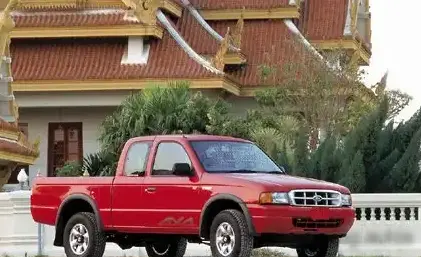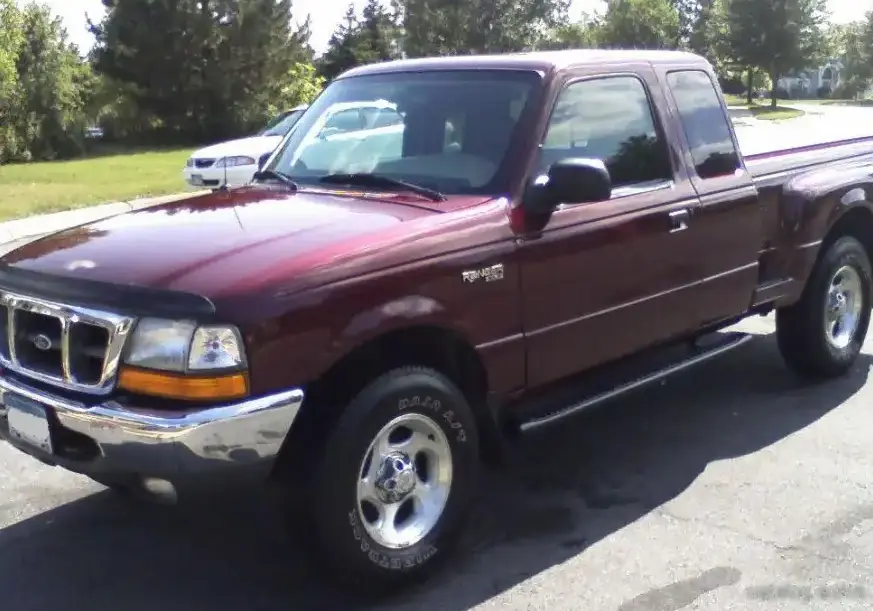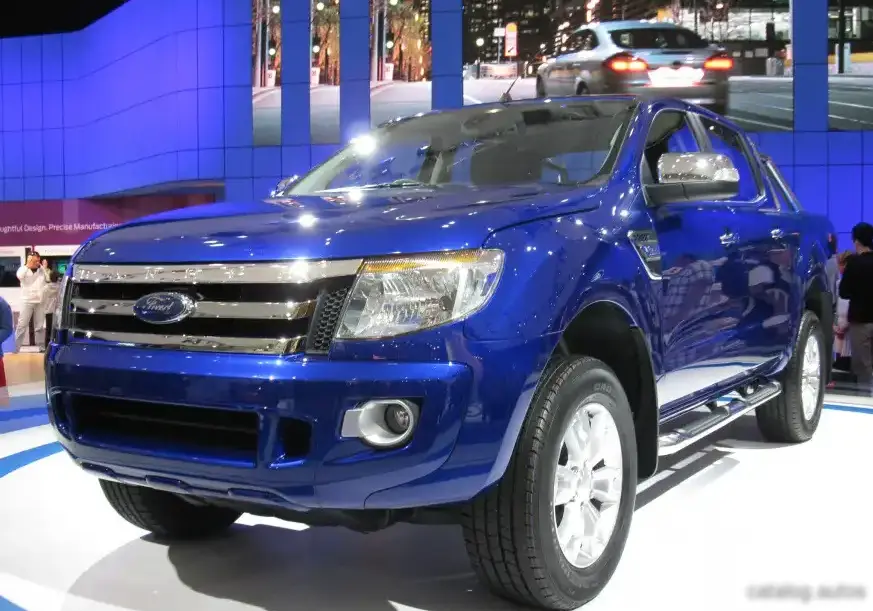
The Ford Ranger II Double Cab, specifically the facelifted version introduced in 2009, represented a significant update to Ford’s mid-size pickup truck offering in global markets. Produced from 2009 to 2011, the 2.5 TDCi 4×4 Automatic variant occupied a middle ground within the Ranger II lineup, balancing capability with relative comfort and ease of use. This model was primarily aimed at buyers needing a versatile vehicle for both work and family duties, offering the practicality of a pickup with the convenience of an automatic transmission and four-wheel drive. It was a key offering in markets outside of North America, where the Ranger maintained a strong presence.
Technical Specifications
| Brand | Ford |
| Model | Ranger |
| Generation | Ranger II Double Cab (facelift 2009) |
| Type (Engine) | 2.5 TDCi (143 Hp) 4×4 Automatic |
| Start of production | 2009 |
| End of production | 2011 |
| Powertrain Architecture | Internal Combustion engine |
| Body type | Pick-up |
| Seats | 5 |
| Doors | 4 |
| Fuel consumption (urban) | 10.9 l/100 km (21.6 US mpg) |
| Fuel consumption (extra urban) | 7.8 l/100 km (30.2 US mpg) |
| Fuel consumption (combined) | 8.9 l/100 km (26.4 US mpg) |
| Fuel Type | Diesel |
| Acceleration 0 – 100 km/h | 12.5 sec |
| Acceleration 0 – 62 mph | 12.5 sec |
| Acceleration 0 – 60 mph | 11.9 sec |
| Maximum speed | 170 km/h (105.63 mph) |
| Weight-to-power ratio | 12.9 kg/Hp |
| Weight-to-torque ratio | 5.6 kg/Nm |
| Power | 143 Hp @ 3500 rpm |
| Torque | 330 Nm @ 1800 rpm (243.4 lb.-ft. @ 1800 rpm) |
| Engine layout | Front, Longitudinal |
| Engine Model/Code | WLAA |
| Engine displacement | 2499 cm3 (152.5 cu. in.) |
| Number of cylinders | 4 |
| Engine configuration | Inline |
| Cylinder Bore | 93 mm (3.66 in.) |
| Piston Stroke | 92 mm (3.62 in.) |
| Compression ratio | 17.5:1 |
| Number of valves per cylinder | 4 |
| Fuel injection system | Diesel Commonrail |
| Engine aspiration | Turbocharger, Intercooler |
| Engine oil capacity | 7 l (7.4 US qt | 6.16 UK qt) |
| Coolant capacity | 9.4 l (9.93 US qt | 8.27 UK qt) |
| Kerb Weight | 1845 kg (4067.53 lbs.) |
| Max. weight | 2985 kg (6580.8 lbs.) |
| Max load | 1140 kg (2513.27 lbs.) |
| Trunk (boot) space – minimum | 1500 l (52.97 cu. ft.) |
| Fuel tank capacity | 70 l (18.49 US gal | 15.4 UK gal) |
| Length | 5080 mm (200 in.) |
| Width | 1788 mm (70.39 in.) |
| Height | 1762 mm (69.37 in.) |
| Wheelbase | 3000 mm (118.11 in.) |
| Front track | 1488 mm (58.58 in.) |
| Rear (Back) track | 1455 mm (57.28 in.) |
| Ride height (ground clearance) | 207 mm (8.15 in.) |
| Drive wheel | All wheel drive (4×4) |
| Number of gears and type of gearbox | 5 gears, automatic transmission |
| Front suspension | Independent torsion bar, double wishbone |
| Rear suspension | Dependent suspension of two longitudinal semi-elliptic leaf springs |
| Front brakes | Ventilated discs |
| Rear brakes | Drum |
| Assisting systems | ABS (Anti-lock braking system) |
| Steering type | Steering rack and pinion |
| Tires size | 235/75 R15; 245/70 R16 |
| Wheel rims size | 15; 16 |
Powertrain & Engine Architecture
The heart of this Ranger variant is the 2.5-liter WLAA TDCi inline-four diesel engine. This engine, a product of Ford’s collaboration with PSA Peugeot Citroën, utilizes a common-rail direct injection system to deliver fuel directly into the cylinders at extremely high pressure. This technology, combined with a variable geometry turbocharger and intercooler, optimizes combustion for improved power and efficiency. The engine produces 143 horsepower at 3500 rpm and 330 Nm (243 lb-ft) of torque at 1800 rpm. The automatic transmission is a five-speed unit, chosen for its ease of use and suitability for a wider range of drivers. While not offering the most responsive shifting characteristics compared to modern automatics, it provided a comfortable driving experience, particularly in urban and off-road conditions.
Driving Characteristics
The 2.5 TDCi automatic Ranger offered a comfortable, if not particularly sporty, driving experience. The automatic transmission, while convenient, did slightly diminish the engine’s responsiveness compared to the available manual transmission. Acceleration from 0-60 mph took around 11.9 seconds, and top speed was limited to 170 km/h (105.6 mph). The torque delivery was relatively flat, making it suitable for towing and hauling, but the engine lacked the outright punch of higher-output versions. The 4×4 system provided good traction in various conditions, and the Ranger’s robust suspension handled rough terrain reasonably well.
Equipment & Trim Levels
The 2.5 TDCi 4×4 Automatic typically came with a reasonable level of standard equipment. This included air conditioning, power windows, central locking, and an AM/FM radio. Higher trim levels, often denoted by names like “Limited” or “Thunder,” added features such as alloy wheels, upgraded interior trim, a CD player, and sometimes even leather seats. Optional extras included a sunroof, navigation system, and a more advanced audio system. The Double Cab configuration provided seating for five passengers, making it a practical choice for families.
Chassis & Braking
The Ranger II Double Cab utilized a body-on-frame construction, providing a robust and durable platform. The front suspension consisted of independent torsion bars and double wishbones, while the rear suspension employed a more traditional setup with two longitudinal semi-elliptic leaf springs. This configuration prioritized load-carrying capacity and durability over outright handling precision. Braking duties were handled by ventilated discs at the front and drum brakes at the rear. ABS (Anti-lock Braking System) was standard, enhancing safety during emergency braking situations.
Market Reception & Comparison
The 2.5 TDCi Automatic Ranger was generally well-received as a practical and versatile pickup truck. Critics praised its comfortable ride, spacious interior, and capable 4×4 system. However, some noted that the automatic transmission could feel sluggish at times, and the engine lacked the refinement of some competitors. Compared to the higher-output 3.0-liter TDCi versions, the 2.5 offered lower performance but better fuel economy. It also represented a more affordable entry point into the Ranger Double Cab range. Against rivals like the Toyota Hilux and Nissan Navara, the Ranger offered a competitive package, particularly in terms of value for money.
Legacy
The 2.5 TDCi engine, while generally reliable, is known to require regular maintenance, particularly regarding the fuel injection system and turbocharger. The automatic transmission, if properly maintained, can provide years of service, but rebuilds can be costly. Today, these Rangers are readily available on the used car market at relatively affordable prices. They represent a solid choice for buyers seeking a capable and practical pickup truck, but prospective owners should be prepared to address potential maintenance issues associated with a vehicle of this age and mileage. The Ranger II Double Cab, in its various configurations, helped solidify Ford’s position as a major player in the global mid-size pickup truck segment.