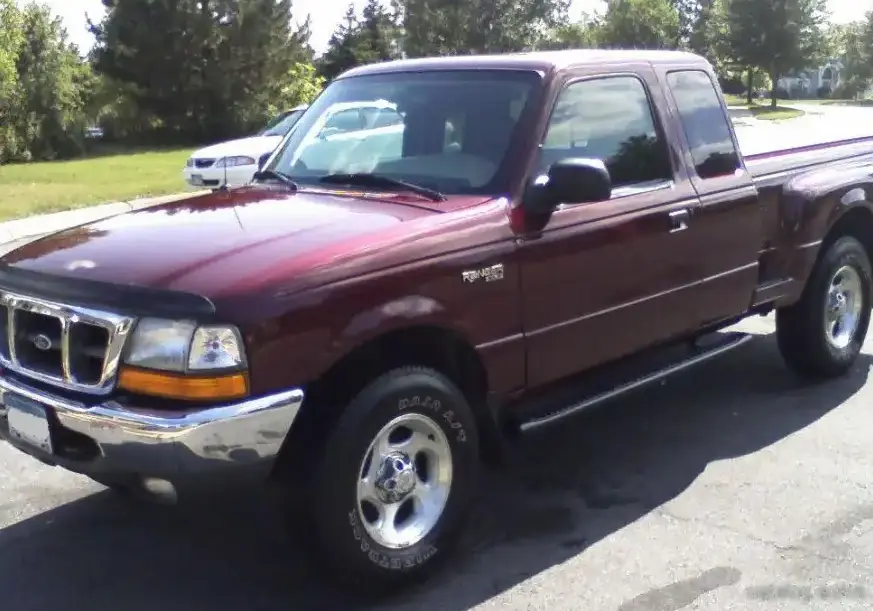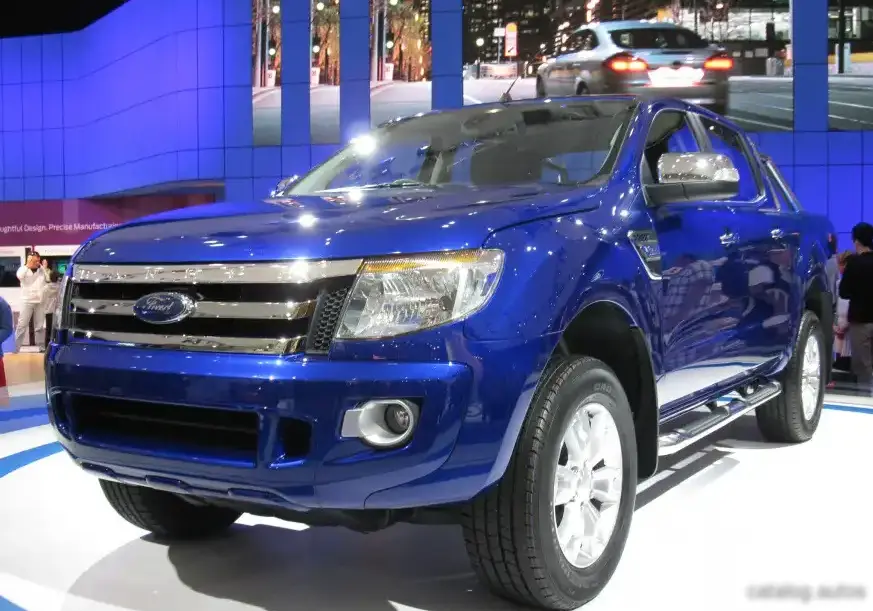
The Ford Ranger II Double Cab, specifically the facelifted version introduced in 2009, represented a significant update to Ford’s mid-size pickup truck offering in global markets. Produced from 2009 to 2011, the 2.5 TDCi variant with a five-speed automatic transmission was positioned as a versatile option, balancing fuel efficiency with reasonable performance for both work and family duties. This model, built on the P2 platform, aimed to provide a comfortable and practical vehicle for buyers needing a pickup with passenger space. It was primarily sold in Europe, Australia, New Zealand, and South Africa, where the demand for compact pickups remained strong.
Technical Specifications
| Brand | Ford |
| Model | Ranger |
| Generation | Ranger II Double Cab (facelift 2009) |
| Type (Engine) | 2.5 TDCi (143 Hp) Automatic |
| Start of production | 2009 |
| End of production | 2011 |
| Powertrain Architecture | Internal Combustion engine |
| Body type | Pick-up |
| Seats | 5 |
| Doors | 4 |
| Fuel Type | Diesel |
| Maximum speed | 170 km/h (105.63 mph) |
| Weight-to-power ratio | 12.9 kg/Hp, 77.5 Hp/tonne |
| Weight-to-torque ratio | 5.6 kg/Nm, 178.9 Nm/tonne |
| Power | 143 Hp @ 3500 rpm |
| Power per litre | 57.2 Hp/l |
| Torque | 330 Nm @ 1800 rpm (243.4 lb.-ft. @ 1800 rpm) |
| Engine layout | Front, Longitudinal |
| Engine Model/Code | WLAA |
| Engine displacement | 2499 cm3 (152.5 cu. in.) |
| Number of cylinders | 4 |
| Engine configuration | Inline |
| Cylinder Bore | 93 mm (3.66 in.) |
| Piston Stroke | 92 mm (3.62 in.) |
| Compression ratio | 17.5:1 |
| Number of valves per cylinder | 4 |
| Fuel injection system | Diesel Commonrail |
| Engine aspiration | Turbocharger, Intercooler |
| Engine oil capacity | 7 l (7.4 US qt | 6.16 UK qt) |
| Coolant | 9.4 l (9.93 US qt | 8.27 UK qt) |
| Kerb Weight | 1845 kg (4067.53 lbs.) |
| Max. weight | 2985 kg (6580.8 lbs.) |
| Max load | 1140 kg (2513.27 lbs.) |
| Trunk (boot) space – minimum | 1500 l (52.97 cu. ft.) |
| Fuel tank capacity | 70 l (18.49 US gal | 15.4 UK gal) |
| Length | 5080 mm (200 in.) |
| Width | 1788 mm (70.39 in.) |
| Height | 1762 mm (69.37 in.) |
| Wheelbase | 3000 mm (118.11 in.) |
| Front track | 1488 mm (58.58 in.) |
| Rear (Back) track | 1455 mm (57.28 in.) |
| Ride height (ground clearance) | 230 mm (9.06 in.) |
| Drivetrain Architecture | The Internal combustion engine (ICE) drives the rear wheels of the vehicle. |
| Drive wheel | Rear wheel drive |
| Number of gears and type of gearbox | 5 gears, automatic transmission |
| Front suspension | Independent torsion bar, double wishbone |
| Rear suspension | Dependent suspension of two longitudinal semi-elliptic leaf springs |
| Front brakes | Ventilated discs |
| Rear brakes | Drum |
| Assisting systems | ABS (Anti-lock braking system) |
| Steering type | Steering rack and pinion |
| Tires size | 235/75 R15; 245/70 R16 |
| Wheel rims size | 15; 16 |
Powertrain & Engine Architecture
The heart of this Ranger variant is the 2.5-liter WLAA TDCi inline-four diesel engine. This engine utilizes a common rail direct injection system, delivering fuel at extremely high pressure for optimized combustion. A turbocharger with an intercooler further enhances performance by forcing more air into the cylinders. The engine produces 143 horsepower at 3500 rpm and 330 Nm (243 lb-ft) of torque at a relatively low 1800 rpm. This torque curve provides good pulling power for hauling and towing. The five-speed automatic transmission was sourced from Jatco, and was chosen for its durability and relative smoothness. While not the most modern automatic, it was well-suited to the engine’s characteristics and the intended use of the vehicle.
Driving Characteristics
The 2.5 TDCi automatic Ranger offered a comfortable, if not particularly sporty, driving experience. The automatic transmission, while providing convenience, did slightly diminish the engine’s responsiveness compared to the available manual transmission. Acceleration was adequate for everyday driving, but overtaking required planning. The torque-rich engine meant that the transmission didn’t need to downshift aggressively on inclines, maintaining a reasonable pace. The suspension, tuned for both on- and off-road use, provided a decent ride quality, although the leaf spring rear suspension could feel somewhat bouncy when unladen. The rear-wheel-drive configuration provided a traditional pickup truck feel, and while not ideal for slippery conditions without careful driving, it contributed to the vehicle’s durability and simplicity.
Equipment & Trim Levels
The 2009 facelifted Ranger Double Cab 2.5 TDCi Automatic typically came with a reasonable level of standard equipment. This included air conditioning, power windows, central locking, and an AM/FM radio with a CD player. Higher trim levels, such as the Limited, added features like alloy wheels, upgraded interior trim, and a more sophisticated audio system. Optional extras included a rear differential lock, a tow bar, and various accessories for the cargo bed. The interior was functional and durable, with hard-wearing plastics and cloth upholstery. The Double Cab configuration provided ample space for five passengers, making it a practical choice for families or work crews.
Chassis & Braking
The Ranger II Double Cab utilized a body-on-frame construction, providing a robust and durable chassis. The front suspension featured independent torsion bars and double wishbones, offering a degree of ride comfort and handling precision. The rear suspension employed a traditional leaf spring setup, chosen for its load-carrying capacity and simplicity. Braking duties were handled by ventilated discs at the front and drum brakes at the rear. Anti-lock Braking System (ABS) was standard, enhancing safety during emergency braking situations. The steering system was a rack and pinion setup, providing reasonably precise steering feel.
Market Reception & Comparison
The Ford Ranger II Double Cab 2.5 TDCi Automatic was generally well-received in its target markets. Critics praised its practicality, durability, and fuel efficiency. However, some noted that the automatic transmission could feel sluggish at times, and the interior was somewhat basic compared to some competitors. Compared to other Ranger variants, such as those with the manual transmission or higher-output engines, the 2.5 TDCi Automatic was positioned as a more comfort-oriented and fuel-efficient option. It appealed to buyers who prioritized convenience and practicality over outright performance. Against competitors like the Toyota Hilux and Nissan Navara, the Ranger offered a competitive package, particularly in terms of value for money.
Legacy
The Ford Ranger II Double Cab 2.5 TDCi Automatic has proven to be a relatively reliable vehicle in the long term. The WLAA engine, while not without its quirks, is generally considered durable and capable of high mileage with proper maintenance. The Jatco automatic transmission is also known for its robustness. Today, these Rangers can be found on the used car market at affordable prices, making them an attractive option for buyers seeking a practical and dependable pickup truck. Common issues include wear and tear on suspension components, and potential problems with the fuel injection system if not properly maintained. However, parts availability is generally good, and the vehicle’s relatively simple construction makes it relatively easy to repair.