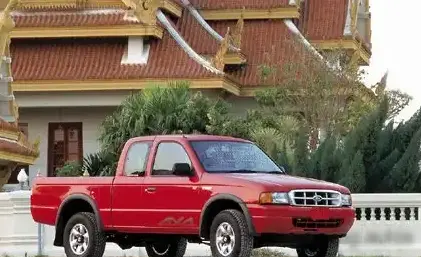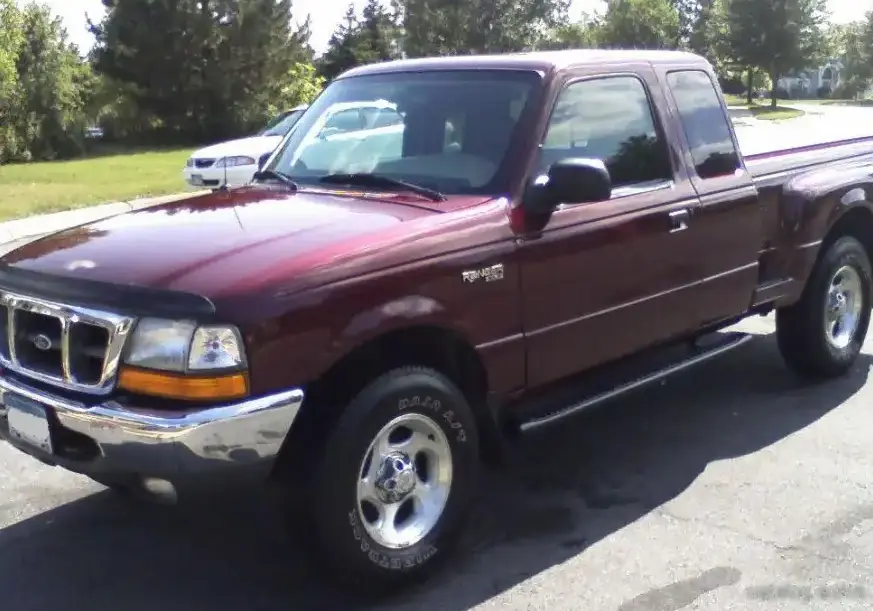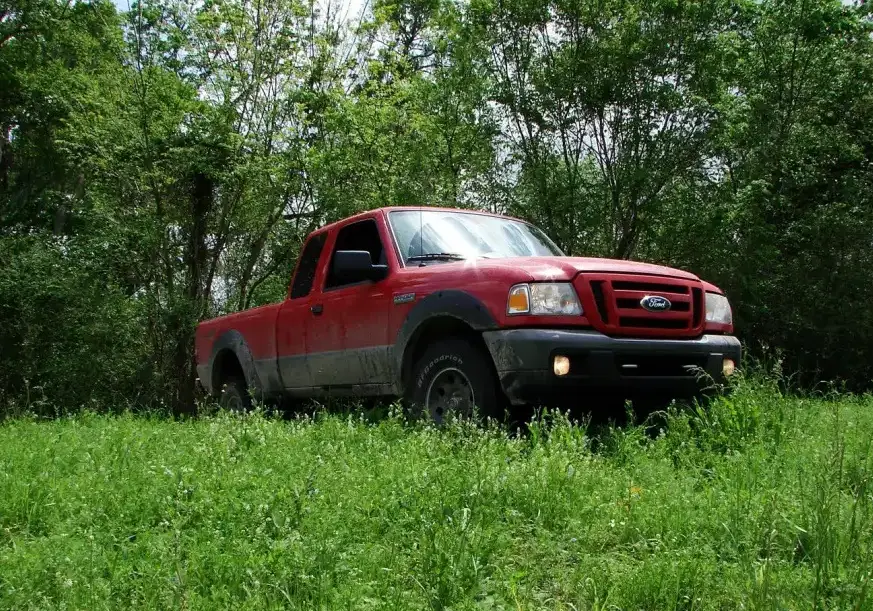
The Ford Ranger II Super Cab 2.3 (143 Hp) 4×4 was a mid-size pickup truck produced by Ford between 2006 and 2010. Representing the second generation of the Ranger in the North American market, this particular variant occupied a key position in the lineup, offering a balance between affordability, capability, and fuel efficiency. It was designed to appeal to buyers needing a versatile truck for both work and personal use, particularly in regions where four-wheel drive was essential. The Super Cab configuration provided additional passenger space compared to the standard cab models, making it a more practical choice for families or crews.
Technical Specifications
| Brand | Ford |
| Model | Ranger |
| Generation | Ranger II Super Cab |
| Type (Engine) | 2.3 (143 Hp) 4×4 |
| Start of production | 2006 |
| End of production | 2010 |
| Powertrain Architecture | Internal Combustion engine |
| Body type | Pick-up |
| Seats | 4 |
| Doors | 2 |
| Fuel Type | Petrol (Gasoline) |
| Power | 143 Hp @ 5250 rpm |
| Power per litre | 63.4 Hp/l |
| Torque | 209 Nm @ 3750 rpm / 154.15 lb.-ft. @ 3750 rpm |
| Engine layout | Front, Longitudinal |
| Engine displacement | 2255 cm3 / 137.61 cu. in. |
| Number of cylinders | 4 |
| Engine configuration | Inline |
| Compression ratio | 9.7:1 |
| Number of valves per cylinder | 4 |
| Fuel injection system | Multi-port manifold injection |
| Engine aspiration | Naturally aspirated engine |
| Engine oil capacity | 3.8 l / 4.02 US qt | 3.34 UK qt |
| Coolant | 10 l / 10.57 US qt | 8.8 UK qt |
| Trunk (boot) space – minimum | 1500 l / 52.97 cu. ft. |
| Fuel tank capacity | 70 l / 18.49 US gal | 15.4 UK gal |
| Length | 5075 mm / 199.8 in. |
| Width | 1805 mm / 71.06 in. |
| Height | 1745 mm / 68.7 in. |
| Wheelbase | 3000 mm / 118.11 in. |
| Front track | 1488 mm / 58.58 in. |
| Rear (Back) track | 1455 mm / 57.28 in. |
| Ride height (ground clearance) | 203 mm / 7.99 in. |
| Drive wheel | All wheel drive (4×4) |
| Number of gears and type of gearbox | 5 gears, manual transmission |
| Front suspension | Independent torsion bar, double wishbone |
| Rear suspension | Dependent suspension of two longitudinal semi-elliptic leaf springs |
| Front brakes | Ventilated discs |
| Rear brakes | Drum |
| Assisting systems | ABS (Anti-lock braking system) |
| Steering type | Steering rack and pinion |
| Power steering | Hydraulic Steering |
| Tires size | 235/75 R15; 245/70 R16 |
| Wheel rims size | 15; 16 |
Powertrain & Engine Architecture
The heart of the Ranger II Super Cab 2.3 4×4 was the 2.3-liter inline-four cylinder engine. This engine, internally designated as the 2.3L Duratec, was a relatively simple and robust design. It featured a single overhead camshaft (SOHC) valvetrain with four valves per cylinder, and utilized a multi-port fuel injection system for precise fuel delivery. The 9.7:1 compression ratio was a compromise between performance and the ability to run on regular unleaded gasoline. The engine’s longitudinal mounting allowed for a traditional rear-wheel-drive layout, with the transfer case enabling on-demand four-wheel drive. The five-speed manual transmission was the standard offering, providing a direct and engaging driving experience. The transmission’s gear ratios were tuned for a balance of acceleration and fuel economy, with a relatively low first gear for off-road capability and a higher fifth gear for highway cruising.
Driving Characteristics
The 143 horsepower and 154 lb-ft of torque produced by the 2.3-liter engine provided adequate, but not overwhelming, performance. Acceleration was modest, and the truck felt most comfortable when driven at moderate speeds. Compared to the available 3.0-liter V6 and 4.0-liter V6 options, the 2.3-liter engine offered significantly less power, resulting in slower acceleration and a lower top speed. However, the 2.3L engine was more fuel-efficient. The manual transmission allowed for precise control over gear selection, enabling drivers to maximize the available power. The four-wheel-drive system provided enhanced traction in slippery conditions, making the truck capable of handling moderate off-road terrain. The ride quality was typical for a body-on-frame pickup truck, with a firm suspension that prioritized load-carrying capacity over comfort.
Equipment & Trim Levels
The Ranger II Super Cab 2.3 4×4 typically came with a fairly basic level of standard equipment. This included air conditioning, a basic audio system, and cloth upholstery. Power windows and locks were often optional extras. The Super Cab configuration offered a small rear seat, suitable for occasional passengers or extra storage. Trim levels varied depending on the year and region, but generally included options for upgraded audio systems, alloy wheels, and exterior styling enhancements. Popular options included a towing package, which added a trailer hitch and upgraded cooling system, and a convenience package, which included features like keyless entry and power mirrors.
Chassis & Braking
The Ranger II utilized a traditional body-on-frame construction, providing a robust and durable platform. The front suspension consisted of an independent torsion bar setup with double wishbone control arms, while the rear suspension employed a leaf spring design. This combination provided a good balance of ride comfort and load-carrying capacity. The braking system featured ventilated discs at the front and drum brakes at the rear. Anti-lock brakes (ABS) were standard, enhancing safety by preventing wheel lockup during hard braking. The steering system was a hydraulic rack-and-pinion setup, providing responsive and precise steering feel.
Market Reception & Comparison
The Ranger II Super Cab 2.3 4×4 was generally well-received by consumers looking for an affordable and capable pickup truck. Critics praised its practicality and durability, but noted that its performance was somewhat lacking compared to the V6-powered models. Fuel economy was a strong point, making it an attractive option for buyers who prioritized efficiency. Compared to competitors like the Chevrolet Colorado and Toyota Tacoma, the Ranger offered a more affordable price point, but lacked some of the refinement and features of those models. The 2.3L engine was often seen as a good choice for buyers who primarily used their trucks for light-duty tasks and didn’t require the extra power of a V6.
Legacy
The Ford Ranger II Super Cab 2.3 4×4 has proven to be a relatively reliable and long-lasting vehicle. The 2.3-liter Duratec engine is known for its durability and relatively low maintenance costs. While not as sought-after as the V6 models, the 2.3-liter version remains a popular choice in the used car market, particularly among buyers looking for an affordable and practical pickup truck. Parts availability is generally good, and the truck’s simple design makes it relatively easy to repair. Today, these Rangers are often found being used as work trucks, farm vehicles, or as a base for off-road modifications.