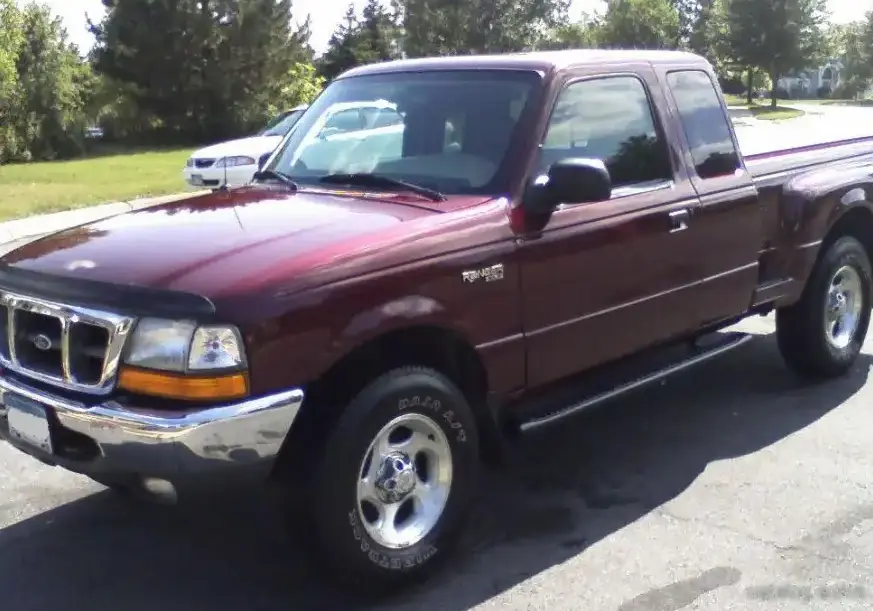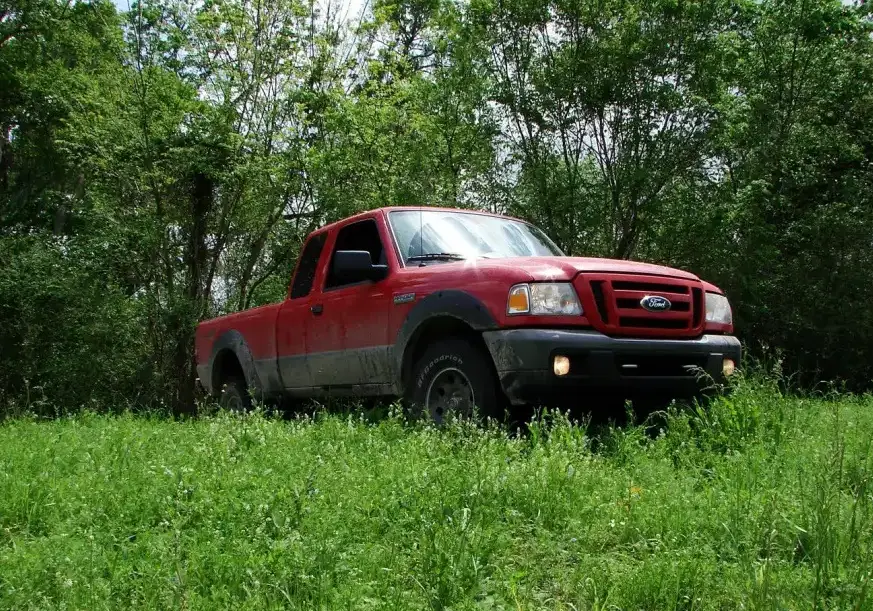
The Ford Ranger II Super Cab 2.5 TDCi 4×4 Automatic, produced between 2006 and 2010, represents a significant iteration of Ford’s globally successful mid-size pickup truck. This variant, built primarily for the European and Australian markets, offered a blend of practicality, diesel efficiency, and four-wheel-drive capability. It occupied a middle ground within the Ranger II lineup, positioned above the base models and below the higher-powered, often more luxuriously equipped, versions. The Super Cab configuration provided extended passenger space compared to the standard cab, making it suitable for both work and family use. This model falls within the broader Ranger II generation (2006-2012), which itself was a heavily revised version of the global Ford Ranger platform.
Technical Specifications
| Brand | Ford |
| Model | Ranger |
| Generation | Ranger II Super Cab |
| Type (Engine) | 2.5 TDCi (143 Hp) 4×4 Automatic |
| Start of production | 2006 |
| End of production | 2010 |
| Powertrain Architecture | Internal Combustion engine |
| Body type | Pick-up |
| Seats | 4 |
| Doors | 2 |
| Fuel consumption (urban) | 10.9 l/100 km (21.6 US mpg) |
| Fuel consumption (extra urban) | 7.8 l/100 km (30.2 US mpg) |
| Fuel consumption (combined) | 8.9 l/100 km (26.4 US mpg) |
| Fuel Type | Diesel |
| Acceleration 0 – 100 km/h | 12.5 sec |
| Acceleration 0 – 62 mph | 12.5 sec |
| Acceleration 0 – 60 mph | 11.9 sec |
| Maximum speed | 147 km/h (91.34 mph) |
| Emission standard | Euro 4 |
| Weight-to-power ratio | 12.9 kg/Hp |
| Weight-to-torque ratio | 5.6 kg/Nm |
| Power | 143 Hp @ 3500 rpm |
| Torque | 330 Nm @ 1800 rpm (243.4 lb.-ft. @ 1800 rpm) |
| Engine layout | Front, Longitudinal |
| Engine Model/Code | WLAA |
| Engine displacement | 2499 cm3 (152.5 cu. in.) |
| Number of cylinders | 4 |
| Engine configuration | Inline |
| Cylinder Bore | 93 mm (3.66 in.) |
| Piston Stroke | 92 mm (3.62 in.) |
| Compression ratio | 17.5:1 |
| Number of valves per cylinder | 4 |
| Fuel injection system | Diesel Commonrail |
| Engine aspiration | Turbocharger, Intercooler |
| Engine oil capacity | 7 l (7.4 US qt | 6.16 UK qt) |
| Coolant capacity | 9.4 l (9.93 US qt | 8.27 UK qt) |
| Kerb Weight | 1845 kg (4067.53 lbs.) |
| Max. weight | 3070 kg (6768.19 lbs.) |
| Max load | 1225 kg (2700.66 lbs.) |
| Trunk (boot) space – minimum | 1500 l (52.97 cu. ft.) |
| Fuel tank capacity | 70 l (18.49 US gal | 15.4 UK gal) |
| Length | 5075 mm (199.8 in.) |
| Width | 1805 mm (71.06 in.) |
| Height | 1745 mm (68.7 in.) |
| Wheelbase | 3000 mm (118.11 in.) |
| Front track | 1488 mm (58.58 in.) |
| Rear (Back) track | 1455 mm (57.28 in.) |
| Ride height (ground clearance) | 203 mm (7.99 in.) |
| Drive wheel | All wheel drive (4×4) |
| Number of gears and type of gearbox | 5 gears, automatic transmission |
| Front suspension | Independent torsion bar, double wishbone |
| Rear suspension | Dependent suspension of two longitudinal semi-elliptic leaf springs |
| Front brakes | Ventilated discs |
| Rear brakes | Drum |
| Assisting systems | ABS (Anti-lock braking system) |
| Steering type | Steering rack and pinion |
| Power steering | Hydraulic Steering |
| Tires size | 235/75 R15; 245/70 R16 |
| Wheel rims size | 15; 16 |
Powertrain & Engine Architecture
The heart of the Ranger II Super Cab 2.5 TDCi 4×4 Automatic is the WLAA engine, a 2.5-liter inline-four cylinder diesel. This engine utilizes a common rail direct injection system, delivering fuel at extremely high pressure for improved combustion efficiency and reduced emissions. A turbocharger with an intercooler further enhances performance by forcing more air into the cylinders. The engine produces 143 horsepower at 3500 rpm and 330 Nm (243 lb-ft) of torque at 1800 rpm. The automatic transmission is a five-speed unit, chosen for its ease of use and suitability for a wider range of drivers. While not known for blistering acceleration, the transmission is geared for towing and hauling, prioritizing usability over outright speed. The WLAA engine is known for its relatively robust design, though proper maintenance is crucial for longevity.
Driving Characteristics
The 2.5 TDCi Automatic Ranger offers a comfortable, if not particularly sporty, driving experience. The automatic transmission provides smooth shifts, but can feel somewhat sluggish when downshifting for overtaking maneuvers. The 330 Nm of torque is readily available from low engine speeds, making it capable of handling moderate loads and tackling off-road terrain. Compared to the manual transmission versions of the same engine, the automatic sacrifices some responsiveness. The higher-output 3.0-liter TDCi variants offered significantly more power and quicker acceleration, but at the cost of increased fuel consumption. The 4×4 system provides enhanced traction in slippery conditions, making it a versatile vehicle for both on and off-road use.
Equipment & Trim Levels
The Ranger II Super Cab 2.5 TDCi 4×4 Automatic typically came equipped with air conditioning, power steering, central locking, and an AM/FM radio. Higher trim levels, often denoted by “Limited” or “XLT” badges, added features such as alloy wheels, upgraded interior trim, electric windows, and a more sophisticated audio system. Optional extras included a sunroof, leather upholstery, and a tow bar. The Super Cab configuration offered a small rear seating area, suitable for occasional passengers, and additional storage space behind the seats.
Chassis & Braking
The Ranger II utilizes a body-on-frame construction, providing a robust and durable platform. The front suspension consists of independent torsion bars and double wishbones, while the rear suspension employs a traditional leaf spring setup. This configuration prioritizes load-carrying capacity and durability over refined handling. The braking system features ventilated discs on the front wheels and drum brakes on the rear. Anti-lock Braking System (ABS) was standard, enhancing safety during emergency braking situations. The relatively simple suspension setup and drum brakes on the rear reflect the vehicle’s work-oriented design and cost considerations.
Market Reception & Comparison
The Ranger II Super Cab 2.5 TDCi 4×4 Automatic was generally well-received in its target markets. Critics praised its practicality, fuel efficiency, and off-road capability. However, some reviewers noted the engine’s lack of outright power and the automatic transmission’s somewhat hesitant performance. Compared to competitors like the Toyota Hilux and Nissan Navara, the Ranger offered a competitive package, particularly in terms of value for money. Fuel economy was a strong point, averaging around 26.4 US mpg in combined driving conditions. Reliability was generally good, although some owners reported issues with the fuel injection system and turbocharger.
Legacy
The Ford Ranger II Super Cab 2.5 TDCi 4×4 Automatic remains a popular choice in the used car market, particularly for those seeking a capable and affordable pickup truck. The WLAA engine, while not the most powerful, is known for its durability when properly maintained. Common issues include wear and tear on the turbocharger and potential problems with the fuel injectors. Parts availability is generally good, and the relatively simple mechanical design makes it relatively easy to repair. This Ranger variant represents a solid and dependable workhorse, offering a blend of practicality, efficiency, and four-wheel-drive capability that continues to appeal to buyers today.