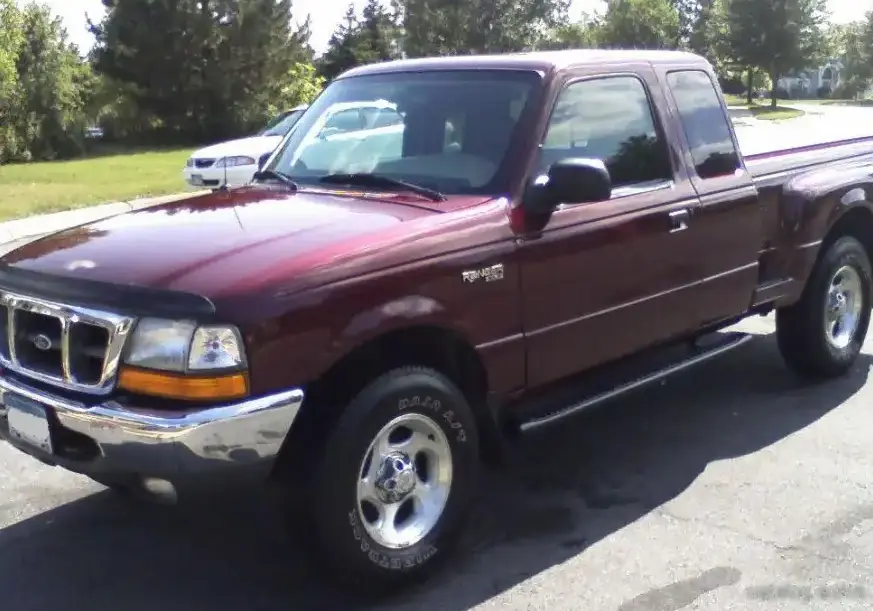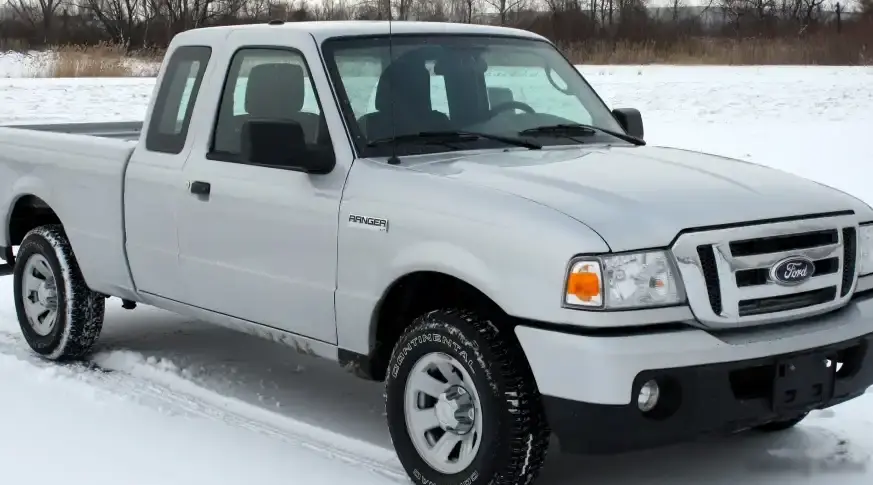
The Ford Ranger II Super Cab, specifically the facelifted version produced from 2009 to 2011, represented a significant update to Ford’s mid-size pickup truck offering. This iteration of the Ranger, sold primarily in Europe, South Africa, Australia, and South America, aimed to blend practicality, durability, and a degree of refinement. The 2.5 TDCi engine with 143 horsepower coupled with a four-wheel drive and automatic transmission configuration was a mid-range offering, positioned between the base model engines and the more powerful variants. It targeted buyers needing a capable workhorse with the convenience of an automatic gearbox, without the higher price tag of the top-spec models.
Technical Specifications
| Brand | Ford |
| Model | Ranger |
| Generation | Ranger II Super Cab (facelift 2009) |
| Type (Engine) | 2.5 TDCi (143 Hp) 4×4 Automatic |
| Start of production | 2009 |
| End of production | 2011 |
| Powertrain Architecture | Internal Combustion engine |
| Body type | Pick-up |
| Seats | 4 |
| Doors | 2 |
| Fuel consumption (urban) | 10.9 l/100 km (21.6 US mpg) |
| Fuel consumption (extra urban) | 7.8 l/100 km (30.2 US mpg) |
| Fuel consumption (combined) | 8.9 l/100 km (26.4 US mpg) |
| Fuel Type | Diesel |
| Acceleration 0 – 100 km/h | 12.5 sec |
| Acceleration 0 – 62 mph | 12.5 sec |
| Acceleration 0 – 60 mph | 11.9 sec |
| Maximum speed | 170 km/h (105.63 mph) |
| Weight-to-power ratio | 12.9 kg/Hp |
| Weight-to-torque ratio | 5.6 kg/Nm |
| Power | 143 Hp @ 3500 rpm |
| Torque | 330 Nm @ 1800 rpm (243.4 lb.-ft. @ 1800 rpm) |
| Engine layout | Front, Longitudinal |
| Engine Model/Code | WLAA |
| Engine displacement | 2499 cm3 (152.5 cu. in.) |
| Number of cylinders | 4 |
| Engine configuration | Inline |
| Cylinder Bore | 93 mm (3.66 in.) |
| Piston Stroke | 92 mm (3.62 in.) |
| Compression ratio | 17.5:1 |
| Number of valves per cylinder | 4 |
| Fuel injection system | Diesel Commonrail |
| Engine aspiration | Turbocharger, Intercooler |
| Engine oil capacity | 7 l (7.4 US qt | 6.16 UK qt) |
| Coolant capacity | 9.4 l (9.93 US qt | 8.27 UK qt) |
| Kerb Weight | 1845 kg (4067.53 lbs.) |
| Max. weight | 2985 kg (6580.8 lbs.) |
| Max load | 1140 kg (2513.27 lbs.) |
| Fuel tank capacity | 70 l (18.49 US gal | 15.4 UK gal) |
| Length | 5080 mm (200 in.) |
| Width | 1788 mm (70.39 in.) |
| Height | 1762 mm (69.37 in.) |
| Wheelbase | 3000 mm (118.11 in.) |
| Front track | 1488 mm (58.58 in.) |
| Rear track | 1455 mm (57.28 in.) |
| Ride height (ground clearance) | 230 mm (9.06 in.) |
| Drive wheel | All wheel drive (4×4) |
| Number of gears | 5 |
| Gearbox type | Automatic transmission |
| Front suspension | Independent torsion bar, double wishbone |
| Rear suspension | Dependent suspension of two longitudinal semi-elliptic leaf springs |
| Front brakes | Ventilated discs |
| Rear brakes | Drum |
| Assisting systems | ABS (Anti-lock braking system) |
| Steering type | Steering rack and pinion |
| Tires size | 235/75 R15; 245/70 R16 |
| Wheel rims size | 15; 16 |
INTRODUCTION
The 2009-2011 Ford Ranger II Super Cab 2.5 TDCi 4×4 Automatic was a key variant within the broader Ranger lineup, particularly in markets outside of North America. Built on the 1HX0/A3 platform, this model represented a facelift of the second-generation Ranger, bringing updated styling and, in this case, a combination of a diesel engine, four-wheel drive, and an automatic transmission. This configuration aimed to provide a balance of capability and convenience for buyers who needed a versatile pickup truck for both work and personal use. The Super Cab body style offered extended rear seating compared to the standard cab, increasing its practicality for families or crews.
Powertrain & Engine Architecture
At the heart of this Ranger variant lies the WLAA 2.5-liter inline-four cylinder turbodiesel engine. This engine, a common sight in European Ford commercial vehicles of the era, utilized a common rail direct injection system to deliver fuel directly into the cylinders at extremely high pressure. This technology, coupled with a turbocharger and intercooler, maximized combustion efficiency and power output. The engine produced 143 horsepower at 3500 rpm and a respectable 330 Nm (243 lb-ft) of torque at 1800 rpm. The four valves per cylinder configuration (DOHC) further enhanced breathing and performance. The automatic transmission was a five-speed unit, designed to provide smooth gear changes and ease of driving, particularly in off-road or towing situations. While not known for being the most technologically advanced automatic, it was a robust and reliable unit.
Driving Characteristics
The Ranger 2.5 TDCi Automatic offered a comfortable, if not particularly sporty, driving experience. The automatic transmission, while convenient, did slightly diminish the engine’s responsiveness compared to the manual transmission options. Acceleration from 0-60 mph took around 11.9 seconds, and top speed was limited to 170 km/h (105.63 mph). The torque delivery was relatively flat, making it suitable for hauling loads or navigating challenging terrain. The four-wheel drive system provided enhanced traction in slippery conditions, and the relatively high ground clearance of 230mm (9.06 inches) allowed for moderate off-road capability. Compared to the higher-output 3.2-liter TDCi versions, this 2.5-liter engine felt less powerful, but it offered better fuel economy and a more relaxed driving experience.
Equipment & Trim Levels
The 2.5 TDCi Automatic typically came with a reasonable level of standard equipment. This included power steering, central locking, electric windows, and an AM/FM radio. Higher trim levels, often denoted by names like “Limited” or “XLT,” added features such as air conditioning, alloy wheels, upgraded interior trim, and sometimes a basic infotainment system. The Super Cab configuration offered rear seats, although they were generally best suited for occasional use or smaller passengers. Optional extras could include a tow bar, side steps, and a bed liner.
Chassis & Braking
The Ranger II Super Cab utilized a body-on-frame construction, providing a robust and durable chassis. The front suspension consisted of independent torsion bars and double wishbones, offering a reasonable level of ride comfort. The rear suspension employed a more traditional setup with two longitudinal semi-elliptic leaf springs, prioritizing load-carrying capacity over outright comfort. Braking duties were handled by ventilated discs at the front and drum brakes at the rear. Anti-lock Braking System (ABS) was standard, enhancing safety during emergency braking situations. The steering was a rack and pinion system, providing precise and responsive handling.
Market Reception & Comparison
The Ranger 2.5 TDCi Automatic was generally well-received as a practical and capable pickup truck. Critics praised its fuel efficiency, durability, and the convenience of the automatic transmission. However, some noted that the engine lacked the outright power of some of its competitors, and the automatic gearbox wasn’t as refined as those found in more expensive vehicles. Compared to the manual transmission versions of the same engine, the automatic offered slightly lower fuel economy and a less engaging driving experience. Against rivals like the Mitsubishi L200 and Nissan Navara, the Ranger offered a competitive package, particularly in terms of value for money.
Legacy
The Ford Ranger II Super Cab 2.5 TDCi Automatic has proven to be a relatively reliable vehicle in the used car market. The WLAA engine, while not without its quirks, is generally considered durable and capable of high mileage with proper maintenance. The automatic transmission, though not the most sophisticated, has also proven to be fairly robust. Common issues include wear and tear on suspension components and potential problems with the fuel injection system. Today, these Rangers represent an affordable and practical option for those seeking a capable pickup truck for work or leisure. Their simplicity and relatively low running costs make them an attractive choice for buyers looking for a dependable and utilitarian vehicle.