Technical Specifications
| Brand | Ford |
| Model | Ranger |
| Generation | Ranger III Double Cab |
| Type (Engine) | 2.2 TDCi (150 Hp) 4×4 Automatic |
| Start of production | 2011 |
| End of production | 2015 |
| Powertrain Architecture | Internal Combustion engine |
| Body type | Pick-up |
| Seats | 5 |
| Doors | 4 |
| Fuel consumption (urban) | 11.9 l/100 km (19.8 US mpg, 23.7 UK mpg, 8.4 km/l) |
| Fuel consumption (extra urban) | 8 l/100 km (29.4 US mpg, 35.3 UK mpg, 12.5 km/l) |
| Fuel consumption (combined) | 9.4 l/100 km (25 US mpg, 30.1 UK mpg, 10.6 km/l) |
| CO2 emissions | 248 g/km |
| Fuel Type | Diesel |
| Acceleration 0 – 100 km/h | 12.6 sec |
| Acceleration 0 – 62 mph | 12.6 sec |
| Acceleration 0 – 60 mph | 12 sec |
| Maximum speed | 175 km/h (108.74 mph) |
| Emission standard | Euro 4 |
| Weight-to-power ratio | 13.8 kg/Hp, 72.7 Hp/tonne |
| Weight-to-torque ratio | 5.5 kg/Nm, 181.8 Nm/tonne |
| Power | 150 Hp @ 3700 rpm |
| Power per litre | 68.2 Hp/l |
| Torque | 375 Nm @ 1500-2500 rpm (276.59 lb.-ft. @ 1500-2500 rpm) |
| Engine layout | Front, Longitudinal |
| Engine displacement | 2198 cm3 (134.13 cu. in.) |
| Number of cylinders | 4 |
| Engine configuration | Inline |
| Cylinder Bore | 86 mm (3.39 in.) |
| Piston Stroke | 94.6 mm (3.72 in.) |
| Compression ratio | 15.7:1 |
| Number of valves per cylinder | 4 |
| Fuel injection system | Diesel Commonrail |
| Engine aspiration | Turbocharger, Intercooler |
| Engine oil capacity | 8.6 l (9.09 US qt | 7.57 UK qt) |
| Coolant | 11.5 l (12.15 US qt | 10.12 UK qt) |
| Kerb Weight | 2063 kg (4548.14 lbs.) |
| Max. weight | 3200 kg (7054.79 lbs.) |
| Max load | 1137 kg (2506.66 lbs.) |
| Trunk (boot) space – minimum | 1210 l (42.73 cu. ft.) |
| Fuel tank capacity | 80 l (21.13 US gal | 17.6 UK gal) |
| Length | 5359 mm (210.98 in.) |
| Width | 1850 mm (72.83 in.) |
| Height | 1815 mm (71.46 in.) |
| Wheelbase | 3220 mm (126.77 in.) |
| Front track | 1560 mm (61.42 in.) |
| Rear (Back) track | 1560 mm (61.42 in.) |
| Ride height (ground clearance) | 229 mm (9.02 in.) |
| Drag coefficient (Cd) | 0.40 |
| Drive wheel | All wheel drive (4×4) |
| Number of gears and type of gearbox | 6 gears, automatic transmission |
| Front suspension | Independent coil spring |
| Rear suspension | Dependent suspension of two longitudinal semi-elliptic leaf springs |
| Front brakes | Ventilated discs |
| Rear brakes | Drum |
| Assisting systems | ABS (Anti-lock braking system) |
| Steering type | Steering rack and pinion |
| Power steering | Hydraulic Steering |
| Tires size | 255/70 R16; 255/55 R16; 265/65 R17; 265/60 R18 |
| Wheel rims size | 16; 17; 18 |
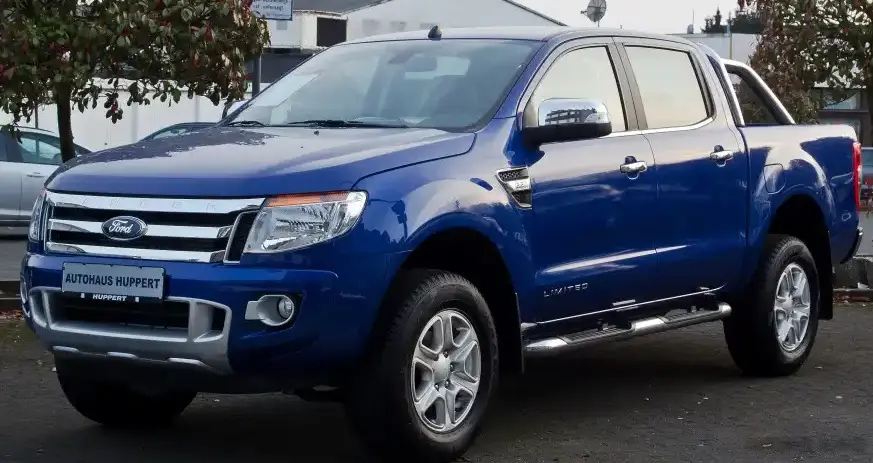
The Ford Ranger III Double Cab 2.2 TDCi 4×4 Automatic, produced between 2011 and 2015, was a significant offering in the mid-size pickup truck segment, particularly in European and Australian markets. Built on the T6 platform, this Ranger variant aimed to balance practicality, capability, and a degree of comfort for both work and family use. It occupied a versatile position in the Ranger lineup, offering four-wheel drive and the convenience of an automatic transmission, appealing to buyers who needed a capable truck without the demands of a manual gearbox. This specific configuration, with its 2.2-liter turbodiesel engine, was positioned as a middle-ground choice, offering a compromise between the base engine’s economy and the more powerful 3.2-liter’s towing capacity.
Powertrain & Engine Architecture
The heart of this Ranger variant is the 2.2-liter Puma TDCi diesel engine. This engine, part of Ford’s Puma family, is a four-cylinder, inline configuration with a longitudinal mounting. It utilizes a common-rail direct injection system, delivering fuel at extremely high pressures for optimized combustion. The engine is turbocharged with an intercooler, enhancing power and efficiency. The 150 horsepower output is achieved at 3700 rpm, while the substantial 375 Nm (276.59 lb.-ft.) of torque is available from a low 1500 rpm, extending to 2500 rpm. This broad torque curve is crucial for a pickup truck, providing strong pulling power and effortless acceleration even when laden. The engine features a compression ratio of 15.7:1 and 16 valves (four per cylinder). The automatic transmission is a six-speed unit, designed to provide smooth shifts and efficient power delivery. While not as quick-shifting as some modern automatics, it was considered reliable and well-suited to the engine’s characteristics.
Driving Characteristics
The 2.2 TDCi automatic Ranger offers a comfortable and capable driving experience. The automatic transmission, while not sporty, provides smooth gear changes and eliminates the need for constant clutch and gear lever operation, making it ideal for urban driving and towing. Acceleration from 0-100 km/h (0-62 mph) takes around 12.6 seconds, which is respectable for a mid-size pickup. The engine’s strong low-end torque makes it feel more powerful than the numbers suggest, particularly when hauling loads or tackling inclines. Compared to the manual transmission version, the automatic sacrifices a small amount of fuel economy and responsiveness, but gains significantly in ease of use. Compared to the higher-output 3.2-liter engine, this 2.2L variant offers better fuel economy but less overall power and towing capacity. The gear ratios are tuned for a balance of fuel efficiency and pulling power, with a relatively tall final drive.
Equipment & Trim Levels
The Ranger III Double Cab 2.2 TDCi 4×4 Automatic typically came with a reasonable level of standard equipment. This included air conditioning, power windows, central locking, and an audio system with USB connectivity. Higher trim levels, such as the Limited, added features like leather upholstery, alloy wheels, a more sophisticated audio system, and parking sensors. Optional extras included a navigation system, a sunroof, and a tow bar. The interior design was functional and durable, with hard-wearing plastics and comfortable seating. The double cab configuration provides seating for five passengers, although rear legroom can be limited for taller occupants.
Chassis & Braking
The Ranger III utilizes a robust chassis designed for both on-road comfort and off-road capability. The front suspension consists of independent coil springs, providing a comfortable ride and good handling. The rear suspension employs a traditional leaf spring setup, which is well-suited to carrying heavy loads. Braking is handled by ventilated discs at the front and drum brakes at the rear. Anti-lock Braking System (ABS) is standard. The 4×4 system offers selectable four-wheel drive, allowing the driver to switch between 2WD and 4WD modes as needed. Ground clearance is a respectable 229 mm (9.02 in.), enabling the Ranger to tackle moderately challenging terrain.
Market Reception & Comparison
The Ford Ranger III Double Cab 2.2 TDCi 4×4 Automatic was generally well-received by critics and buyers alike. It was praised for its versatility, capability, and comfortable ride. Fuel economy was considered good for a pickup truck of its size, averaging around 9.4 l/100 km (25 US mpg). However, some critics noted that the automatic transmission could feel sluggish at times, and the interior was not as refined as some of its competitors. Compared to other trims in the Ranger lineup, the 2.2 TDCi automatic offered a good balance of performance, economy, and price. It was a popular choice for buyers who needed a capable pickup truck for both work and leisure.
Legacy
The 2.2 TDCi engine and the six-speed automatic transmission have proven to be relatively reliable in the long term. While some owners have reported issues with the diesel particulate filter (DPF) and the fuel injection system, these are not uncommon problems for modern diesel engines. The Ranger III Double Cab remains a popular choice in the used car market, offering a good value for money. Its robust construction and capable 4×4 system make it a practical and durable vehicle for a wide range of applications. Parts availability is generally good, and maintenance costs are reasonable, contributing to its continued appeal.