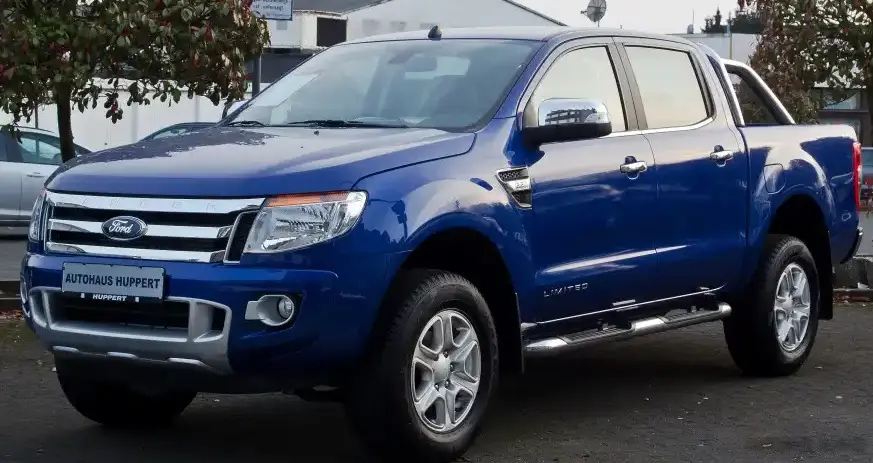
The Ford Ranger III Double Cab 3.2 TDCi 4×4, produced between 2011 and 2015, represented a significant evolution of Ford’s globally popular pickup truck. This variant, powered by the robust 3.2-liter turbodiesel engine, was primarily aimed at markets outside of North America, where the Ranger nameplate had been discontinued for a period. It served as a versatile workhorse and family vehicle, offering a blend of practicality, capability, and comfort. The Double Cab configuration provided seating for five passengers, making it suitable for both commercial and personal use. This model occupied a mid-to-high range position within the Ranger III lineup, offering more power and features than the base engine options but remaining below the top-spec trims.
Technical Specifications
| Brand | Ford |
| Model | Ranger |
| Generation | Ranger III Double Cab |
| Type (Engine) | 3.2 TDCi (200 Hp) 4×4 |
| Start of production | 2011 |
| End of production | 2015 |
| Powertrain Architecture | Internal Combustion engine |
| Body type | Pick-up |
| Seats | 5 |
| Doors | 4 |
| Fuel consumption (urban) | 12 l/100 km (19.6 US mpg) |
| Fuel consumption (extra urban) | 8.1 l/100 km (29 US mpg) |
| Fuel consumption (combined) | 9.5 l/100 km (24.8 US mpg) |
| CO2 emissions | 249 g/km |
| Fuel Type | Diesel |
| Acceleration 0 – 100 km/h | 10.3 sec |
| Acceleration 0 – 62 mph | 10.3 sec |
| Acceleration 0 – 60 mph | 9.8 sec |
| Maximum speed | 175 km/h (108.74 mph) |
| Emission standard | Euro 4 |
| Weight-to-power ratio | 10.4 kg/Hp |
| Weight-to-torque ratio | 4.4 kg/Nm |
| Power | 200 Hp @ 3000 rpm |
| Torque | 470 Nm @ 1500-2750 rpm (346.65 lb.-ft.) |
| Engine layout | Front, Longitudinal |
| Engine displacement | 3198 cm3 (195.15 cu. in.) |
| Number of cylinders | 5 |
| Engine configuration | Inline |
| Cylinder Bore | 89.9 mm (3.54 in.) |
| Piston Stroke | 100.8 mm (3.97 in.) |
| Compression ratio | 15.7:1 |
| Number of valves per cylinder | 4 |
| Fuel injection system | Diesel Commonrail |
| Engine aspiration | Turbocharger, Intercooler |
| Engine oil capacity | 9.75 l (10.3 US qt) |
| Coolant capacity | 12.9 l (13.63 US qt) |
| Kerb Weight | 2073 kg (4570.18 lbs.) |
| Max. weight | 3200 kg (7054.79 lbs.) |
| Max load | 1127 kg (2484.61 lbs.) |
| Trunk (boot) space – minimum | 1210 l (42.73 cu. ft.) |
| Fuel tank capacity | 80 l (21.13 US gal) |
| Length | 5359 mm (210.98 in.) |
| Width | 1850 mm (72.83 in.) |
| Height | 1815 mm (71.46 in.) |
| Wheelbase | 3220 mm (126.77 in.) |
| Front track | 1560 mm (61.42 in.) |
| Rear track | 1560 mm (61.42 in.) |
| Ride height (ground clearance) | 229 mm (9.02 in.) |
| Drag coefficient (Cd) | 0.40 |
| Drive wheel | All wheel drive (4×4) |
| Number of gears | 6 |
| Gearbox type | Manual transmission |
| Front suspension | Independent coil spring |
| Rear suspension | Dependent suspension of two longitudinal semi-elliptic leaf springs |
| Front brakes | Ventilated discs |
| Rear brakes | Drum |
| Assisting systems | ABS (Anti-lock braking system) |
| Steering type | Steering rack and pinion |
| Power steering | Hydraulic Steering |
| Tires size | 255/70 R16; 255/55 R16; 265/65 R17; 265/60 R18 |
| Wheel rims size | 16; 17; 18 |
Powertrain & Engine Architecture
The heart of the Ranger III Double Cab 3.2 TDCi is the Puma 3.2-liter inline five-cylinder diesel engine. This engine, designated as the Puma 3200, was a significant upgrade over the smaller displacement diesels offered in the Ranger lineup. It featured a common-rail direct injection system, a variable geometry turbocharger, and an intercooler, all contributing to its impressive power and torque output. The engine’s robust construction and relatively simple design (compared to more modern diesels) contributed to its durability. The 3.2 TDCi produced 200 horsepower at 3000 rpm and a substantial 470 Nm (346.65 lb-ft) of torque between 1500 and 2750 rpm. This torque curve provided excellent pulling power, making it well-suited for towing and hauling. The engine was typically paired with a six-speed manual transmission, although an automatic transmission was also available in some markets. The longitudinal engine layout and rear-wheel-drive based four-wheel-drive system were standard.
Driving Characteristics
The 3.2 TDCi-powered Ranger Double Cab offered a compelling driving experience. The engine’s ample torque meant that it didn’t require frequent gear changes, even when carrying a load or tackling inclines. The six-speed manual transmission provided precise shifts, and the gear ratios were well-matched to the engine’s powerband. While not a sports truck, the Ranger offered responsive acceleration, achieving 0-60 mph in around 9.8 seconds. The four-wheel-drive system, selectable via a rotary dial, provided enhanced traction in off-road conditions. Compared to the smaller 2.5-liter diesel variants, the 3.2 TDCi offered a noticeable improvement in performance and refinement. It was also more capable when towing, with a higher maximum towing capacity. The ride quality, while firm due to the truck’s construction, was generally comfortable for everyday use.
Equipment & Trim Levels
The Ranger III Double Cab 3.2 TDCi 4×4 was typically offered in several trim levels, varying by market. Standard equipment generally included air conditioning, power windows, power door locks, and a basic audio system. Higher trim levels added features such as alloy wheels, a more sophisticated audio system with Bluetooth connectivity, cruise control, and upgraded interior trim. Optional extras included a navigation system, leather upholstery, and a sunroof. The Double Cab configuration provided ample space for five passengers, with a usable rear seat. The interior design was functional and durable, with a focus on practicality rather than luxury.
Chassis & Braking
The Ranger III Double Cab utilized a body-on-frame construction, providing a robust and durable chassis. The front suspension consisted of independent coil springs, while the rear suspension employed a traditional leaf spring setup. This configuration provided a good balance between ride comfort and load-carrying capacity. The braking system featured ventilated discs on the front wheels and drum brakes on the rear. Anti-lock Braking System (ABS) was standard. The steering was a hydraulic rack-and-pinion system, providing precise and responsive handling. Tire sizes varied depending on the trim level, ranging from 255/70 R16 to 265/60 R18.
Market Reception & Comparison
The Ford Ranger III Double Cab 3.2 TDCi 4×4 was generally well-received by automotive critics. It was praised for its powerful engine, robust construction, and versatile capabilities. Fuel economy, while respectable for a pickup truck, was not its strongest suit, averaging around 24.8 US mpg in combined driving. Compared to other pickups in its class, such as the Toyota Hilux and Nissan Navara, the Ranger offered a competitive combination of performance, features, and value. The 3.2 TDCi engine was considered more refined and powerful than some of its competitors’ offerings. Reliability was generally good, although some owners reported minor issues with the fuel injection system.
Legacy
The Ford Ranger III Double Cab 3.2 TDCi 4×4 has proven to be a durable and reliable workhorse. In the used car market, these trucks continue to hold their value, particularly well-maintained examples. The 3.2 TDCi engine is known for its longevity, and with proper maintenance, it can provide many years of service. While newer pickup trucks offer more advanced technology and features, the Ranger III remains a popular choice for those seeking a capable, affordable, and dependable vehicle. Its simple design and robust construction make it relatively easy to maintain and repair, contributing to its enduring appeal.