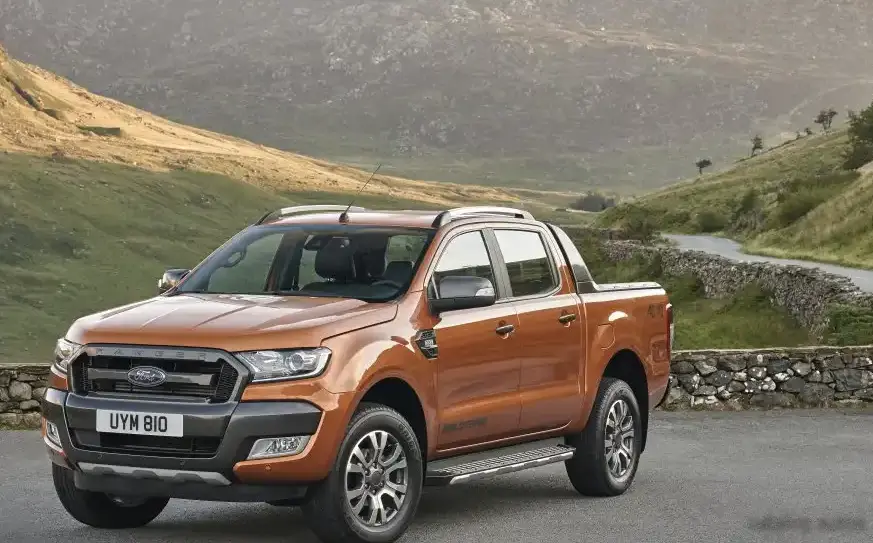
The Ford Ranger III Double Cab, specifically the facelifted version introduced in 2015, represented a significant evolution of Ford’s globally successful mid-size pickup truck. Produced from 2015 to 2018, this iteration of the Ranger was primarily aimed at markets outside of North America, where the smaller dimensions and more fuel-efficient engine options were highly valued. The 3.2 TDCi variant, equipped with a 200 horsepower engine and a six-speed automatic transmission, occupied a mid-to-upper position within the Ranger III Double Cab lineup, offering a balance of performance, capability, and comfort. It was positioned above the lower-powered 2.2-liter diesel options and below potential high-performance or specialized off-road trims, if offered in specific markets.
Technical Specifications
| Brand | Ford |
| Model | Ranger |
| Generation | Ranger III Double Cab (facelift 2015) |
| Type (Engine) | 3.2 TDCi (200 Hp) Automatic |
| Start of production | 2015 |
| End of production | 2018 |
| Powertrain Architecture | Internal Combustion engine |
| Body type | Pick-up |
| Seats | 5 |
| Doors | 4 |
| Fuel consumption (combined) | 8.5 l/100 km (27.7 US mpg, 33.2 UK mpg, 11.8 km/l) |
| CO2 emissions | 225 g/km |
| Fuel Type | Diesel |
| Maximum speed | 175 km/h (108.74 mph) |
| Emission standard | Euro 5 |
| Weight-to-power ratio | 9.4 kg/Hp, 106.2 Hp/tonne |
| Weight-to-torque ratio | 4 kg/Nm, 249.6 Nm/tonne |
| Power | 200 Hp @ 3000 rpm |
| Power per litre | 62.5 Hp/l |
| Torque | 470 Nm @ 1500-2750 rpm (346.65 lb.-ft. @ 1500-2750 rpm) |
| Engine layout | Front, Longitudinal |
| Engine displacement | 3198 cm3 (195.15 cu. in.) |
| Number of cylinders | 5 |
| Engine configuration | Inline |
| Cylinder Bore | 89.9 mm (3.54 in.) |
| Piston Stroke | 100.8 mm (3.97 in.) |
| Compression ratio | 15.7:1 |
| Number of valves per cylinder | 4 |
| Fuel injection system | Diesel Commonrail |
| Engine aspiration | Turbocharger, Intercooler |
| Engine oil capacity | 9.75 l (10.3 US qt | 8.58 UK qt) |
| Coolant | 13.5 l (14.27 US qt | 11.88 UK qt) |
| Kerb Weight | 1883 kg (4151.3 lbs.) |
| Max. weight | 3200 kg (7054.79 lbs.) |
| Max load | 1317 kg (2903.49 lbs.) |
| Fuel tank capacity | 80 l (21.13 US gal | 17.6 UK gal) |
| Length | 5277-5354 mm (207.76 – 210.79 in.) |
| Width | 1860 mm (73.23 in.) |
| Height | 1815 mm (71.46 in.) |
| Wheelbase | 3220 mm (126.77 in.) |
| Front track | 1590 mm (62.6 in.) |
| Rear track | 1590 mm (62.6 in.) |
| Front overhang | 908 mm (35.75 in.) |
| Rear overhang | 1149 mm (45.24 in.) |
| Ride height (ground clearance) | 232 mm (9.13 in.) |
| Approach angle | 28° |
| Departure angle | 28° |
| Ramp-over angle | 25° |
| Climb angle | 32° |
| Wading depth | 600 mm (23.62 in.) |
| Drivetrain Architecture | Rear wheel drive |
| Number of gears | 6 |
| Gearbox type | Automatic transmission |
| Front suspension | Independent coil spring |
| Rear suspension | Dependent suspension of two longitudinal semi-elliptic leaf springs |
| Front brakes | Ventilated discs |
| Rear brakes | Drum |
| Assisting systems | ABS (Anti-lock braking system) |
| Steering type | Steering rack and pinion |
| Power steering | Electric Steering |
| Tires size | 215/70 R16; 255/70 R16; 265/65 R17; 265/60 R18 |
| Wheel rims size | 16; 17; 18 |
Powertrain & Engine Architecture
The heart of this Ranger variant is the 3.2-liter TDCi (Turbo Diesel Commonrail Injection) engine. This engine, part of Ford’s Duratorq family, is an inline five-cylinder diesel known for its robust construction and relatively smooth operation for a diesel. The 3198cc displacement is achieved with a bore of 89.9mm and a stroke of 100.8mm, operating at a compression ratio of 15.7:1. The engine utilizes a common rail direct injection system, delivering fuel at extremely high pressures for optimized combustion and reduced emissions. A turbocharger with an intercooler further enhances performance by forcing more air into the cylinders. The six-speed automatic transmission, sourced from various suppliers depending on the market, was chosen for its balance of efficiency and ease of use. It’s a conventional torque converter automatic, offering smooth shifts but not the lightning-fast responsiveness of modern dual-clutch transmissions.
Driving Characteristics
The 3.2 TDCi automatic Ranger offered a comfortable and capable driving experience. While not a sports truck, the 200 horsepower and 470 Nm (346 lb-ft) of torque provided ample power for everyday driving and hauling loads. The automatic transmission, while smooth, did slightly diminish the engine’s responsiveness compared to the available manual transmission. Gear ratios were tuned for a balance of fuel economy and towing capacity. Acceleration was adequate, but the Ranger’s weight (around 1883 kg or 4151 lbs) meant it wasn’t particularly quick. The torque curve was relatively flat, providing good pulling power across a wide RPM range, making it suitable for towing and off-road driving. Compared to the lower-powered 2.2-liter diesel options, the 3.2 TDCi offered a noticeable improvement in performance, especially when fully loaded or tackling steep inclines.
Equipment & Trim Levels
The level of standard equipment varied depending on the specific market and trim level within the Ranger III Double Cab range. Generally, the 3.2 TDCi automatic models included air conditioning, power windows and locks, a basic audio system, and steel wheels. Higher trim levels added features such as alloy wheels, a more sophisticated infotainment system with touchscreen display, rear parking sensors, cruise control, and upgraded interior upholstery. Optional extras often included a tow package, a bed liner, and various styling accessories. Interior materials were generally durable and practical, reflecting the truck’s work-oriented nature.
Chassis & Braking
The Ranger III Double Cab utilized a body-on-frame construction, providing a robust and durable platform. The front suspension consisted of independent coil springs, while the rear suspension employed a traditional leaf spring setup. This configuration prioritized load-carrying capacity and durability over outright ride comfort. Braking duties were handled by ventilated discs at the front and drum brakes at the rear. ABS (Anti-lock Braking System) was standard. The steering system was a rack-and-pinion setup with electric power assistance, offering reasonable steering feel and maneuverability.
Market Reception & Comparison
The Ford Ranger III Double Cab 3.2 TDCi Automatic was generally well-received in markets where it was sold. Critics praised its robust build quality, comfortable ride (for a body-on-frame pickup), and capable engine. However, some noted that the automatic transmission could feel slightly sluggish and that the interior, while functional, lacked the refinement of some competitors. Compared to the 2.2-liter diesel versions, the 3.2 TDCi offered significantly more power and torque, making it a better choice for those who frequently tow or carry heavy loads. Fuel economy was reasonable for a vehicle of its size and type, averaging around 8.5 l/100km (27.7 US mpg).
Legacy
The 3.2 TDCi engine proved to be a reliable and durable powerplant, and well-maintained examples continue to be sought after in the used car market. While not without its quirks (like any diesel engine, it requires regular maintenance and can be susceptible to issues with the fuel injection system if neglected), the engine’s robust construction generally ensures long-term reliability. The Ranger III Double Cab, as a whole, established Ford as a major player in the global mid-size pickup truck segment, paving the way for the more modern Ranger models that followed. Today, these Rangers represent a good value proposition for buyers seeking a capable and affordable pickup truck.