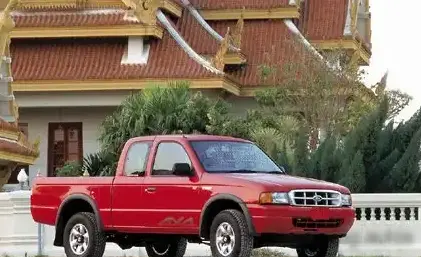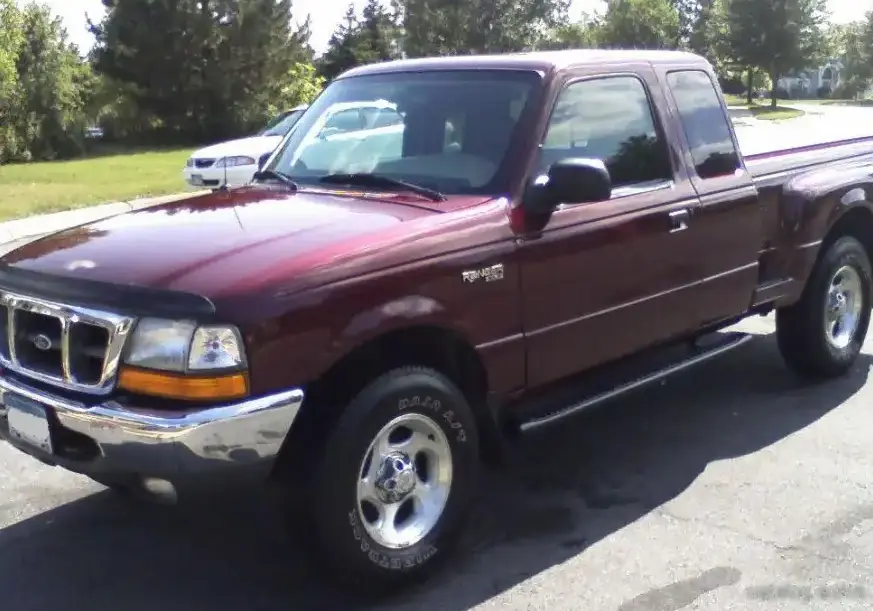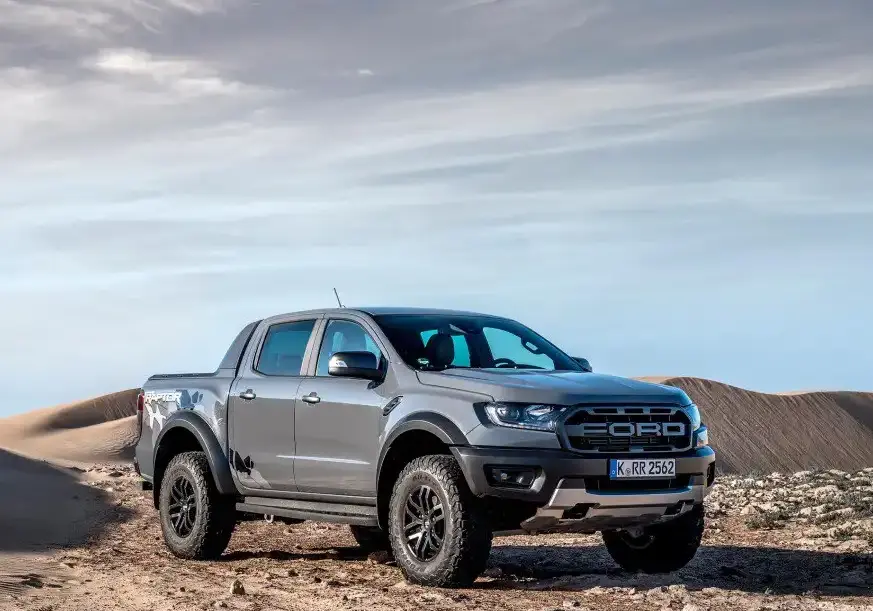
The Ford Ranger Raptor 2.0 EcoBlue, introduced in May 2019 as part of the Ranger III facelift, represented a significant step in the performance-oriented mid-size pickup segment, particularly in European and Asian markets. While the North American Ranger received a different Raptor variant, this 213 horsepower diesel-powered version carved a niche for itself as a capable and efficient off-road machine. Production continued through 2022. This variant sat at the top of the Ranger lineup, offering a blend of performance, technology, and rugged styling not found in lower trims. It was positioned above the standard Ranger models, offering a more aggressive aesthetic and enhanced off-road capability.
Technical Specifications
| Brand | Ford |
| Model | Ranger |
| Generation | Ranger III Double Cab (facelift 2019) |
| Type (Engine) | Raptor 2.0 EcoBlue (213 Hp) 4×4 Automatic |
| Start of production | May, 2019 |
| End of production | 2022 |
| Powertrain Architecture | Internal Combustion engine |
| Body type | Pick-up |
| Seats | 5 |
| Doors | 4 |
| Fuel consumption (economy) – combined | 8.9 l/100 km |
| Fuel consumption (economy) – combined | 26.4 US mpg |
| Fuel consumption (economy) – combined | 31.7 UK mpg |
| Fuel consumption (economy) – combined | 11.2 km/l |
| CO2 emissions | 233 g/km |
| Fuel Type | Diesel |
| Acceleration 0 – 100 km/h | 10 sec |
| Acceleration 0 – 62 mph | 10 sec |
| Acceleration 0 – 60 mph | 9.5 sec |
| Maximum speed | 170 km/h |
| Maximum speed | 105.63 mph |
| Emission standard | Euro 6d-TEMP |
| Weight-to-power ratio | 11.8 kg/Hp |
| Weight-to-power ratio | 84.9 Hp/tonne |
| Weight-to-torque ratio | 5 kg/Nm |
| Weight-to-torque ratio | 199.2 Nm/tonne |
| Power | 213 Hp @ 3750 rpm |
| Power per litre | 106.7 Hp/l |
| Torque | 500 Nm @ 1750-2000 rpm |
| Torque | 368.78 lb.-ft. @ 1750-2000 rpm |
| Engine displacement | 1996 cm3 |
| Engine displacement | 121.8 cu. in. |
| Number of cylinders | 4 |
| Engine configuration | Inline |
| Cylinder Bore | 84.01 mm |
| Cylinder Bore | 3.31 in. |
| Piston Stroke | 90 mm |
| Piston Stroke | 3.54 in. |
| Compression ratio | 16:1 |
| Number of valves per cylinder | 4 |
| Fuel injection system | Diesel Commonrail |
| Engine aspiration | BiTurbo, Intercooler |
| Valvetrain | DOHC |
| Engine oil capacity | 8.1 l |
| Engine oil capacity | 8.56 US qt |
| Engine oil capacity | 7.13 UK qt |
| Coolant | 12.6 l |
| Coolant | 13.31 US qt |
| Coolant | 11.09 UK qt |
| Kerb Weight | 2510 kg |
| Kerb Weight | 5533.6 lbs |
| Max. weight | 3130 kg |
| Max. weight | 6900.47 lbs |
| Max load | 620 kg |
| Max load | 1366.87 lbs |
| Fuel tank capacity | 80 l |
| Fuel tank capacity | 21.13 US gal |
| Fuel tank capacity | 17.6 UK gal |
| AdBlue tank | 20 l |
| AdBlue tank | 5.28 US gal |
| AdBlue tank | 4.4 UK gal |
| Permitted trailer load with brakes (12%) | 2500 kg |
| Permitted trailer load with brakes (12%) | 5511.56 lbs |
| Permitted trailer load without brakes | 750 kg |
| Permitted trailer load without brakes | 1653.47 lbs |
| Length | 5363 mm |
| Length | 211.14 in |
| Width | 2028 mm |
| Width | 79.84 in |
| Width with mirrors folded | 2028 mm |
| Width with mirrors folded | 79.84 in |
| Width including mirrors | 2180 mm |
| Width including mirrors | 85.83 in |
| Height | 1873 mm |
| Height | 73.74 in |
| Wheelbase | 3220 mm |
| Wheelbase | 126.77 in |
| Front track | 1710 mm |
| Front track | 67.32 in |
| Rear (Back) track | 1710 mm |
| Rear (Back) track | 67.32 in |
| Front overhang | 908 mm |
| Front overhang | 35.75 in |
| Rear overhang | 1235 mm |
| Rear overhang | 48.62 in |
| Ride height (ground clearance) | 283 mm |
| Ride height (ground clearance) | 11.14 in |
| Minimum turning circle (turning diameter) | 12.9 m |
| Minimum turning circle (turning diameter) | 42.32 ft |
| Approach angle | 32.5° |
| Departure angle | 27.0° |
| Ramp-over (brakeover) angle | 24.0° |
| Climb angle | 35.0° |
| Wading depth | 850 mm |
| Wading depth | 33.46 in |
| Drive wheel | All wheel drive (4×4) |
| Number of gears and type of gearbox | 10 gears, automatic transmission |
| Rear suspension | Independent multi-link suspension |
| Front brakes | Ventilated discs, 332 mm |
| Rear brakes | Ventilated discs, 332 mm |
| Assisting systems | ABS (Anti-lock braking system) |
| Tires size | 285/70 R17 |
| Wheel rims size | 8J x17 |
Powertrain & Engine Architecture
The heart of the Ranger Raptor 2.0 EcoBlue is the Ford 2.0-liter EcoBlue turbocharged diesel engine. This engine, part of Ford’s EcoBoost family, utilizes a sophisticated bi-turbo setup – one low-inertia turbocharger for responsiveness and one high-pressure turbocharger for peak power. The engine code is typically associated with variants like the 205PS or 213PS versions. It features a cast iron block, aluminum cylinder head, and a 16:1 compression ratio. Fuel is delivered via a high-pressure common rail direct injection system, ensuring precise fuel metering for optimal combustion. The engine produces 213 horsepower at 3750 rpm and a substantial 500 Nm (368.78 lb-ft) of torque between 1750 and 2000 rpm. This broad torque curve is crucial for off-road performance and towing. The engine is paired with a 10-speed automatic transmission, a key feature that differentiates it from other Ranger models. This transmission provides a wide range of gear ratios, optimizing both on-road cruising and low-speed off-road crawling.
Driving Characteristics
The 2.0 EcoBlue engine, coupled with the 10-speed automatic, delivers a unique driving experience. While not as brutally powerful as some gasoline-powered performance pickups, the Ranger Raptor offers a strong and usable powerband. The 10-speed transmission allows the engine to stay within its optimal torque range, providing responsive acceleration in most situations. The gear ratios are well-suited for both highway driving and technical off-road terrain. Compared to the 3.2-liter five-cylinder diesel found in earlier Ranger models, the 2.0 EcoBlue is more refined and offers better fuel economy. However, it lacks the raw, guttural sound of the larger engine. Against higher-output Ranger variants, such as those with aftermarket tuning, the 2.0 EcoBlue feels less potent, but its inherent reliability and efficiency make it a practical choice for everyday use.
Equipment & Trim Levels
The Ranger Raptor 2.0 EcoBlue came generously equipped, reflecting its premium positioning. Standard features included a unique exterior styling package with wider wheel arches, a distinctive front grille, and Raptor-specific badging. Inside, the cabin featured sport seats with unique upholstery, a leather-wrapped steering wheel, and aluminum pedals. Infotainment was typically handled by Ford’s SYNC 3 system with an 8-inch touchscreen, offering navigation, Apple CarPlay, and Android Auto compatibility. Available options included a power-adjustable driver’s seat, a premium sound system, and a bed liner. Safety features such as automatic emergency braking, lane-keeping assist, and adaptive cruise control were also often included.
Chassis & Braking
The Ranger Raptor’s chassis was significantly upgraded compared to standard Ranger models. It featured a wider track, a reinforced frame, and a Fox suspension system with position-sensitive damping. This suspension setup provided exceptional off-road capability, absorbing bumps and maintaining control on rough terrain. The rear suspension utilized a multi-link design, contributing to improved ride quality and handling. Braking duties were handled by ventilated disc brakes on all four wheels, providing ample stopping power. The front discs measured 332mm in diameter. An anti-lock braking system (ABS) was standard.
Market Reception & Comparison
The Ranger Raptor 2.0 EcoBlue was generally well-received by automotive critics. It was praised for its off-road capability, comfortable ride, and refined engine. However, some reviewers noted that the diesel engine lacked the excitement of a gasoline-powered performance pickup. Fuel economy was a strong point, with combined figures around 8.9 l/100 km (26.4 US mpg). Compared to other Ranger trims, the Raptor offered a significant upgrade in terms of performance and features, but it also came with a higher price tag. Reliability was generally good, with the 2.0 EcoBlue engine proving to be durable and dependable.
Legacy
The Ford Ranger Raptor 2.0 EcoBlue established a new benchmark for performance-oriented mid-size pickups in Europe and Asia. It demonstrated that a diesel engine could deliver both impressive off-road capability and reasonable fuel economy. While the North American Ranger Raptor received a different engine and suspension setup, the global Ranger Raptor paved the way for a new generation of performance trucks. Today, the 2.0 EcoBlue Ranger Raptor remains a popular choice in the used car market, prized for its ruggedness, capability, and distinctive styling. Its robust powertrain and well-engineered chassis ensure that it will continue to provide years of reliable service.