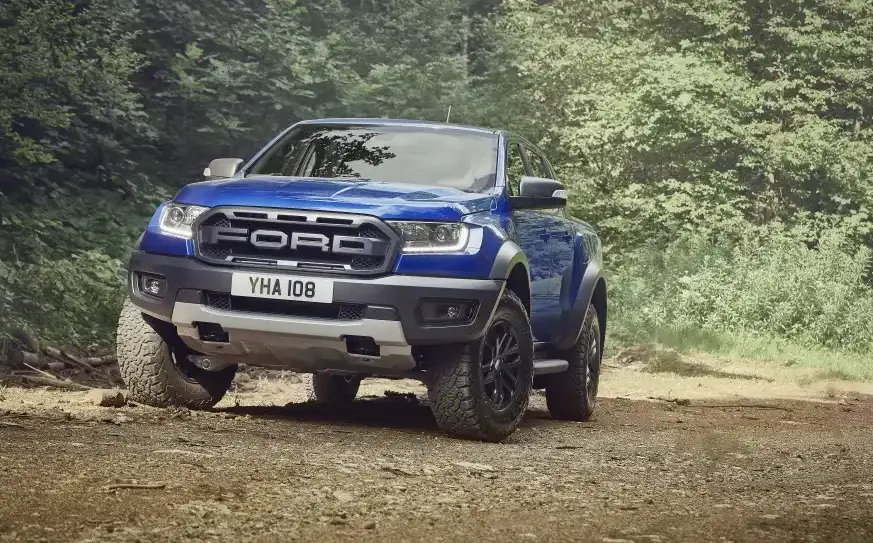
The Ford Ranger IV SuperCrew, specifically equipped with the 2.3-liter EcoBoost engine producing 270 horsepower and paired with a 4×4 automatic transmission, represents a significant entry in the mid-size pickup truck market in North America. Produced from January 2019 through May 2023, this configuration aimed to balance capability, fuel efficiency, and modern features within the Ranger lineup. It served as a popular choice for buyers seeking a versatile truck for both work and personal use, positioned as a step up from the base engine option but below the higher-performance Ranger Raptor.
Technical Specifications
| Brand | Ford |
| Model | Ranger |
| Generation | Ranger IV SuperCrew (Americas) |
| Type (Engine) | 2.3 EcoBoost (270 Hp) 4×4 Automatic |
| Start of production | January, 2019 |
| End of production | May, 2023 |
| Powertrain Architecture | Internal Combustion engine |
| Body type | Pick-up |
| Seats | 5 |
| Doors | 4 |
| Fuel consumption (economy) – urban | 11.7 l/100 km (20.1 US mpg, 24.1 UK mpg, 8.5 km/l) |
| Fuel consumption (economy) – extra urban | 9.8 l/100 km (24 US mpg, 28.8 UK mpg, 10.2 km/l) |
| Fuel consumption (economy) – combined | 10.7 l/100 km (22 US mpg, 26.4 UK mpg, 9.3 km/l) |
| Fuel Type | Petrol (Gasoline) |
| Power | 270 Hp |
| Power per litre | 119.4 Hp/l |
| Torque | 420 Nm (309.78 lb.-ft.) |
| Engine layout | Front, Longitudinal |
| Engine displacement | 2261 cm3 (137.97 cu. in.) |
| Number of cylinders | 4 |
| Engine configuration | Inline |
| Number of valves per cylinder | 4 |
| Fuel injection system | Direct injection |
| Engine aspiration | Twin-Turbo, Intercooler |
| Valvetrain | DOHC |
| Engine oil capacity | 5.9 l (6.23 US qt | 5.19 UK qt) |
| Coolant | 11 l (11.62 US qt | 9.68 UK qt) |
| Max. weight | 2744 kg (6049.48 lbs.) |
| Fuel tank capacity | 68 l (17.96 US gal | 14.96 UK gal) |
| Permitted trailer load with brakes (12%) | 3402 kg (7500.13 lbs.) |
| Length | 5354 mm (210.79 in.) |
| Width | 1862 mm (73.31 in.) |
| Width with mirrors folded | 1976 mm (77.8 in.) |
| Width including mirrors | 2179 mm (85.79 in.) |
| Height | 1816 mm (71.5 in.) |
| Wheelbase | 3221 mm (126.81 in.) |
| Front overhang | 909 mm (35.79 in.) |
| Rear overhang | 1224 mm (48.19 in.) |
| Ride height (ground clearance) | 226 mm (8.9 in.) |
| Approach angle | 28.7° |
| Departure angle | 25.4° |
| Ramp-over (brakeover) angle | 21.5° |
| Drive wheel | All wheel drive (4×4) |
| Number of gears and type of gearbox | 10 gears, automatic transmission |
| Front suspension | Double wishbone |
| Front brakes | Disc |
| Rear brakes | Disc |
| Assisting systems | ABS (Anti-lock braking system) |
| Steering type | Steering rack and pinion |
| Power steering | Electric Steering |
| Tires size | 255/65 R17; 265/60 R18 |
| Wheel rims size | 17; 18 |
Introduction
The Ford Ranger IV SuperCrew 2.3 EcoBoost 4×4 Automatic, launched in 2019, marked Ford’s return to the mid-size pickup segment in North America after a nearly seven-year hiatus. Built on the global T6 platform, the Ranger aimed to offer a compelling alternative to the Toyota Tacoma and Chevrolet Colorado. The SuperCrew configuration, denoting a four-door cab, provided increased passenger space compared to the extended cab models. The 2.3-liter EcoBoost engine and ten-speed automatic transmission combination was positioned as the sweet spot in the lineup, offering a balance of power, efficiency, and towing capacity for a broad range of customers.
Powertrain & Engine Architecture
At the heart of this Ranger variant lies Ford’s 2.3-liter EcoBoost inline-four cylinder engine. This engine, part of Ford’s EcoBoost family, utilizes direct fuel injection, a twin-scroll turbocharger, and variable valve timing to deliver a robust 270 horsepower and 310 lb-ft of torque. The engine code is generally identified as M2G1. The direct injection system allows for precise fuel delivery, optimizing combustion efficiency and power output. The twin-scroll turbocharger minimizes turbo lag, providing quicker response and improved low-end torque. The ten-speed automatic transmission, co-developed with General Motors, features a wide gear ratio spread, enhancing both acceleration and fuel economy. This transmission is known for its smooth shifting and ability to keep the engine in its optimal power band.
Driving Characteristics
The 2.3 EcoBoost engine, coupled with the ten-speed automatic, provides a noticeable step up in performance compared to the base 2.5-liter naturally aspirated engine. While not as overtly powerful as the later-introduced Ranger Raptor, the 270 hp variant offers ample power for daily driving, highway cruising, and moderate towing. The ten-speed transmission effectively manages the engine’s power, providing quick and smooth gear changes. The 4×4 system, offering selectable drive modes, enhances traction in various conditions, making it suitable for both on-road and off-road use. The ride quality is generally comfortable, though it can feel somewhat firm when the truck is unloaded. Compared to manual transmission Rangers, the automatic offers convenience and ease of use, but some drivers may prefer the greater control offered by a manual gearbox.
Equipment & Trim Levels
The Ranger SuperCrew 2.3 EcoBoost 4×4 Automatic was available in several trim levels, including XL, XLT, and Lariat. The XL trim served as the base model, offering essential features such as air conditioning, a basic infotainment system, and steel wheels. The XLT trim added features like alloy wheels, a more advanced infotainment system with Apple CarPlay and Android Auto compatibility, and power windows and locks. The Lariat trim, the most luxurious option, included leather upholstery, heated front seats, a premium sound system, and additional safety features. Optional extras included a towing package, a navigation system, and a panoramic sunroof.
Chassis & Braking
The Ranger IV SuperCrew utilizes a body-on-frame construction, providing a robust and durable platform. The front suspension features independent double wishbones, while the rear suspension employs leaf springs. This configuration balances ride comfort with load-carrying capacity. Braking duties are handled by disc brakes on all four wheels, providing adequate stopping power. An Anti-lock Braking System (ABS) is standard, enhancing safety during emergency braking situations. The chassis is designed to handle the increased weight and torque of the 2.3 EcoBoost engine, providing a stable and controlled driving experience.
Market Reception & Comparison
The Ford Ranger IV SuperCrew 2.3 EcoBoost 4×4 Automatic was generally well-received by automotive critics. Reviewers praised its comfortable ride, powerful engine, and user-friendly technology. Fuel economy was considered competitive for its class, averaging around 22 mpg combined. Compared to the base 2.5-liter engine, the 2.3 EcoBoost offered a significant performance upgrade, making it a more appealing option for buyers who frequently tow or haul cargo. However, some critics noted that the interior materials were not as premium as those found in some competitors, such as the Toyota Tacoma. Reliability reports have been generally positive, with few major issues reported with the 2.3 EcoBoost engine and ten-speed transmission.
Legacy
The Ford Ranger IV SuperCrew 2.3 EcoBoost 4×4 Automatic has established itself as a reliable and capable mid-size pickup truck in the used car market. The 2.3 EcoBoost engine has proven to be durable and relatively maintenance-free, while the ten-speed automatic transmission has also demonstrated good long-term reliability. As a result, these Rangers hold their value well and remain a popular choice for buyers seeking a versatile and dependable truck. The success of this Ranger variant paved the way for the introduction of the more performance-oriented Ranger Raptor, further solidifying Ford’s presence in the competitive mid-size pickup segment.