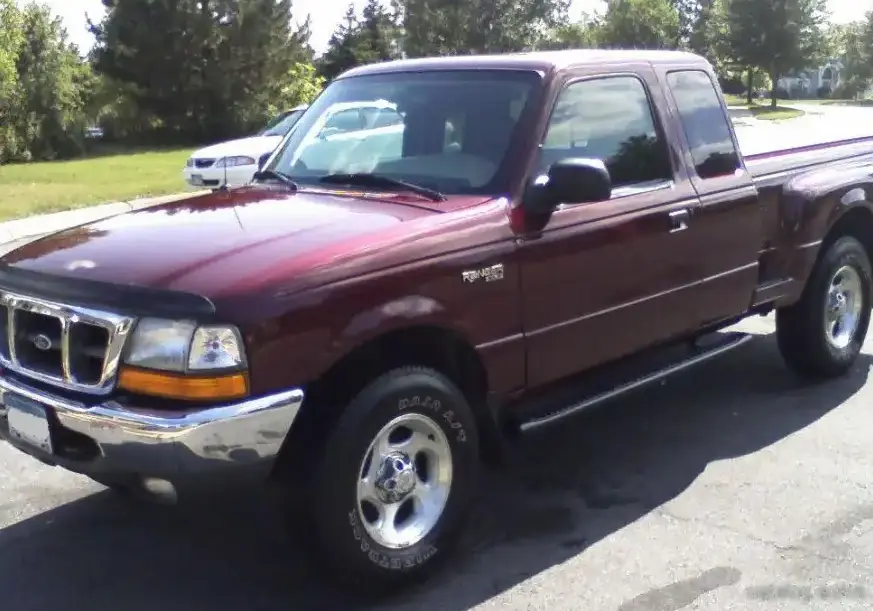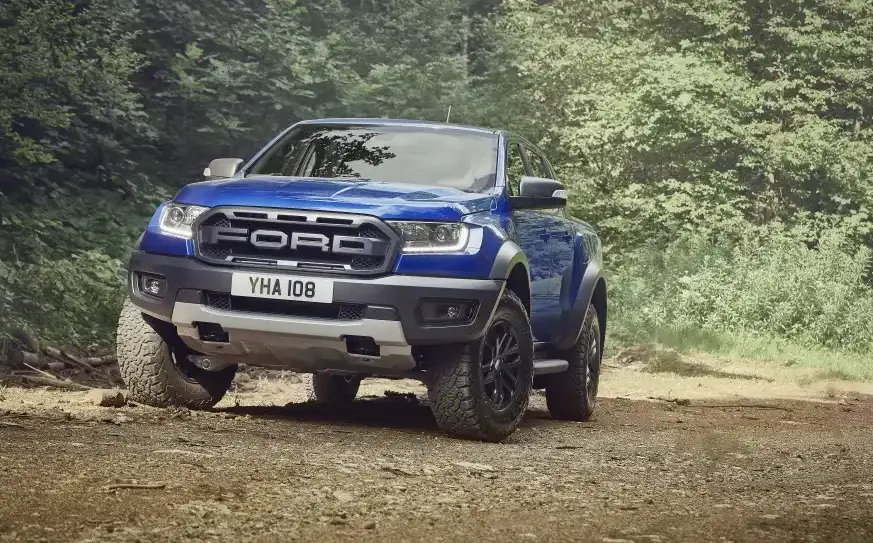
The Ford Ranger IV SuperCrew, specifically equipped with the 2.3-liter EcoBoost engine and a ten-speed automatic transmission, was a mid-size pickup truck sold in the Americas from January 2019 through May 2023. This configuration represented a significant step up in terms of performance and refinement compared to the base engine options, positioning itself as a strong contender in the increasingly competitive mid-size truck segment. It was part of the fourth generation of the Ranger, reintroduced to the North American market after a hiatus of several years, built on the T6 platform.
Technical Specifications
| Brand | Ford |
| Model | Ranger |
| Generation | Ranger IV SuperCrew (Americas) |
| Type (Engine) | 2.3 EcoBoost (270 Hp) Automatic |
| Start of production | January, 2019 |
| End of production | May, 2023 |
| Powertrain Architecture | Internal Combustion engine |
| Body type | Pick-up |
| Seats | 5 |
| Doors | 4 |
| Fuel consumption (economy) – urban | 11.2 l/100 km (21 US mpg, 25.2 UK mpg, 8.9 km/l) |
| Fuel consumption (economy) – extra urban | 9 l/100 km (26.1 US mpg, 31.4 UK mpg, 11.1 km/l) |
| Fuel consumption (economy) – combined | 10.2 l/100 km (23.1 US mpg, 27.7 UK mpg, 9.8 km/l) |
| Fuel Type | Petrol (Gasoline) |
| Power | 270 Hp |
| Power per litre | 119.4 Hp/l |
| Torque | 420 Nm (309.78 lb.-ft.) |
| Engine layout | Front, Longitudinal |
| Engine displacement | 2261 cm3 (137.97 cu. in.) |
| Number of cylinders | 4 |
| Engine configuration | Inline |
| Number of valves per cylinder | 4 |
| Fuel injection system | Direct injection |
| Engine aspiration | Twin-Turbo, Intercooler |
| Valvetrain | DOHC |
| Engine oil capacity | 5.9 l (6.23 US qt | 5.19 UK qt) |
| Coolant | 11 l (11.62 US qt | 9.68 UK qt) |
| Max. weight | 2744 kg (6049.48 lbs.) |
| Fuel tank capacity | 68 l (17.96 US gal | 14.96 UK gal) |
| Permitted trailer load with brakes (12%) | 3402 kg (7500.13 lbs.) |
| Length | 5354 mm (210.79 in.) |
| Width | 1862 mm (73.31 in.) |
| Width with mirrors folded | 1976 mm (77.8 in.) |
| Width including mirrors | 2179 mm (85.79 in.) |
| Height | 1806 mm (71.1 in.) |
| Wheelbase | 3221 mm (126.81 in.) |
| Front overhang | 909 mm (35.79 in.) |
| Rear overhang | 1224 mm (48.19 in.) |
| Ride height (ground clearance) | 213 mm (8.39 in.) |
| Approach angle | 28.7° |
| Departure angle | 25.4° |
| Ramp-over (brakeover) angle | 21.5° |
| Drivetrain Architecture | Rear wheel drive. Internal Combustion engine. |
| Drive wheel | Rear wheel drive |
| Number of gears and type of gearbox | 10 gears, automatic transmission |
| Front suspension | Double wishbone |
| Front brakes | Disc |
| Rear brakes | Disc |
| Assisting systems | ABS (Anti-lock braking system) |
| Steering type | Steering rack and pinion |
| Power steering | Electric Steering |
| Tires size | 255/70 R16; 255/65 R17; 265/60 R18 |
| Wheel rims size | 16; 17; 18 |
INTRODUCTION
The Ford Ranger IV SuperCrew 2.3 EcoBoost Automatic, launched in 2019, marked Ford’s re-entry into the highly competitive mid-size pickup truck market in North America. Following a seven-year absence, the Ranger was redesigned on the global T6 platform, offering a blend of capability, technology, and fuel efficiency. The 2.3 EcoBoost engine, paired with a sophisticated ten-speed automatic transmission, was positioned as the premium engine option, offering a significant performance upgrade over the base 2.5-liter naturally aspirated four-cylinder. The SuperCrew configuration, denoting a four-door cab with a five-passenger seating capacity, further broadened the Ranger’s appeal to families and those needing more interior space.
Powertrain & Engine Architecture
At the heart of this Ranger variant lies the 2.3-liter EcoBoost inline-four cylinder engine. This engine, part of Ford’s EcoBoost family, utilizes a combination of direct fuel injection, twin-turbocharging, and a variable valve timing system (DOHC) to deliver a balance of power and efficiency. The engine code is generally identified as M2G1. The twin-turbo setup employs a low-inertia turbocharger for quick response and a larger turbocharger for sustained power at higher RPMs. The ten-speed automatic transmission, co-developed with General Motors, features a wide gear ratio spread, optimizing both acceleration and fuel economy. This transmission is known for its smooth shifting and responsiveness, contributing to a more refined driving experience compared to older automatic transmissions. The transmission is electronically controlled, adapting shift points based on driving conditions and driver input.
Driving Characteristics
The 2.3 EcoBoost engine delivers a noticeable performance boost over the base engine. With 270 horsepower and 310 lb-ft of torque, the Ranger SuperCrew offers ample power for everyday driving, towing, and off-road adventures. The ten-speed automatic transmission effectively manages the engine’s powerband, providing quick acceleration and smooth gear changes. While not as overtly sporty as some competitors, the Ranger 2.3 EcoBoost offers a composed and confident driving experience. The wide gear ratios of the transmission allow the engine to operate efficiently at highway speeds, contributing to respectable fuel economy for a pickup truck. Compared to a manual transmission equipped Ranger, the automatic offers convenience and ease of use, particularly in stop-and-go traffic. However, some drivers may prefer the greater control offered by a manual gearbox.
Equipment & Trim Levels
The 2.3 EcoBoost engine was typically offered on the XLT and Lariat trim levels of the Ranger SuperCrew. Standard equipment on the XLT included features such as a 4.2-inch infotainment screen, Bluetooth connectivity, a rearview camera, and basic safety features like ABS and stability control. The Lariat trim added more luxurious features, including a larger 8-inch touchscreen, Apple CarPlay and Android Auto compatibility, leather upholstery, heated front seats, and a premium audio system. Optional extras available on both trims included a towing package, off-road package (with skid plates and upgraded suspension), and various convenience features like a power moonroof and remote start. Interior upholstery typically consisted of cloth on the XLT and leather on the Lariat, with dashboard configurations varying slightly depending on the trim level.
Chassis & Braking
The Ranger SuperCrew features a body-on-frame construction, providing a robust and durable platform for hauling and towing. The front suspension utilizes a double-wishbone design, while the rear suspension employs leaf springs. This setup provides a good balance of ride comfort and load-carrying capacity. Braking duties are handled by disc brakes on all four wheels, providing ample stopping power. An Anti-lock Braking System (ABS) is standard, enhancing safety and control during emergency braking situations. The Ranger’s chassis is designed to handle a maximum payload of around 1,570 pounds and a towing capacity of up to 7,500 pounds when properly equipped. Stabilizer bars are included on both the front and rear axles to reduce body roll during cornering.
Market Reception & Comparison
The Ford Ranger IV SuperCrew 2.3 EcoBoost Automatic was generally well-received by automotive critics. Reviewers praised the engine’s power and refinement, as well as the smooth operation of the ten-speed automatic transmission. Fuel economy was considered competitive for its class, although not class-leading. Compared to the base 2.5-liter engine, the 2.3 EcoBoost offered a significant performance advantage, making it a more appealing option for those who frequently tow or haul heavy loads. However, some critics noted that the Ranger’s interior, while functional, lacked the premium feel of some competitors, such as the Toyota Tacoma. Reliability reports have been generally positive, with few major issues reported with the 2.3 EcoBoost engine and ten-speed transmission.
Legacy
The Ford Ranger IV SuperCrew 2.3 EcoBoost Automatic represents a significant step forward in the mid-size pickup truck segment. The combination of a powerful and efficient engine, a sophisticated transmission, and a capable chassis has made it a popular choice among truck buyers. On the used car market, these Rangers hold their value relatively well, particularly those in good condition with low mileage. The 2.3 EcoBoost engine has proven to be a reliable and durable powertrain, and the ten-speed automatic transmission has also demonstrated good long-term reliability. As a result, the Ranger 2.3 EcoBoost Automatic remains a desirable and practical option for those seeking a capable and versatile mid-size pickup truck.