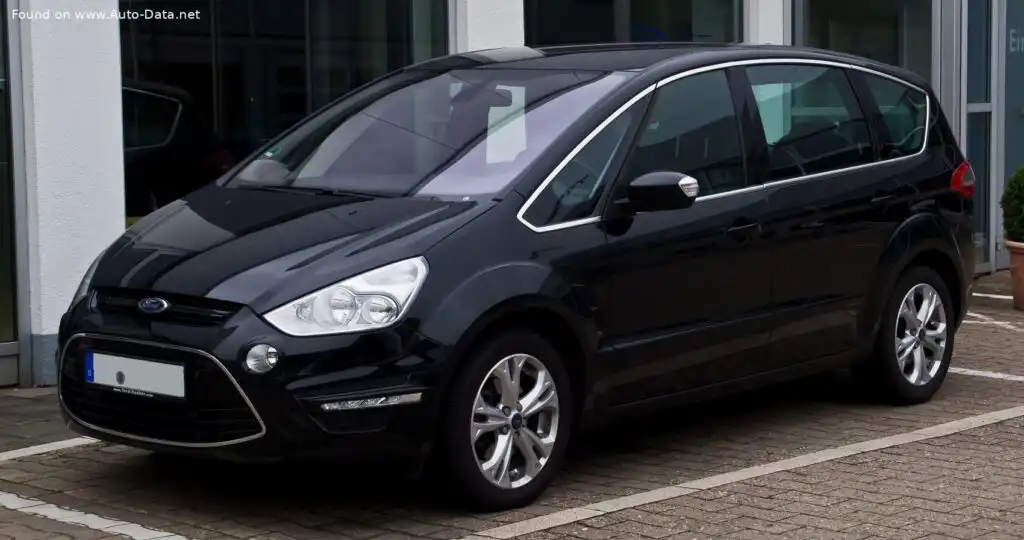
The Ford S-MAX 2.0i 16V, producing 145 horsepower, was a key variant in the first generation (2006-2014) of Ford’s multi-purpose vehicle (MPV). Introduced in 2006, the S-MAX aimed to offer a more dynamic and stylish alternative to traditional people carriers, appealing to families who desired a vehicle that was both practical and enjoyable to drive. This 2.0-liter engine option, paired with a five-speed manual transmission, occupied a mid-range position in the S-MAX lineup, offering a balance between performance, fuel economy, and affordability. It served as a popular choice in European markets, where MPVs were in high demand.
Technical Specifications
| Brand | Ford |
| Model | S-MAX |
| Generation | S-MAX (First Generation) |
| Type (Engine) | 2.0 i 16V (145 Hp) |
| Start of production | 2006 |
| End of production | 2010 |
| Powertrain Architecture | Internal Combustion Engine |
| Body type | Minivan |
| Seats | 7 |
| Doors | 5 |
| Fuel consumption (urban) | 11 l/100 km (21.4 US mpg) |
| Fuel consumption (extra urban) | 6.4 l/100 km (36.8 US mpg) |
| Fuel consumption (combined) | 8.1 l/100 km (29 US mpg) |
| Fuel Type | Petrol (Gasoline) |
| Acceleration 0 – 100 km/h | 10.9 sec |
| Acceleration 0 – 62 mph | 10.9 sec |
| Acceleration 0 – 60 mph | 10.4 sec |
| Maximum speed | 197 km/h (122.41 mph) |
| Weight-to-power ratio | 11.1 kg/Hp |
| Weight-to-torque ratio | 8.4 kg/Nm |
| Power | 145 Hp @ 6000 rpm |
| Torque | 190 Nm @ 4500 rpm (140.14 lb.-ft. @ 4500 rpm) |
| Engine layout | Front, Transverse |
| Engine Model/Code | AOWA, AOWB |
| Engine displacement | 1999 cm3 (121.99 cu. in.) |
| Number of cylinders | 4 |
| Engine configuration | Inline |
| Cylinder Bore | 87.5 mm (3.44 in.) |
| Piston Stroke | 83.1 mm (3.27 in.) |
| Compression ratio | 10.8:1 |
| Number of valves per cylinder | 4 |
| Fuel injection system | Multi-port manifold injection |
| Engine aspiration | Naturally aspirated |
| Valvetrain | DOHC |
| Engine oil capacity | 4.3 l (4.54 US qt | 3.78 UK qt) |
| Coolant capacity | 6.2 l (6.55 US qt | 5.46 UK qt) |
| Kerb Weight | 1605 kg (3538.42 lbs.) |
| Max. weight | 2340 kg (5158.82 lbs.) |
| Max load | 735 kg (1620.4 lbs.) |
| Trunk (boot) space – minimum | 854 l (30.16 cu. ft.) |
| Trunk (boot) space – maximum | 2100 l (74.16 cu. ft.) |
| Fuel tank capacity | 70 l (18.49 US gal | 15.4 UK gal) |
| Length | 4768 mm (187.72 in.) |
| Width | 1884 mm (74.17 in.) |
| Height | 1658 mm (65.28 in.) |
| Wheelbase | 2850 mm (112.2 in.) |
| Front track | 1589 mm (62.56 in.) |
| Rear track | 1605 mm (63.19 in.) |
| Minimum turning circle | 11.6 m (38.06 ft.) |
| Drivetrain | Front wheel drive |
| Number of gears | 5 |
| Gearbox type | Manual transmission |
| Front suspension | Spring Strut |
| Rear suspension | Transverse stabilizer |
| Front brakes | Ventilated discs |
| Rear brakes | Disc |
| Assisting systems | ABS (Anti-lock braking system) |
| Steering type | Steering rack and pinion |
| Tires size | 215/60 R16 |
| Wheel rims size | 6.5J X 16 |
Powertrain & Engine Architecture
The S-MAX 2.0i 16V utilized the Ford Duratec 2.0-liter inline-four engine, specifically the AOWA or AOWB engine codes depending on the market and emissions regulations. This engine was a well-established unit within the Ford portfolio, known for its relative reliability and affordability. It featured a double overhead camshaft (DOHC) valvetrain with four valves per cylinder, contributing to its respectable power output for its displacement. Fuel delivery was managed by a multi-port fuel injection system, providing precise fuel metering for optimal combustion. The engine’s naturally aspirated design meant it relied solely on atmospheric pressure for air intake, unlike turbocharged variants. The five-speed manual transmission was a standard offering, providing drivers with direct control over gear selection. Gear ratios were tuned for a balance of acceleration and fuel efficiency, prioritizing usability over outright performance.
Driving Characteristics
The 145 hp 2.0i S-MAX offered a competent, if not exhilarating, driving experience. Acceleration from 0-60 mph took around 10.4 seconds, making it suitable for everyday driving and highway merging. While not as quick as the higher-powered variants, such as those equipped with the 2.5-liter turbocharged engine, the 2.0i provided sufficient power for most situations, especially when not fully loaded with passengers and luggage. The manual transmission allowed for engaging driving, and the gear ratios were well-matched to the engine’s torque curve. Compared to the automatic transmission option, the manual offered better fuel economy and a more connected feel. The S-MAX’s chassis, designed for dynamic handling, helped to mitigate the effects of body roll, providing a relatively stable and controlled ride.
Equipment & Trim Levels
The 2.0i S-MAX typically came with a reasonable level of standard equipment. This included air conditioning, power windows, power mirrors, and a basic audio system. Higher trim levels, such as the Titanium, added features like alloy wheels, upgraded upholstery, a more sophisticated audio system, and parking sensors. Interior upholstery was typically cloth, with options for leather available on higher trims. The dashboard layout was functional and ergonomically designed, with clear instrumentation and easy-to-reach controls. Optional extras included a sunroof, navigation system, and rear entertainment system.
Chassis & Braking
The S-MAX featured a robust chassis designed to handle the demands of a family vehicle. Front suspension utilized MacPherson struts, while the rear employed a multi-link setup, providing a comfortable ride and good handling characteristics. Ventilated disc brakes were fitted to the front wheels, providing ample stopping power, while the rear brakes were typically solid discs. Anti-lock Braking System (ABS) was standard, enhancing safety during emergency braking situations. The S-MAX’s suspension was tuned to provide a balance between comfort and handling, making it suitable for a variety of driving conditions.
Market Reception & Comparison
The Ford S-MAX 2.0i 16V was generally well-received by automotive critics. It was praised for its spacious interior, versatile seating configuration, and engaging driving dynamics. However, some critics noted that the 2.0-liter engine could feel underpowered when the vehicle was fully loaded. Compared to the more powerful 2.5-liter turbocharged engine, the 2.0i offered better fuel economy but lacked the same level of performance. The 2.0i also provided a more affordable entry point into the S-MAX range, making it accessible to a wider range of buyers. In terms of reliability, the Duratec 2.0-liter engine was generally considered to be reliable, although regular maintenance was essential.
Legacy
The Ford S-MAX 2.0i 16V remains a popular choice in the used car market, particularly for families seeking a practical and affordable MPV. The Duratec 2.0-liter engine has proven to be relatively durable, and parts availability is generally good. While not the most powerful or technologically advanced variant of the S-MAX, the 2.0i offers a compelling combination of practicality, affordability, and driving enjoyment. Its legacy lies in providing a versatile and reliable transportation solution for families, contributing to the S-MAX’s overall success as a modern MPV.