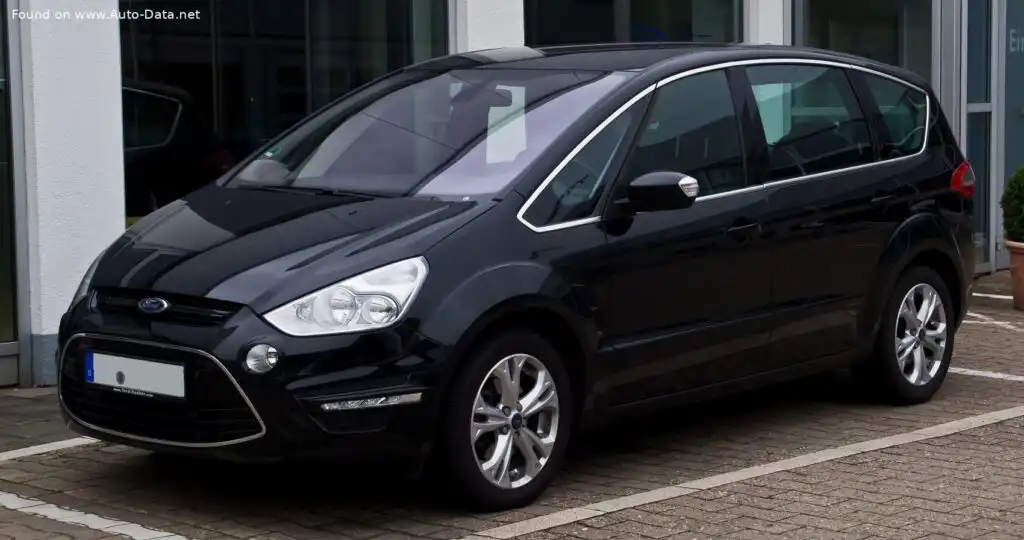
The Ford S-MAX 2.0 TDCi, producing 140 horsepower, was a key variant in the first generation (2006-2014) of Ford’s multi-purpose vehicle (MPV). Introduced as part of the 2006 model year lineup, this version of the S-MAX aimed to provide a balance between fuel efficiency, practicality, and affordability within the range. It occupied a mid-range position, slotting below the more powerful 2.5-liter petrol and higher-output diesel options, and above the base 1.8-liter petrol. The S-MAX, designed to compete with vehicles like the Renault Espace and Volkswagen Sharan, was Ford’s attempt to create a sporty and dynamic MPV, differentiating itself from the more traditionally styled competitors in the European market.
Technical Specifications
| Brand | Ford |
| Model | S-MAX |
| Generation | S-MAX (First Generation) |
| Type (Engine) | 2.0 TDCi (140 Hp) |
| Start of production | 2006 |
| End of production | 2010 |
| Powertrain Architecture | Internal Combustion Engine |
| Body type | Minivan |
| Seats | 7 |
| Doors | 5 |
| Fuel consumption (urban) | 8.1 l/100 km (29 US mpg, 34.9 UK mpg) |
| Fuel consumption (extra urban) | 5.4 l/100 km (43.6 US mpg, 52.3 UK mpg) |
| Fuel consumption (combined) | 6.4 l/100 km (36.8 US mpg, 44.1 UK mpg) |
| Fuel Type | Diesel |
| Acceleration 0 – 100 km/h | 10.2 sec |
| Acceleration 0 – 62 mph | 10.2 sec |
| Acceleration 0 – 60 mph | 9.7 sec |
| Maximum speed | 196 km/h (121.79 mph) |
| Emission standard | Euro 4 |
| Weight-to-power ratio | 12.4 kg/Hp |
| Weight-to-torque ratio | 5.4 kg/Nm |
| Power | 140 Hp @ 4000 rpm |
| Torque | 320 Nm @ 1750 rpm (236.02 lb.-ft. @ 1750 rpm) |
| Engine layout | Front, Transverse |
| Engine Model/Code | QXWA, QXWB, QXWC |
| Engine displacement | 1997 cm3 (121.86 cu. in.) |
| Number of cylinders | 4 |
| Engine configuration | Inline |
| Cylinder Bore | 85 mm (3.35 in.) |
| Piston Stroke | 88 mm (3.46 in.) |
| Compression ratio | 17.9:1 |
| Number of valves per cylinder | 4 |
| Fuel injection system | Diesel Commonrail |
| Engine aspiration | Turbocharger, Intercooler |
| Engine oil capacity | 5.5 l (5.81 US qt, 4.84 UK qt) |
| Coolant capacity | 8.1 l (8.56 US qt, 7.13 UK qt) |
| Kerb Weight | 1736 kg (3827.22 lbs.) |
| Max. weight | 2505 kg (5522.58 lbs.) |
| Max load | 769 kg (1695.35 lbs.) |
| Trunk (boot) space – minimum | 854 l (30.16 cu. ft.) |
| Trunk (boot) space – maximum | 2100 l (74.16 cu. ft.) |
| Fuel tank capacity | 70 l (18.49 US gal, 15.4 UK gal) |
| Length | 4768 mm (187.72 in.) |
| Width | 1884 mm (74.17 in.) |
| Height | 1658 mm (65.28 in.) |
| Wheelbase | 2850 mm (112.2 in.) |
| Front track | 1589 mm (62.56 in.) |
| Rear track | 1605 mm (63.19 in.) |
| Minimum turning circle | 11.6 m (38.06 ft.) |
| Drivetrain | Front wheel drive |
| Number of gears | 6 |
| Gearbox type | Manual transmission |
| Front suspension | Spring Strut |
| Rear suspension | Transverse stabilizer |
| Front brakes | Ventilated discs |
| Rear brakes | Disc |
| Assisting systems | ABS (Anti-lock braking system) |
| Steering type | Steering rack and pinion |
| Tires size | 215/60 R16 |
| Wheel rims size | 6.5J x 16 5×10⁸ |
INTRODUCTION
The Ford S-MAX 2.0 TDCi (140 hp) was produced between 2006 and 2010 as a significant offering within the first generation of the S-MAX line. Built on Ford’s C1 platform (also known as the 1HX0/A3 platform, shared with the Ford Galaxy and, in some respects, the Volvo S80), the S-MAX aimed to redefine the MPV segment with its focus on driving dynamics and contemporary styling. This 2.0-liter diesel variant was positioned as a practical and economical choice for families, offering seven-seat capability and a reasonable level of performance. It was a popular choice in Europe, where diesel engines were, and continue to be, favored for their fuel efficiency and torque characteristics.
Powertrain & Engine Architecture
The heart of the S-MAX 2.0 TDCi is the Ford-PSA jointly developed 2.0-liter four-cylinder diesel engine. Engine codes QXWA, QXWB, and QXWC identify specific variations of this engine, often differing in minor calibration details. This engine utilizes a common rail direct injection system, delivering fuel at extremely high pressure for optimized combustion. The engine features a single overhead camshaft (SOHC) operating four valves per cylinder. A turbocharger with an intercooler is employed to boost power and torque, providing 140 horsepower at 4000 rpm and 320 Nm (236 lb-ft) of torque at 1750 rpm. The engine’s relatively high compression ratio of 17.9:1 contributes to its efficiency. The 2.0 TDCi is paired with a six-speed manual transmission, chosen for its balance of fuel economy and driver engagement. While an automatic transmission was available on other S-MAX variants, it wasn’t typically offered with this specific engine and power output.
Driving Characteristics
The S-MAX 2.0 TDCi (140 hp) delivers a competent, if not exhilarating, driving experience. Acceleration from 0-60 mph takes approximately 9.7 seconds, and top speed is around 121.79 mph. The engine’s torque peak at 1750 rpm provides ample pulling power for everyday driving and overtaking maneuvers. However, compared to the more powerful 2.5-liter petrol or higher-output diesel versions, the 2.0 TDCi feels less responsive, particularly at higher engine speeds. The six-speed manual transmission is well-matched to the engine, offering precise shifts and allowing the driver to keep the engine in its optimal power band. The S-MAX’s chassis, tuned for a more engaging driving experience than many of its competitors, contributes to confident handling, although the vehicle’s weight (1736 kg / 3827.22 lbs) is noticeable.
Equipment & Trim Levels
The S-MAX 2.0 TDCi typically came equipped with a reasonable level of standard features. These included air conditioning, power windows, power mirrors, a CD stereo system, and ABS brakes. Higher trim levels, such as Titanium, added features like alloy wheels, rear parking sensors, automatic headlights and rain-sensing wipers, and upgraded interior trim. Interior upholstery was typically cloth, with options for leather available on higher-spec models. The dashboard layout was functional and modern for its time, with a clear instrument cluster and logically arranged controls. Optional extras included a panoramic sunroof, navigation system, and a premium sound system.
Chassis & Braking
The S-MAX utilizes a MacPherson strut front suspension and a multi-link rear suspension, providing a good balance of ride comfort and handling. A transverse stabilizer bar is fitted to both the front and rear axles to reduce body roll. The braking system consists of ventilated discs on the front wheels and solid discs on the rear. ABS (Anti-lock Braking System) is standard, enhancing braking performance and stability. The steering is rack and pinion, providing precise and responsive steering feel. The S-MAX 2.0 TDCi typically rides on 215/60 R16 tires mounted on 6.5J x 16 alloy or steel wheels.
Market Reception & Comparison
The Ford S-MAX 2.0 TDCi was generally well-received by automotive critics. It was praised for its spacious interior, versatile seating configuration, and engaging driving dynamics. However, some reviewers noted that the 140 hp engine could feel underpowered when the vehicle was fully loaded. Compared to the more powerful S-MAX variants, the 2.0 TDCi offered better fuel economy – achieving around 36.8 US mpg combined – but at the expense of performance. It was also generally more affordable to purchase and insure than its higher-powered siblings. Against competitors like the Renault Espace and Volkswagen Sharan, the S-MAX 2.0 TDCi offered a more dynamic driving experience and a more contemporary design.
Legacy
The Ford S-MAX 2.0 TDCi has proven to be a relatively reliable vehicle, with the 2.0-liter diesel engine generally considered durable. Common issues include diesel particulate filter (DPF) problems, particularly on vehicles that primarily undertake short journeys, and occasional issues with the turbocharger. However, with regular maintenance and servicing, these engines can cover high mileages. On the used car market, the S-MAX 2.0 TDCi remains a popular choice for families seeking a practical and affordable MPV. Its combination of space, versatility, and fuel efficiency continues to appeal to buyers, making it a well-regarded and enduring vehicle in its segment.