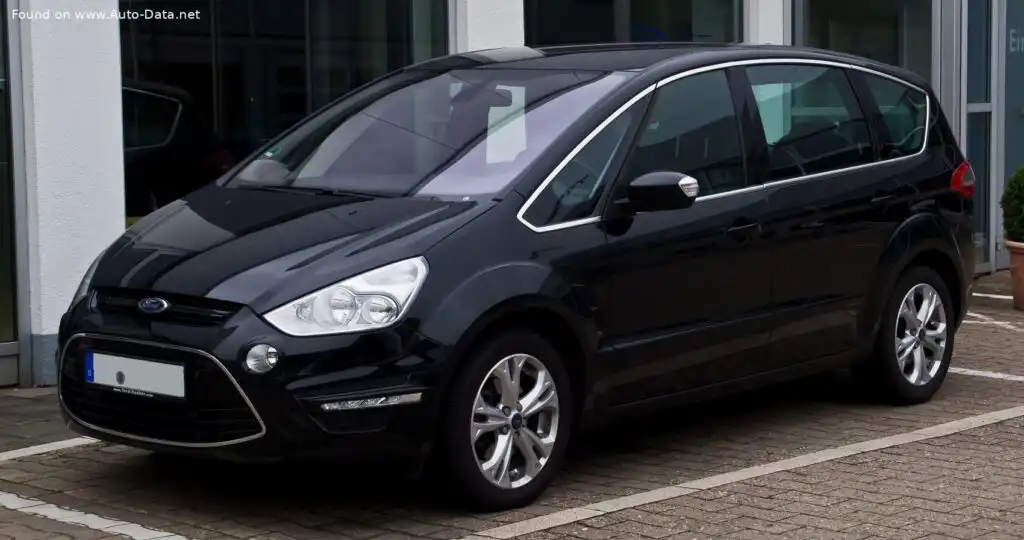
The Ford S-MAX 2.3 T, producing 161 horsepower, was a key variant in the first generation of the S-MAX minivan, manufactured from 2006 to 2010. Positioned as a mid-range offering, it aimed to balance performance with affordability within the S-MAX lineup. The S-MAX, launched as a direct competitor to European multi-purpose vehicles (MPVs) like the Renault Espace and Volkswagen Sharan, sought to inject a degree of driving enjoyment into the family transport segment. This 2.3-liter engine option provided a step up in power compared to the base 1.8-liter models, while remaining more accessible than the range-topping 2.5-liter turbocharged version.
Technical Specifications
| Brand | Ford |
| Model | S-MAX |
| Generation | S-MAX |
| Type (Engine) | 2.3 T (161 Hp) |
| Start of production | 2006 |
| End of production | 2010 |
| Powertrain Architecture | Internal Combustion engine |
| Body type | Minivan |
| Seats | 7 |
| Doors | 5 |
| Fuel consumption (urban) | 13.7 l/100 km (17.2 US mpg, 20.6 UK mpg, 7.3 km/l) |
| Fuel consumption (extra urban) | 7.4 l/100 km (31.8 US mpg, 38.2 UK mpg, 13.5 km/l) |
| Fuel consumption (combined) | 9.7 l/100 km (24.2 US mpg, 29.1 UK mpg, 10.3 km/l) |
| Fuel Type | Petrol (Gasoline) |
| Acceleration 0 – 100 km/h | 11.2 sec |
| Acceleration 0 – 62 mph | 11.2 sec |
| Acceleration 0 – 60 mph | 10.6 sec |
| Maximum speed | 194 km/h (120.55 mph) |
| Emission standard | Euro 4 |
| Weight-to-power ratio | 10 kg/Hp, 100.3 Hp/tonne |
| Weight-to-torque ratio | 7.7 kg/Nm, 129.6 Nm/tonne |
| Power | 161 Hp @ 6500 rpm |
| Power per litre | 71.2 Hp/l |
| Torque | 208 Nm @ 4200 rpm (153.41 lb.-ft. @ 4200 rpm) |
| Engine layout | Front, Transverse |
| Engine Model/Code | SEWA |
| Engine displacement | 2261 cm3 (137.97 cu. in.) |
| Number of cylinders | 4 |
| Engine configuration | Inline |
| Cylinder Bore | 87.5 mm (3.44 in.) |
| Piston Stroke | 94 mm (3.7 in.) |
| Compression ratio | 10.6:1 |
| Number of valves per cylinder | 4 |
| Fuel injection system | Multi-port manifold injection |
| Engine aspiration | Naturally aspirated engine |
| Valvetrain | DOHC |
| Engine oil capacity | 4.3 l (4.54 US qt | 3.78 UK qt) |
| Coolant | 6.9 l (7.29 US qt | 6.07 UK qt) |
| Kerb Weight | 1605 kg (3538.42 lbs.) |
| Max. weight | 2340 kg (5158.82 lbs.) |
| Max load | 735 kg (1620.4 lbs.) |
| Trunk (boot) space – minimum | 854 l (30.16 cu. ft.) |
| Trunk (boot) space – maximum | 2100 l (74.16 cu. ft.) |
| Fuel tank capacity | 70 l (18.49 US gal | 15.4 UK gal) |
| Length | 4768 mm (187.72 in.) |
| Width | 1884 mm (74.17 in.) |
| Height | 1658 mm (65.28 in.) |
| Wheelbase | 2850 mm (112.2 in.) |
| Front track | 1589 mm (62.56 in.) |
| Rear (Back) track | 1605 mm (63.19 in.) |
| Minimum turning circle | 11.6 m (38.06 ft.) |
| Drivetrain Architecture | ICE, Front wheel drive |
| Drive wheel | Front wheel drive |
| Number of gears | 5 gears, manual transmission |
| Front suspension | Spring Strut |
| Rear suspension | Transverse stabilizer |
| Front brakes | Ventilated discs |
| Rear brakes | Disc |
| Assisting systems | ABS (Anti-lock braking system) |
| Steering type | Steering rack and pinion |
| Tires size | 215/60 R16 |
| Wheel rims size | 6.5J x 16 5×10⁸ |
Powertrain & Engine Architecture
The S-MAX 2.3 T utilized the Ford SEWA engine, a 2.3-liter inline-four cylinder gasoline engine. This engine was a naturally aspirated design, relying on displacement and optimized airflow rather than forced induction for its power output. It featured a double overhead camshaft (DOHC) valvetrain with four valves per cylinder, contributing to efficient cylinder filling and exhaust scavenging. Fuel delivery was managed by a multi-port fuel injection system. The engine’s 161 horsepower peak arrived at 6500 rpm, while its 208 Nm (153.41 lb-ft) of torque was available at 4200 rpm. The engine was transversely mounted in the front of the vehicle, driving the front wheels. The 5-speed manual transmission was the standard offering for this variant, providing a relatively direct connection between the engine and the wheels.
Driving Characteristics
The 2.3 T S-MAX offered a noticeable step up in performance compared to the base 1.8-liter models. While not a sports car, the 161 hp engine provided adequate power for highway cruising and overtaking maneuvers. The 0-60 mph acceleration time of around 10.6 seconds was respectable for a family minivan of this era. The 5-speed manual transmission allowed drivers to maintain optimal engine speed for various driving conditions. However, compared to the more powerful 2.5-liter turbocharged version, the 2.3 T felt less responsive, particularly when fully loaded with passengers and luggage. The gear ratios were tuned for a balance of fuel economy and usability, rather than outright performance.
Equipment & Trim Levels
The 2.3 T S-MAX typically came equipped with features such as air conditioning, power windows, power mirrors, and a basic audio system. Higher trim levels added options like alloy wheels, fog lights, a multi-function steering wheel, and upgraded interior trim. Safety features included ABS brakes and front airbags. The S-MAX was designed to be a practical and family-friendly vehicle, so even base models offered a reasonable level of comfort and convenience. Optional extras included a panoramic sunroof, rear parking sensors, and a DVD entertainment system for rear passengers.
Chassis & Braking
The S-MAX featured a MacPherson strut front suspension and a multi-link rear suspension, providing a comfortable ride and decent handling characteristics. The front brakes were ventilated discs, offering good stopping power, while the rear brakes were solid discs. The steering was a rack-and-pinion system, providing precise and responsive steering feel. The S-MAX’s chassis was designed to accommodate the vehicle’s weight and provide a stable platform for carrying passengers and cargo. Stabilizer bars were fitted to both the front and rear axles to reduce body roll during cornering.
Market Reception & Comparison
The Ford S-MAX 2.3 T was generally well-received by automotive critics. It was praised for its spacious interior, comfortable ride, and relatively engaging driving dynamics. However, some reviewers noted that the 2.3-liter engine could feel strained when the vehicle was fully loaded. Compared to the 1.8-liter models, the 2.3 T offered a significant performance improvement, but at a higher price point. The 2.5-liter turbocharged version provided even more power, but was considerably more expensive. Fuel economy was reasonable for a vehicle of its size and type, averaging around 24.2 US mpg in combined driving.
Legacy
The Ford S-MAX 2.3 T has proven to be a relatively reliable vehicle, with the SEWA engine generally considered durable. Common maintenance items include regular oil changes, timing belt replacement (typically every 100,000 miles), and inspection of the cooling system. In the used car market, the 2.3 T S-MAX represents a good value proposition for buyers seeking a spacious and practical minivan with decent performance. While not as sought-after as the higher-spec 2.5-liter models, the 2.3 T offers a compelling blend of affordability, reliability, and usability.