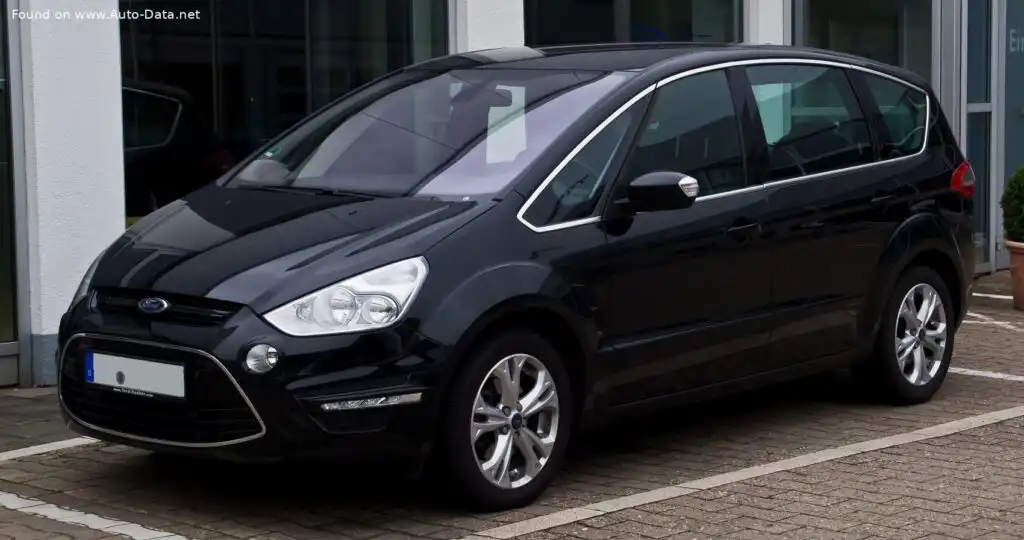
The Ford S-MAX, particularly the facelifted version introduced in 2010, represented Ford’s entry into the multi-purpose vehicle (MPV) segment with a focus on sporty handling and practicality. The 2.0 Duratorq TDCi variant, producing 163 horsepower and paired with the Powershift dual-clutch transmission, was a significant offering within the S-MAX lineup from 2010 to 2014. This configuration aimed to balance fuel efficiency with acceptable performance for family transportation, positioning itself as a mid-range option appealing to buyers seeking a more refined driving experience than the base models, but without the higher cost of the more powerful versions.
Technical Specifications
| Brand | Ford |
| Model | S-MAX |
| Generation | S-MAX (facelift 2010) |
| Type (Engine) | 2.0 Duratorq TDCi (163 Hp) Powershift |
| Start of production | 2010 |
| End of production | 2014 |
| Powertrain Architecture | Internal Combustion engine |
| Body type | MPV |
| Seats | 7 |
| Doors | 5 |
| Fuel consumption (urban) | 7.4 l/100 km (31.8 US mpg) |
| Fuel consumption (extra urban) | 5.2 l/100 km (45.2 US mpg) |
| Fuel consumption (combined) | 6 l/100 km (39.2 US mpg) |
| Fuel Type | Diesel |
| Acceleration 0 – 100 km/h | 10.2 sec |
| Acceleration 0 – 62 mph | 10.2 sec |
| Acceleration 0 – 60 mph | 9.7 sec |
| Maximum speed | 202 km/h (125.52 mph) |
| Emission standard | Euro 5 |
| Weight-to-power ratio | 10.4 kg/Hp |
| Power | 163 Hp |
| Engine layout | Front, Transverse |
| Engine Model/Code | TXWA |
| Engine configuration | Inline |
| Fuel injection system | Diesel Commonrail |
| Engine aspiration | Turbocharger, Intercooler |
| Engine oil capacity | 5.5 l (5.81 US qt | 4.84 UK qt) |
| Coolant capacity | 8.1 l (8.56 US qt | 7.13 UK qt) |
| Kerb Weight | 1689 kg (3723.61 lbs) |
| Max. weight | 2505 kg (5522.58 lbs) |
| Max load | 816 kg (1798.97 lbs) |
| Trunk (boot) space – minimum | 285 l (10.06 cu. ft) |
| Trunk (boot) space – maximum | 2000 l (70.63 cu. ft) |
| Fuel tank capacity | 70 l (18.49 US gal | 15.4 UK gal) |
| Length | 4903 mm (193.03 in) |
| Width | 2154 mm (84.8 in) |
| Height | 1660 mm (65.35 in) |
| Minimum turning circle | 11.9 m (39.04 ft) |
| Drivetrain | Front wheel drive |
| Number of gears | 6 |
| Gearbox type | Automatic transmission |
Powertrain & Engine Architecture
The heart of this S-MAX variant is the 2.0-liter Duratorq TDCi diesel engine, specifically the TXWA engine code. This engine is a four-cylinder, inline configuration, utilizing a common-rail direct fuel injection system. The common-rail system, operating at very high pressures, allows for precise fuel metering and optimized combustion, contributing to both power output and fuel efficiency. A turbocharger with an intercooler is employed to increase air intake, further boosting performance. The engine features four valves per cylinder (DOHC) and is known for its relatively robust construction. The Powershift transmission is a six-speed, dual-clutch transmission (DCT). This type of transmission offers quicker and smoother gear changes compared to a traditional torque-converter automatic, and contributes to improved fuel economy. It operates similarly to two manual gearboxes in one, with one clutch controlling the odd gears and the other controlling the even gears, allowing for pre-selection of the next gear.
Driving Characteristics
The 163 horsepower and the Powershift transmission provide a decent level of performance for everyday driving. Acceleration from 0-60 mph in around 9.7 seconds is adequate for merging onto highways and overtaking, though it doesn’t offer the briskness of the higher-powered 2.0 TDCi or the petrol-powered variants. The Powershift transmission contributes to a more engaging driving experience than a conventional automatic, with quick shifts and a responsive feel. However, some drivers have reported occasional jerkiness at low speeds, a common characteristic of early dual-clutch transmissions. The gear ratios are tuned for a balance between fuel economy and usability, with a relatively long final drive to aid efficiency. Compared to the manual transmission versions of the same engine, the Powershift offers convenience but may slightly reduce fuel economy due to the inherent losses within the transmission itself.
Equipment & Trim Levels
The 2.0 Duratorq TDCi 163 hp Powershift S-MAX typically came equipped with a respectable level of standard features. These generally included air conditioning, alloy wheels, front and rear electric windows, a CD/radio system with auxiliary input, and ABS brakes. Higher trim levels, such as Titanium, added features like automatic climate control, rear parking sensors, cruise control, and upgraded interior trim. Optional extras included a panoramic sunroof, leather upholstery, and a navigation system. The interior typically featured cloth upholstery, with a functional and modern dashboard layout. The S-MAX’s seven-seat configuration was a key selling point, offering flexibility for families.
Chassis & Braking
The S-MAX utilizes a front-wheel-drive platform with independent suspension at the front (typically MacPherson struts) and a multi-link suspension at the rear. This suspension setup provides a good balance between ride comfort and handling. Braking systems varied depending on the trim level, with lower trims often featuring disc brakes at the front and drum brakes at the rear. Higher trims generally had disc brakes all around. Anti-lock Braking System (ABS) was standard across the range. The S-MAX’s chassis was designed to provide a relatively sporty driving experience for an MPV, with a focus on minimizing body roll and providing responsive steering.
Market Reception & Comparison
The 2.0 Duratorq TDCi 163 hp Powershift S-MAX was generally well-received by automotive critics as a practical and efficient family vehicle. It was praised for its spacious interior, versatile seating configuration, and decent fuel economy. However, some reviewers noted that the engine could feel strained when fully loaded or when driving uphill. Compared to the more powerful 2.0 TDCi variants, this version offered a lower price point but sacrificed some performance. Against competitors like the Volkswagen Sharan and Citroën C4 Picasso, the S-MAX stood out for its more dynamic driving characteristics. Fuel economy figures of around 39.2 US mpg combined were competitive for its class.
Legacy
The 2.0 Duratorq TDCi engine, in various iterations, proved to be a reliable powerplant, although the Powershift transmission has been known to experience issues in some cases, particularly with clutch wear and mechatronic unit failures. Regular maintenance, including timely transmission fluid changes, is crucial for ensuring the longevity of the Powershift gearbox. Today, used examples of this S-MAX variant are relatively affordable and represent a good value for buyers seeking a spacious and practical MPV. However, potential buyers should be aware of the potential transmission issues and factor in the cost of potential repairs when considering a purchase. The S-MAX, in general, remains a popular choice in the used car market due to its blend of practicality, style, and driving enjoyment.