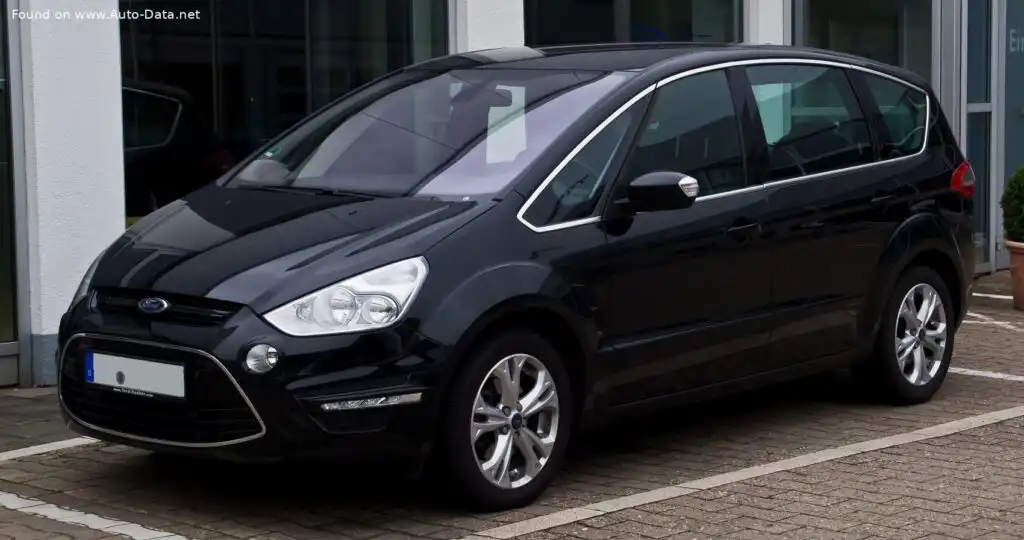
The Ford S-MAX, particularly the facelifted version introduced in 2010, represented a significant offering in the multi-purpose vehicle (MPV) segment. The 2.0 EcoBoost variant, producing 203 horsepower and paired with Ford’s Powershift dual-clutch transmission, was a key model within the lineup, bridging the gap between more economical engine options and the higher-performance ST model. Production of this specific configuration ran from 2010 to 2014, catering primarily to European markets where the MPV class remained highly popular. This version aimed to deliver a balance of performance, fuel efficiency, and practicality for families.
Technical Specifications
| Brand | Ford |
| Model | S-MAX |
| Generation | S-MAX (facelift 2010) |
| Type (Engine) | 2.0 EcoBoost (203 Hp) Powershift |
| Start of production | 2010 |
| End of production | 2014 |
| Powertrain Architecture | Internal Combustion engine |
| Body type | MPV |
| Seats | 7 |
| Doors | 5 |
| Fuel consumption (urban) | 11 l/100 km (21.4 US mpg, 25.7 UK mpg, 9.1 km/l) |
| Fuel consumption (extra urban) | 6.4 l/100 km (36.8 US mpg, 44.1 UK mpg, 15.6 km/l) |
| Fuel consumption (combined) | 8.1 l/100 km (29 US mpg, 34.9 UK mpg, 12.3 km/l) |
| Fuel Type | Petrol (Gasoline) |
| Acceleration 0 – 100 km/h | 8.5 sec |
| Acceleration 0 – 62 mph | 8.5 sec |
| Acceleration 0 – 60 mph | 8.1 sec |
| Maximum speed | 221 km/h (137.32 mph) |
| Emission standard | Euro 5 |
| Weight-to-power ratio | 8.2 kg/Hp, 122.2 Hp/tonne |
| Power | 203 Hp |
| Engine layout | Front, Transverse |
| Engine Model/Code | TNWA |
| Engine configuration | Inline |
| Fuel injection system | Direct injection |
| Engine aspiration | Turbocharger, Intercooler |
| Engine oil capacity | 5.4 l (5.71 US qt, 4.75 UK qt) |
| Coolant capacity | 6.9 l (7.29 US qt, 6.07 UK qt) |
| Kerb Weight | 1661 kg (3661.88 lbs) |
| Max. weight | 2400 kg (5291.09 lbs) |
| Max load | 739 kg (1629.22 lbs) |
| Trunk (boot) space – minimum | 285 l (10.06 cu. ft.) |
| Trunk (boot) space – maximum | 2000 l (70.63 cu. ft.) |
| Fuel tank capacity | 70 l (18.49 US gal, 15.4 UK gal) |
| Length | 4903 mm (193.03 in) |
| Width | 2154 mm (84.8 in) |
| Height | 1660 mm (65.35 in) |
| Minimum turning circle | 11.9 m (39.04 ft) |
| Drivetrain Architecture | Front wheel drive |
| Number of gears | 6 |
| Gearbox type | Automatic transmission |
| Assisting systems | ABS (Anti-lock braking system) |
| Steering type | Steering rack and pinion |
Powertrain & Engine Architecture
The heart of this S-MAX variant is the 2.0-liter EcoBoost engine, designated with the code TNWA. This engine is a turbocharged, direct-injection inline-four cylinder. Direct injection allows for more precise fuel delivery, improving both power and efficiency. The turbocharger, coupled with an intercooler, significantly boosts power output compared to naturally aspirated engines of similar displacement. The EcoBoost engine utilizes variable valve timing on both the intake and exhaust sides, optimizing performance across the rev range. The Powershift transmission is a six-speed dual-clutch transmission (DCT). This type of transmission offers quicker, smoother shifts than a traditional automatic, and contributes to improved fuel economy. It operates similarly to two manual transmissions in one, pre-selecting the next gear for near-instantaneous changes.
Driving Characteristics
The 203 hp EcoBoost engine, paired with the Powershift transmission, provided a noticeable step up in performance compared to the lower-powered engine options available in the S-MAX range, such as the 1.6 EcoBoost or the 2.0 TDCi diesel. Acceleration from 0-60 mph in around 8.1 seconds was respectable for a seven-seat MPV. The Powershift transmission, while generally responsive, could exhibit some low-speed jerkiness, a common characteristic of early DCT implementations. The gear ratios were tuned for a balance of acceleration and fuel economy, with a relatively tall sixth gear for highway cruising. Compared to the higher-performance S-MAX ST, this variant offered a more relaxed driving experience, prioritizing comfort and usability over outright speed.
Equipment & Trim Levels
The 2.0 EcoBoost Powershift S-MAX typically came equipped with a generous level of standard features. These included air conditioning, alloy wheels, a CD/radio system with auxiliary input, and front and rear electric windows. Higher trim levels, such as Titanium, added features like leather upholstery, a panoramic sunroof, rear parking sensors, and a more advanced infotainment system with navigation. Optional extras included a DVD entertainment system for rear passengers, adaptive cruise control, and keyless entry. The interior design was functional and modern, with a focus on practicality and space for passengers and luggage.
Chassis & Braking
The S-MAX featured a front-wheel-drive chassis with independent suspension all around – MacPherson struts at the front and a multi-link setup at the rear. This suspension configuration provided a good balance of ride comfort and handling. The braking system consisted of ventilated front discs and solid rear discs on most models, with ABS (Anti-lock Braking System) as standard. Stabilizer bars were fitted to both the front and rear axles to reduce body roll during cornering. The steering was a rack and pinion system, providing precise and responsive control.
Market Reception & Comparison
The 2.0 EcoBoost Powershift S-MAX was generally well-received by automotive critics. It was praised for its strong performance, good fuel economy, and spacious interior. However, some reviewers noted the occasional jerkiness of the Powershift transmission at low speeds. Compared to the diesel-powered S-MAX models, the EcoBoost offered a more refined and responsive driving experience, albeit with slightly higher fuel consumption. Against competitors like the Volkswagen Sharan and the Citroën C4 Picasso, the S-MAX stood out for its sporty handling and stylish design.
Legacy
The 2.0 EcoBoost engine proved to be a relatively reliable unit, although the Powershift transmission has been known to experience issues in some cases, particularly with early production units. Common problems include clutch wear and mechatronic unit failures. Regular maintenance, including fluid changes, is crucial for ensuring the longevity of the transmission. Today, the 2010-2014 S-MAX 2.0 EcoBoost Powershift represents a compelling option in the used MPV market, offering a good balance of performance, practicality, and value. Its spacious interior, comfortable ride, and relatively modern features make it a suitable choice for families seeking a versatile and capable vehicle.