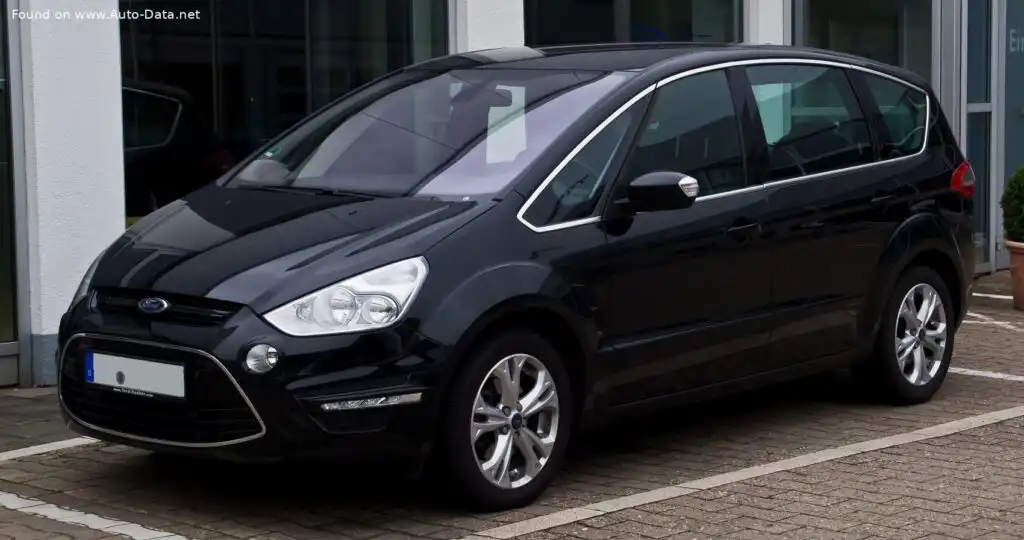
The Ford S-MAX, particularly the facelifted version introduced in 2010, represented a significant offering in the multi-purpose vehicle (MPV) segment. The 2.0 EcoBoost variant, producing 240 horsepower and paired with Ford’s Powershift dual-clutch transmission, was a key model within the lineup, positioned as a performance-oriented option for families seeking both practicality and driving enjoyment. Production of this specific configuration ran from 2010 to 2014, solidifying its place in the first generation (Mk1) S-MAX’s lifecycle.
Technical Specifications
| Brand | Ford |
| Model | S-MAX |
| Generation | S-MAX (facelift 2010) |
| Type (Engine) | 2.0 EcoBoost (240 Hp) Powershift |
| Start of production | 2010 |
| End of production | 2014 |
| Powertrain Architecture | Internal Combustion engine |
| Body type | MPV |
| Seats | 7 |
| Doors | 5 |
| Fuel consumption (urban) | 11.5 l/100 km (20.5 US mpg) |
| Fuel consumption (extra urban) | 6.5 l/100 km (36.2 US mpg) |
| Fuel consumption (combined) | 8.3 l/100 km (28.3 US mpg) |
| Fuel Type | Petrol (Gasoline) |
| Acceleration 0 – 100 km/h | 7.9 sec |
| Acceleration 0 – 62 mph | 7.9 sec |
| Acceleration 0 – 60 mph | 7.5 sec |
| Maximum speed | 235 km/h (146.02 mph) |
| Emission standard | Euro 5 |
| Weight-to-power ratio | 6.9 kg/Hp |
| Power | 240 Hp |
| Engine layout | Front, Transverse |
| Engine Model/Code | TPWA |
| Engine configuration | Inline |
| Fuel injection system | Direct injection |
| Engine aspiration | Turbocharger, Intercooler |
| Engine oil capacity | 5.4 l (5.71 US qt | 4.75 UK qt) |
| Coolant capacity | 6.9 l (7.29 US qt | 6.07 UK qt) |
| Kerb Weight | 1661 kg (3661.88 lbs) |
| Max. weight | 2400 kg (5291.09 lbs) |
| Max load | 739 kg (1629.22 lbs) |
| Trunk (boot) space – minimum | 285 l (10.06 cu. ft) |
| Trunk (boot) space – maximum | 2000 l (70.63 cu. ft) |
| Fuel tank capacity | 70 l (18.49 US gal | 15.4 UK gal) |
| Length | 4903 mm (193.03 in) |
| Width | 2154 mm (84.8 in) |
| Height | 1660 mm (65.35 in) |
| Minimum turning circle | 11.9 m (39.04 ft) |
| Drivetrain Architecture | Front wheel drive |
| Number of gears | 6 |
| Gearbox type | Automatic transmission |
| Assisting systems | ABS (Anti-lock braking system) |
| Steering type | Steering rack and pinion |
Powertrain & Engine Architecture
The heart of the S-MAX 2.0 EcoBoost was the TPWA engine, a 1998cc inline-four cylinder powerplant. This engine utilized direct fuel injection, a technology that allowed for precise fuel delivery and improved combustion efficiency. A single twin-scroll turbocharger, coupled with an intercooler, boosted power output to 240 horsepower and 230 lb-ft of torque. The engine’s design prioritized responsiveness and a broad torque curve, making it well-suited for the S-MAX’s weight and intended use. The Powershift 6-speed dual-clutch transmission (DCT) was a crucial component, offering quick and seamless gear changes, enhancing both acceleration and fuel economy. This transmission allowed for both fully automatic operation and manual gear selection via steering wheel-mounted paddles or the gear selector.
Driving Characteristics
The 2.0 EcoBoost S-MAX offered a noticeably more engaging driving experience compared to lower-powered variants. The 7.9-second 0-62 mph acceleration time was respectable for an MPV, and the engine provided ample power for overtaking and highway cruising. The Powershift transmission contributed to this performance, delivering rapid shifts and minimizing power interruption. While not as sporty as some dedicated performance vehicles, the S-MAX 2.0 EcoBoost struck a good balance between practicality and driving dynamics. The gear ratios were tuned to provide strong acceleration in the lower gears, while higher gears focused on fuel efficiency during steady-state cruising. Compared to the 1.6 EcoBoost models, the 2.0 offered a significant power increase, and while not matching the performance of the later 2.2-liter diesel, it provided a more refined and responsive driving experience.
Equipment & Trim Levels
The 2.0 EcoBoost S-MAX typically came equipped with a generous level of standard features. These included air conditioning, alloy wheels, a CD/radio system with auxiliary input, and electric windows and mirrors. Higher trim levels, such as Titanium, added features like leather upholstery, a premium sound system, parking sensors, and a navigation system. Optional extras included a panoramic sunroof, adaptive cruise control, and a rear entertainment system. The interior design was functional and modern, with a focus on practicality and comfort. The seven-seat configuration provided flexibility for families, and the rear seats could be folded flat to maximize cargo space.
Chassis & Braking
The S-MAX featured a MacPherson strut front suspension and a multi-link rear suspension, providing a comfortable ride and good handling characteristics. The suspension was tuned to balance ride comfort with body control, making it suitable for both city driving and long highway journeys. The braking system consisted of ventilated front discs and solid rear discs, with ABS (Anti-lock Braking System) as standard. The steering was a rack-and-pinion system, providing precise and responsive steering feel. Stabilizer bars were fitted to both the front and rear axles to reduce body roll during cornering.
Market Reception & Comparison
The Ford S-MAX 2.0 EcoBoost was generally well-received by automotive critics. It was praised for its spacious interior, comfortable ride, and strong performance. The Powershift transmission was also noted as a positive feature, although some reviewers pointed out occasional hesitation at low speeds. Fuel economy was considered reasonable for a vehicle of its size and performance, averaging around 28.3 US mpg in combined driving. Compared to the 1.6 EcoBoost variant, the 2.0 offered a significant performance upgrade, justifying the higher price tag for buyers prioritizing power. Against diesel alternatives, the 2.0 EcoBoost offered a more refined driving experience, but typically at the cost of slightly higher fuel consumption.
Legacy
The 2.0 EcoBoost engine, and the Powershift transmission, proved to be generally reliable, although some owners have reported issues with the transmission’s mechatronic unit. Regular maintenance, including fluid changes, is crucial for ensuring the longevity of both the engine and transmission. Today, the S-MAX 2.0 EcoBoost remains a popular choice in the used car market, offering a compelling combination of practicality, performance, and value. Its spacious interior, comfortable ride, and relatively strong engine make it a suitable option for families seeking a versatile and enjoyable MPV. The availability of parts and servicing is generally good, ensuring that these vehicles can be maintained for many years to come.