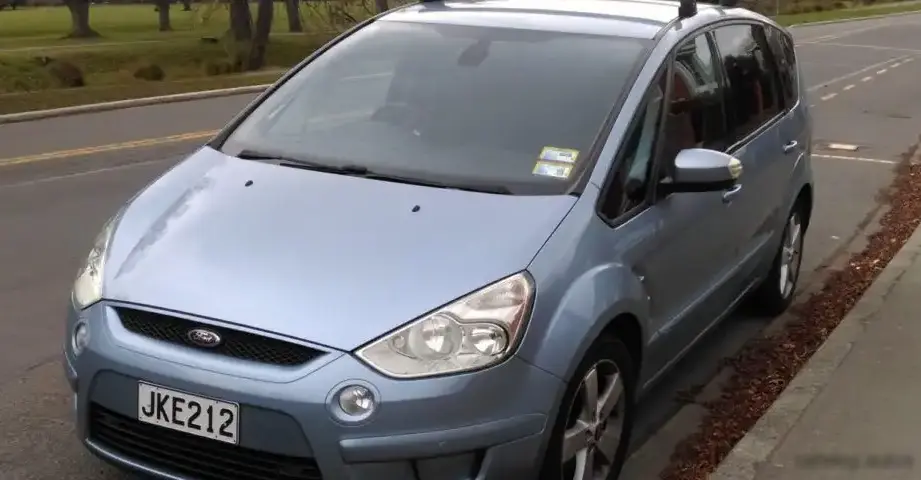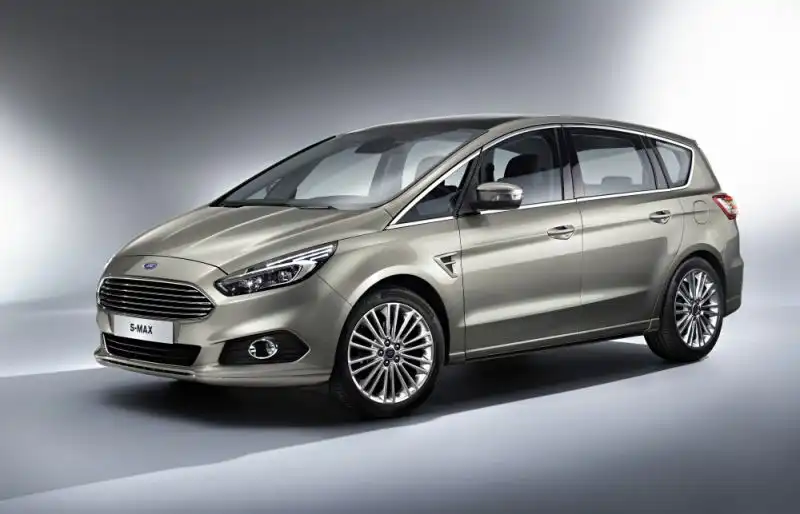
The Ford S-MAX II 1.5 EcoBoost (160 hp) S&S was a mid-range variant of Ford’s popular multi-purpose vehicle (MPV), produced from 2015 to 2018. Positioned within the second generation S-MAX range (introduced in 2015, internally designated as the second generation), this model aimed to balance fuel efficiency with acceptable performance for family transport. It served as a more economical alternative to the higher-powered engine options, while offering a more refined experience than the base engine. The S&S designation indicates the inclusion of Ford’s Start/Stop technology, designed to improve fuel economy in urban driving conditions.
Technical Specifications
| Brand | Ford |
| Model | S-MAX |
| Generation | S-MAX II |
| Type (Engine) | 1.5 EcoBoost (160 Hp) S&S |
| Start of production | 2015 |
| End of production | 2018 |
| Powertrain Architecture | Internal Combustion engine |
| Body type | MPV |
| Seats | 5 |
| Doors | 5 |
| Fuel consumption (urban) | 8 l/100 km (29.4 US mpg, 35.3 UK mpg, 12.5 km/l) |
| Fuel consumption (extra urban) | 5.6 l/100 km (42 US mpg, 50.4 UK mpg, 17.9 km/l) |
| Fuel consumption (combined) | 6.5 l/100 km (36.2 US mpg, 43.5 UK mpg, 15.4 km/l) |
| CO2 emissions | 149 g/km |
| Fuel Type | Petrol (Gasoline) |
| Acceleration 0 – 100 km/h | 9.9 sec |
| Acceleration 0 – 62 mph | 9.9 sec |
| Acceleration 0 – 60 mph | 9.4 sec |
| Maximum speed | 200 km/h (124.27 mph) |
| Emission standard | Euro 5b |
| Weight-to-power ratio | 10.3 kg/Hp, 97.3 Hp/tonne |
| Weight-to-torque ratio | 6.9 kg/Nm, 145.9 Nm/tonne |
| Power | 160 Hp @ 6000 rpm |
| Power per litre | 106.8 Hp/l |
| Torque | 240 Nm @ 1500-4500 rpm (177.01 lb.-ft. @ 1500-4500 rpm) |
| Engine layout | Front, Transverse |
| Engine Model/Code | UNCI, UNCJ, UNCK |
| Engine displacement | 1498 cm3 (91.41 cu. in.) |
| Number of cylinders | 4 |
| Engine configuration | Inline |
| Cylinder Bore | 79.02 mm (3.11 in.) |
| Piston Stroke | 76.4 mm (3.01 in.) |
| Compression ratio | 10:1 |
| Number of valves per cylinder | 4 |
| Fuel injection system | Direct injection |
| Engine aspiration | Turbocharger, Intercooler |
| Valvetrain | DOHC |
| Engine oil capacity | 4.1 l (4.33 US qt | 3.61 UK qt) |
| Coolant | 10.7 l (11.31 US qt | 9.41 UK qt) |
| Kerb Weight | 1645 kg (3626.6 lbs.) |
| Max. weight | 2450 kg (5401.33 lbs.) |
| Max load | 805 kg (1774.72 lbs.) |
| Trunk (boot) space – minimum | 700 l (24.72 cu. ft.) |
| Trunk (boot) space – maximum | 2200 l (77.69 cu. ft.) |
| Fuel tank capacity | 70 l (18.49 US gal | 15.4 UK gal) |
| Length | 4796 mm (188.82 in.) |
| Width | 1916 mm (75.43 in.) |
| Width including mirrors | 2137 mm (84.13 in.) |
| Height | 1655 mm (65.16 in.) |
| Wheelbase | 2849 mm (112.17 in.) |
| Front track | 1606 mm (63.23 in.) |
| Rear (Back) track | 1606 mm (63.23 in.) |
| Ride height (ground clearance) | 128-150 mm (5.04 – 5.91 in.) |
| Minimum turning circle | 12 m (39.37 ft.) |
| Drivetrain Architecture | ICE, Front wheel drive |
| Number of gears | 6 |
| Gearbox type | Manual transmission |
| Front suspension | Independent, McPherson with coil spring and anti-roll bar |
| Rear suspension | Independent coil spring |
| Front brakes | Ventilated discs |
| Rear brakes | Disc |
| Assisting systems | ABS |
| Steering type | Steering rack and pinion |
| Tires size | 235/55 R17; 235/50 R18; 245/45 R19 |
| Wheel rims size | 7.5J x 17; 7.5J x 18; 8J x 19 |
Powertrain & Engine Architecture
The heart of the S-MAX II 1.5 EcoBoost was the UNCI, UNCJ, or UNCK engine code, a 1.5-liter inline-four cylinder gasoline engine. This engine belonged to Ford’s EcoBoost family, characterized by turbocharging and direct fuel injection. The direct injection system, operating at pressures up to 200 bar, allowed for precise fuel delivery and improved combustion efficiency. The engine featured a single scroll turbocharger with an integrated intercooler, boosting power output while minimizing turbo lag. The valvetrain employed a double overhead camshaft (DOHC) design with four valves per cylinder, optimizing gas flow for enhanced performance. The Start/Stop system automatically shut off the engine when the vehicle came to a halt, such as at traffic lights, and restarted it instantly when the driver released the brake pedal. This feature contributed to reduced fuel consumption in urban environments. The engine was transversely mounted at the front of the vehicle.
Driving Characteristics
The 160 hp output, coupled with 240 Nm of torque available from 1500-4500 rpm, provided adequate performance for everyday driving. Acceleration from 0-60 mph took approximately 9.4 seconds, and the top speed was 200 km/h (124 mph). Compared to the higher-powered 2.0-liter EcoBoost variants, the 1.5-liter engine offered less outright acceleration. However, the broader torque curve made it feel responsive in most driving situations. The six-speed manual transmission provided precise gear changes, although some drivers found the shift action slightly notchy. The gear ratios were tuned for a balance between fuel economy and performance, with a relatively long final drive to aid efficiency. The 1.5 EcoBoost felt less strained during highway cruising than the base engine, offering a more relaxed driving experience.
Equipment & Trim Levels
The 1.5 EcoBoost S&S typically came equipped with features such as air conditioning, power windows, power mirrors, a basic audio system with USB connectivity, and steel wheels with wheel covers. Higher trim levels, such as Zetec and Titanium, added features like alloy wheels, a touchscreen infotainment system with navigation, automatic climate control, parking sensors, and a rear-view camera. Interior upholstery was typically cloth, with options for leather upgrades on higher trims. Optional extras included a panoramic sunroof, adaptive cruise control, and a premium sound system.
Chassis & Braking
The S-MAX II utilized an independent suspension system on both the front and rear axles. The front suspension employed McPherson struts with coil springs and an anti-roll bar, while the rear suspension featured an independent multi-link setup with coil springs. This configuration provided a comfortable ride and good handling characteristics. Braking duties were handled by ventilated discs on the front wheels and solid discs on the rear. Anti-lock Braking System (ABS) was standard. The S-MAX’s weight, around 1645 kg, was relatively moderate for its class, contributing to its balanced handling.
Market Reception & Comparison
The Ford S-MAX II 1.5 EcoBoost S&S was generally well-received by automotive critics as a practical and efficient family vehicle. It was praised for its spacious interior, comfortable ride, and decent fuel economy. However, some reviewers noted that the engine could feel underpowered when fully loaded or when tackling steep hills. Compared to the 2.0-liter EcoBoost models, the 1.5-liter version offered better fuel economy but less performance. Against competitors like the Volkswagen Touran and Citroën C4 Picasso, the S-MAX offered a more engaging driving experience and a more premium interior.
Legacy
The 1.5 EcoBoost engine, while generally reliable, has been known to exhibit occasional issues with the timing chain and carbon buildup on the intake valves. Regular maintenance, including oil changes and the use of quality fuel, is crucial for ensuring long-term reliability. On the used car market, the S-MAX II 1.5 EcoBoost S&S represents a good value proposition for buyers seeking a spacious and practical MPV with reasonable running costs. Its blend of efficiency and practicality continues to make it a popular choice among families.