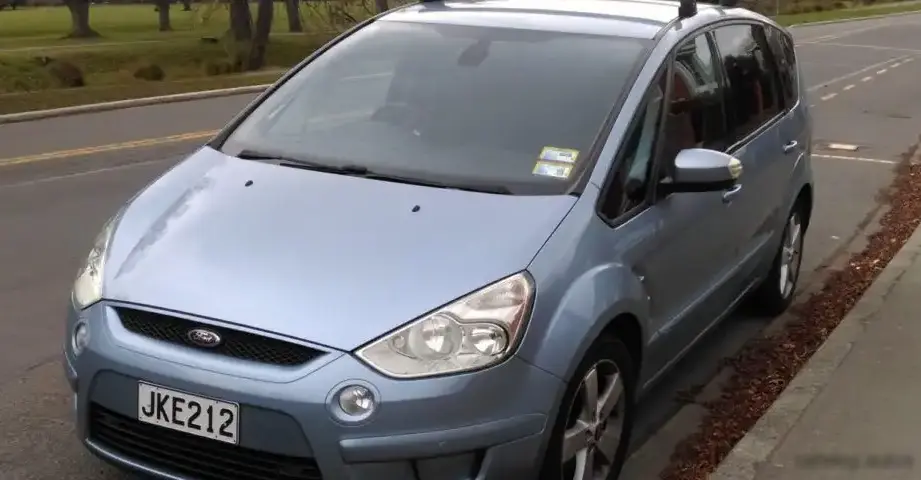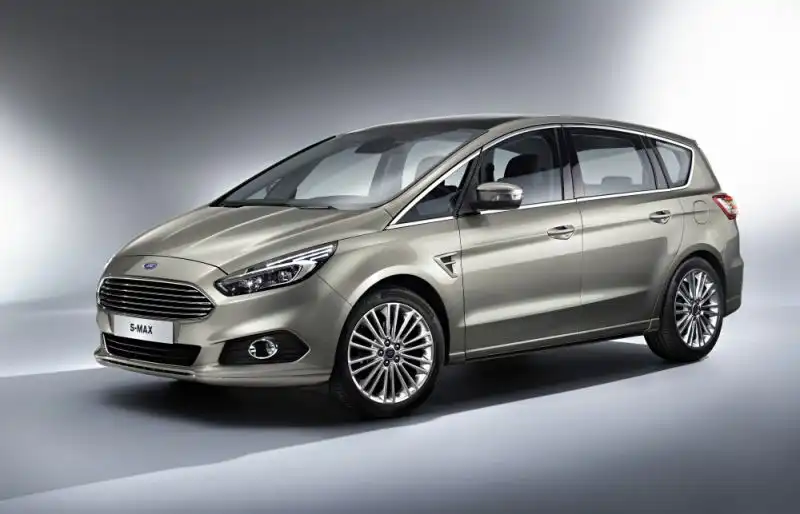
The Ford S-MAX II 1.5 EcoBoost (165 hp) S&S 7-Seat, produced from 2018 to 2019, represents a key variant within the second generation of Ford’s popular multi-purpose vehicle (MPV). Positioned as a mid-range offering, this model aimed to balance fuel efficiency, practicality, and affordability within the S-MAX lineup. It was primarily marketed in Europe, where the demand for seven-seat MPVs remained strong, offering a compelling alternative to larger SUVs. This version utilized Ford’s EcoBoost engine technology, emphasizing a blend of performance and reduced emissions. The S-MAX II, built on the Ford C2 platform, continued the original’s reputation for dynamic handling and spaciousness, but with updated technology and styling.
| Brand | Ford |
| Model | S-MAX |
| Generation | S-MAX II |
| Type (Engine) | 1.5 EcoBoost (165 Hp) S&S 7 Seat |
| Start of production | 2018 |
| End of production | 2019 |
| Powertrain Architecture | Internal Combustion engine |
| Body type | MPV |
| Seats | 7 |
| Doors | 5 |
| Fuel consumption (urban) | 8.8 l/100 km (26.7 US mpg) |
| Fuel consumption (extra urban) | 6.4 l/100 km (36.8 US mpg) |
| Fuel consumption (combined) | 7.4 l/100 km (31.8 US mpg) |
| CO2 emissions | 170 g/km |
| Fuel Type | Petrol (Gasoline) |
| Acceleration 0 – 100 km/h | 9.9 sec |
| Acceleration 0 – 62 mph | 9.9 sec |
| Acceleration 0 – 60 mph | 9.4 sec |
| Maximum speed | 200 km/h (124.27 mph) |
| Emission standard | Euro 6 d-TEMP |
| Weight-to-power ratio | 10 kg/Hp |
| Weight-to-torque ratio | 6.8 kg/Nm |
| Power | 165 Hp @ 5500 rpm |
| Torque | 242 Nm @ 1600-4000 rpm (178.49 lb.-ft.) |
| Engine layout | Front, Transverse |
| Engine Model/Code | C15HDTX, UNCP |
| Engine displacement | 1498 cm3 (91.41 cu. in.) |
| Number of cylinders | 4 |
| Engine configuration | Inline |
| Cylinder Bore | 79.02 mm (3.11 in.) |
| Piston Stroke | 76.4 mm (3.01 in.) |
| Compression ratio | 10:1 |
| Number of valves per cylinder | 4 |
| Fuel injection system | Direct injection |
| Engine aspiration | Turbocharger, Intercooler |
| Valvetrain | DOHC |
| Engine oil capacity | 4.1 l (4.33 US qt | 3.61 UK qt) |
| Coolant capacity | 10.7 l (11.31 US qt | 9.41 UK qt) |
| Kerb Weight | 1645 kg (3626.6 lbs.) |
| Max. weight | 2450 kg (5401.33 lbs.) |
| Max load | 805 kg (1774.72 lbs.) |
| Trunk (boot) space – minimum | 285 l (10.06 cu. ft.) |
| Trunk (boot) space – maximum | 2020 l (71.34 cu. ft.) |
| Fuel tank capacity | 70 l (18.49 US gal | 15.4 UK gal) |
| Length | 4796 mm (188.82 in.) |
| Width | 1916 mm (75.43 in.) |
| Width including mirrors | 2137 mm (84.13 in.) |
| Height | 1655 mm (65.16 in.) |
| Wheelbase | 2849 mm (112.17 in.) |
| Front track | 1606 mm (63.23 in.) |
| Rear track | 1606 mm (63.23 in.) |
| Ride height (ground clearance) | 128-150 mm (5.04 – 5.91 in.) |
| Minimum turning circle | 12 m (39.37 ft.) |
| Drivetrain | Front wheel drive |
| Number of gears | 6 |
| Gearbox type | Manual transmission |
| Front suspension | Independent, McPherson with coil spring and anti-roll bar |
| Rear suspension | Independent coil spring |
| Front brakes | Ventilated discs |
| Rear brakes | Disc |
| Assisting systems | ABS (Anti-lock braking system) |
| Steering type | Steering rack and pinion |
| Tires size | 235/55 R17; 235/50 R18; 245/45 R19 |
| Wheel rims size | 7.5J x 17; 7.5J x 18; 8J x 19 |
Powertrain & Engine Architecture
The heart of the S-MAX II 1.5 EcoBoost is the C15HDTX engine, a 1.5-liter inline-four cylinder gasoline engine. This engine is part of Ford’s EcoBoost family, characterized by turbocharging and direct fuel injection. The engine utilizes a single twin-scroll turbocharger, which helps to reduce turbo lag and improve responsiveness. Direct injection delivers fuel directly into the combustion chamber, allowing for more precise fuel control and increased efficiency. The engine features a double overhead camshaft (DOHC) valvetrain with four valves per cylinder, optimizing airflow for enhanced performance. The 1.5 EcoBoost engine produces 165 horsepower at 5500 rpm and 242 Nm (178 lb-ft) of torque between 1600 and 4000 rpm. This engine was paired with a six-speed manual transmission in this configuration, delivering power to the front wheels. The Start & Stop system was standard, further contributing to fuel savings in urban driving conditions.
Driving Characteristics
The 1.5 EcoBoost engine, coupled with the six-speed manual transmission, provided a reasonably engaging driving experience for the S-MAX II. While not as overtly powerful as the higher-output 2.0-liter EcoBoost variants, the 1.5L offered sufficient power for everyday driving and highway cruising. Acceleration from 0-60 mph took approximately 9.4 seconds. The six-speed gearbox was well-matched to the engine’s torque curve, allowing drivers to keep the engine in its optimal power band. Compared to the more powerful versions, the 1.5 EcoBoost prioritized fuel economy over outright performance. The manual transmission offered more driver involvement than the optional automatic, providing better control and responsiveness. However, the lower horsepower meant that fully loaded with passengers and luggage, the engine could feel strained on inclines or during quick overtaking maneuvers.
Equipment & Trim Levels
The 1.5 EcoBoost 7-Seat trim typically included standard features such as air conditioning, Ford’s SYNC infotainment system with a touchscreen display, Bluetooth connectivity, and alloy wheels. Safety features included ABS, electronic stability control, and multiple airbags. Higher trim levels offered additional features like leather upholstery, heated front seats, a panoramic sunroof, and advanced driver-assistance systems such as adaptive cruise control and lane-keeping assist. The interior design was functional and modern, with a focus on practicality and space. The seven-seat configuration offered flexibility for families, with the third-row seats folding flat to maximize cargo space when not in use.
Chassis & Braking
The S-MAX II utilized an independent suspension system on both the front and rear axles. The front suspension employed McPherson struts with a coil spring and anti-roll bar, while the rear suspension featured an independent coil spring setup. This configuration provided a comfortable ride and good handling characteristics. The braking system consisted of ventilated discs on the front wheels and solid discs on the rear wheels. ABS (Anti-lock Braking System) was standard, enhancing braking performance and stability. The steering system was a rack and pinion type, providing precise and responsive steering feel.
Market Reception & Comparison
The Ford S-MAX II 1.5 EcoBoost 7-Seat was generally well-received by automotive critics as a practical and efficient MPV. Reviewers praised its spacious interior, comfortable ride, and decent fuel economy. However, some critics noted that the 1.5-liter engine could feel underpowered when fully loaded. Compared to the 2.0-liter EcoBoost variants, the 1.5L offered a more affordable entry point into the S-MAX range, but at the expense of performance. Against competitors like the Volkswagen Touran and Citroën Grand C4 Picasso, the S-MAX II offered a more dynamic driving experience, but the fuel economy was comparable. The reliability of the 1.5 EcoBoost engine was generally good, although some owners reported minor issues with the turbocharger and fuel injectors.
Legacy
The Ford S-MAX II 1.5 EcoBoost 7-Seat remains a popular choice in the used car market, particularly for families seeking a spacious and practical vehicle. The 1.5 EcoBoost engine has proven to be relatively reliable, although regular maintenance is essential to ensure long-term durability. The availability of spare parts is good, and the S-MAX II benefits from Ford’s extensive dealer network. While newer MPVs and SUVs have emerged since its production ended, the S-MAX II 1.5 EcoBoost continues to offer a compelling combination of practicality, efficiency, and affordability, making it a viable option for budget-conscious buyers.