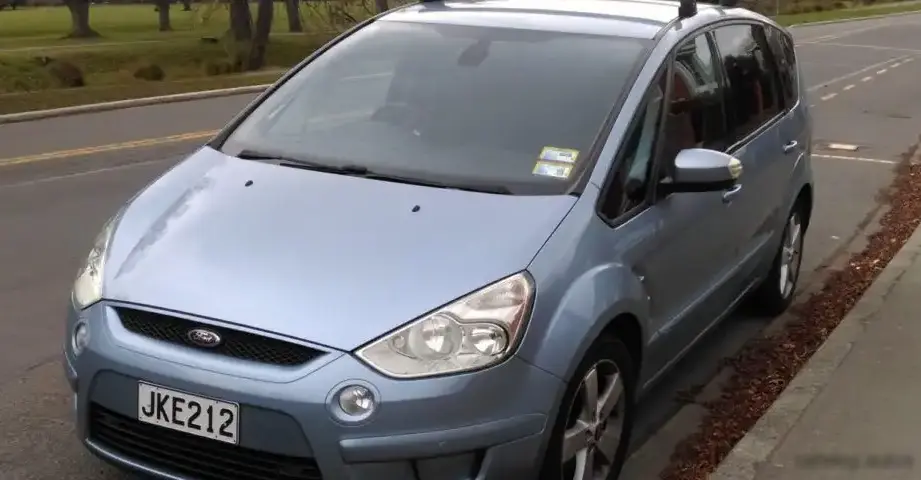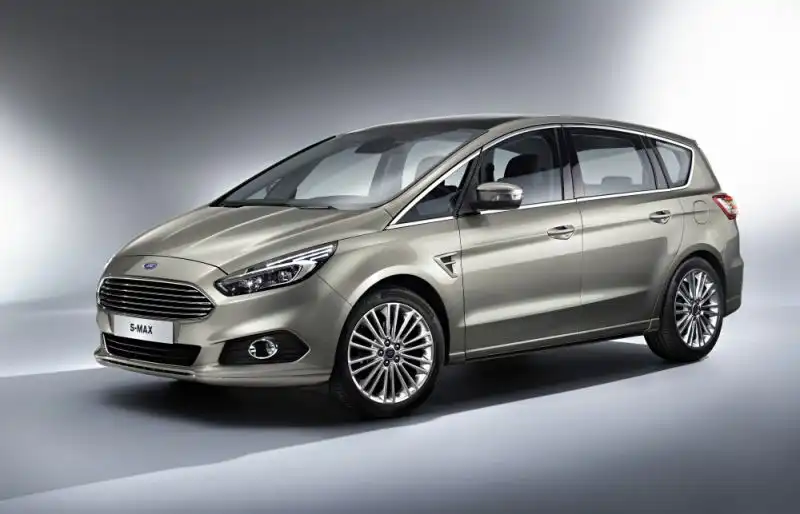
The Ford S-MAX II 2.0 Bi-Turbo Ecoblue (240 Hp) Automatic S&S was a high-performance variant of the second-generation Ford S-MAX, produced from 2018 to 2019. Positioned as a premium offering within the S-MAX lineup, it combined a powerful bi-turbo diesel engine with a smooth-shifting eight-speed automatic transmission and Ford’s Start-Stop technology. This model aimed to deliver a blend of performance, efficiency, and practicality for families seeking a sporty multi-purpose vehicle (MPV). It primarily served the European market, where larger MPVs remained popular, offering a more dynamic alternative to traditional people carriers.
| Brand | Ford |
| Model | S-MAX |
| Generation | S-MAX II |
| Type (Engine) | 2.0 Bi-Turbo Ecoblue (240 Hp) Automatic S&S |
| Start of production | 2018 |
| End of production | 2019 |
| Powertrain Architecture | Internal Combustion engine |
| Body type | MPV |
| Seats | 5 |
| Doors | 5 |
| Fuel consumption (urban) | 7.1-7.2 l/100 km (33.1 – 32.7 US mpg) |
| Fuel consumption (extra urban) | 5.2-5.3 l/100 km (45.2 – 44.4 US mpg) |
| Fuel consumption (combined) | 5.9-6.3 l/100 km (39.9 – 37.3 US mpg) |
| CO2 emissions | 154-162 g/km |
| Fuel Type | Diesel |
| Acceleration 0 – 100 km/h | 8.6 sec |
| Acceleration 0 – 62 mph | 8.6 sec |
| Acceleration 0 – 60 mph | 8.2 sec |
| Maximum speed | 218 km/h (135.46 mph) |
| Emission standard | Euro 6 d-TEMP |
| Weight-to-power ratio | 7.4 kg/Hp |
| Weight-to-torque ratio | 3.5 kg/Nm |
| Power | 240 Hp @ 4000 rpm |
| Torque | 500 Nm @ 2000 rpm (368.78 lb.-ft. @ 2000 rpm) |
| Engine layout | Front, Transverse |
| Engine Model/Code | YLCB |
| Engine displacement | 1997 cm3 (121.86 cu. in.) |
| Number of cylinders | 4 |
| Engine configuration | Inline |
| Cylinder Bore | 85 mm (3.35 in.) |
| Piston Stroke | 88 mm (3.46 in.) |
| Compression ratio | 16:1 |
| Number of valves per cylinder | 4 |
| Fuel injection system | Diesel Commonrail |
| Engine aspiration | BiTurbo, Intercooler |
| Valvetrain | DOHC |
| Engine oil capacity | 6.4 l (6.76 US qt | 5.63 UK qt) |
| Coolant capacity | 10.7 l (11.31 US qt | 9.41 UK qt) |
| Kerb Weight | 1766 kg (3893.36 lbs.) |
| Max. weight | 2575 kg (5676.9 lbs.) |
| Max load | 809 kg (1783.54 lbs.) |
| Trunk (boot) space – minimum | 700 l (24.72 cu. ft.) |
| Trunk (boot) space – maximum | 2200 l (77.69 cu. ft.) |
| Fuel tank capacity | 70 l (18.49 US gal | 15.4 UK gal) |
| Length | 4796 mm (188.82 in.) |
| Width | 1916 mm (75.43 in.) |
| Width including mirrors | 2137 mm (84.13 in.) |
| Height | 1655 mm (65.16 in.) |
| Wheelbase | 2849 mm (112.17 in.) |
| Front track | 1606 mm (63.23 in.) |
| Rear track | 1606 mm (63.23 in.) |
| Ride height (ground clearance) | 128-150 mm (5.04 – 5.91 in.) |
| Minimum turning circle | 12 m (39.37 ft.) |
| Drivetrain Architecture | Front wheel drive |
| Number of gears | 8 |
| Gearbox type | Automatic transmission |
| Front suspension | Independent, McPherson with coil spring and anti-roll bar |
| Rear suspension | Independent coil spring |
| Front brakes | Ventilated discs |
| Rear brakes | Disc |
| Assisting systems | ABS (Anti-lock braking system) |
| Steering type | Steering rack and pinion |
| Tires size | 235/55 R17; 235/50 R18; 245/45 R19 |
| Wheel rims size | 7.5J x 17; 7.5J x 18; 8J x 19 |
Powertrain & Engine Architecture
The heart of the S-MAX II 2.0 Bi-Turbo Ecoblue was the YLCB engine, a 1997cc inline-four cylinder diesel. This engine featured two turbochargers – a smaller, more responsive turbo for low-end torque and a larger turbo for high-end power. This sequential turbocharging setup, combined with an intercooler, minimized turbo lag and provided a broad, usable powerband. The engine utilized a Bosch common rail direct fuel injection system, operating at a high pressure of 2,500 bar to ensure efficient combustion and reduced emissions. The valvetrain employed a double overhead camshaft (DOHC) design with four valves per cylinder, optimizing gas flow for improved performance. The eight-speed automatic transmission, sourced from Aisin, was chosen for its smooth shifting characteristics and efficiency. It featured a torque converter lock-up clutch to minimize slippage and improve fuel economy. The inclusion of Ford’s Start-Stop system further enhanced fuel efficiency by automatically shutting off the engine when the vehicle was stationary.
Driving Characteristics
The 240 horsepower and 500 Nm (368 lb-ft) of torque delivered by the 2.0 Bi-Turbo Ecoblue engine provided brisk acceleration. The 0-60 mph sprint was achieved in approximately 8.2 seconds, and the vehicle had a top speed of 135.46 mph. Compared to the lower-powered 1.5 EcoBlue variants, the 2.0 Bi-Turbo offered a significantly more engaging driving experience, with ample power for overtaking and effortless cruising. While not as sporty as some dedicated performance vehicles, the S-MAX II 2.0 Bi-Turbo provided a confident and capable driving experience. The eight-speed automatic transmission contributed to this, offering quick and seamless gear changes. The gear ratios were tuned to balance acceleration and fuel economy, with a relatively tall final drive for efficient highway cruising. Compared to the six-speed manual transmission available on some S-MAX models, the automatic offered greater convenience, particularly in urban traffic.
Equipment & Trim Levels
The 2.0 Bi-Turbo Ecoblue variant typically came with a high level of standard equipment. This included features such as Ford’s SYNC 3 infotainment system with an 8-inch touchscreen, navigation, Apple CarPlay and Android Auto compatibility, and a premium sound system. Interior upholstery was typically a combination of leather and cloth, with heated front seats and a power-adjustable driver’s seat. Standard safety features included adaptive cruise control, lane-keeping assist, automatic emergency braking, and front and rear parking sensors. Optional extras included a panoramic sunroof, a rear-view camera, and a hands-free power tailgate. The trim level often sat at the top or near the top of the S-MAX range, offering a more luxurious and well-equipped experience than the base models.
Chassis & Braking
The S-MAX II featured an independent suspension system on both the front and rear axles. The front suspension utilized a McPherson strut design with a coil spring and anti-roll bar, while the rear suspension employed an independent multi-link setup. This configuration provided a comfortable ride quality while maintaining good handling characteristics. The braking system consisted of ventilated discs on the front wheels and solid discs on the rear wheels. Anti-lock braking system (ABS) and electronic stability control (ESC) were standard features, enhancing safety and control. The S-MAX II’s chassis was designed to accommodate the increased power and torque of the 2.0 Bi-Turbo engine, with reinforced components and optimized suspension tuning.
Market Reception & Comparison
The Ford S-MAX II 2.0 Bi-Turbo Ecoblue was generally well-received by automotive critics. It was praised for its powerful engine, smooth transmission, and spacious interior. However, some reviewers noted that the ride could be firm on certain road surfaces. Compared to other trims in the S-MAX lineup, the 2.0 Bi-Turbo offered a significant performance advantage, but at a higher price point. Fuel economy was competitive for its class, averaging around 39.9 mpg on the combined cycle. Reliability reports suggested that the 2.0 Bi-Turbo engine was generally reliable, although regular maintenance was essential to ensure optimal performance. Compared to competitors such as the Volkswagen Sharan and the Citroën Grand C4 Picasso, the S-MAX II 2.0 Bi-Turbo offered a more engaging driving experience and a more premium interior.
Legacy
The Ford S-MAX II 2.0 Bi-Turbo Ecoblue remains a desirable used car option for those seeking a spacious, practical, and relatively sporty MPV. The 2.0 Bi-Turbo engine has proven to be durable and reliable when properly maintained. However, potential buyers should be aware of the importance of regular servicing, including oil changes and filter replacements. The eight-speed automatic transmission is also known to be reliable, but it’s essential to check for smooth shifting and any signs of wear or damage. As a relatively rare variant, the 2.0 Bi-Turbo Ecoblue often commands a premium price on the used car market, reflecting its performance and equipment levels. It represents a compelling choice for families who prioritize both practicality and driving enjoyment.