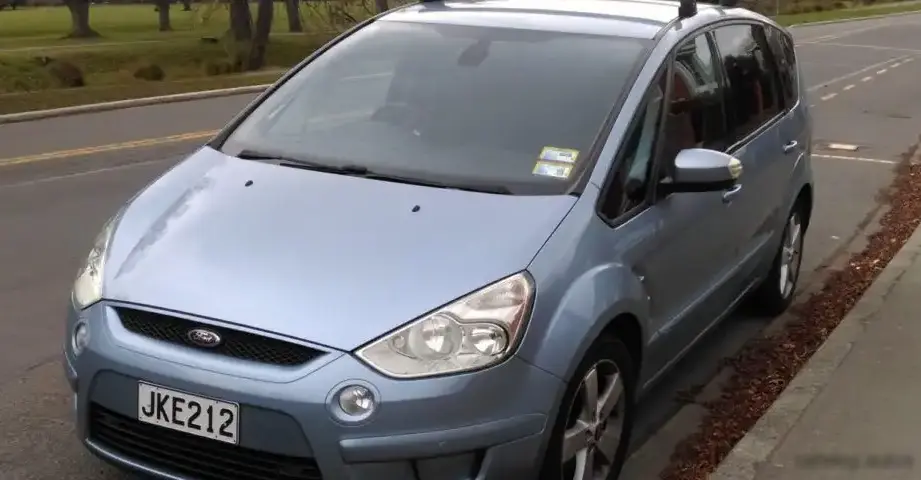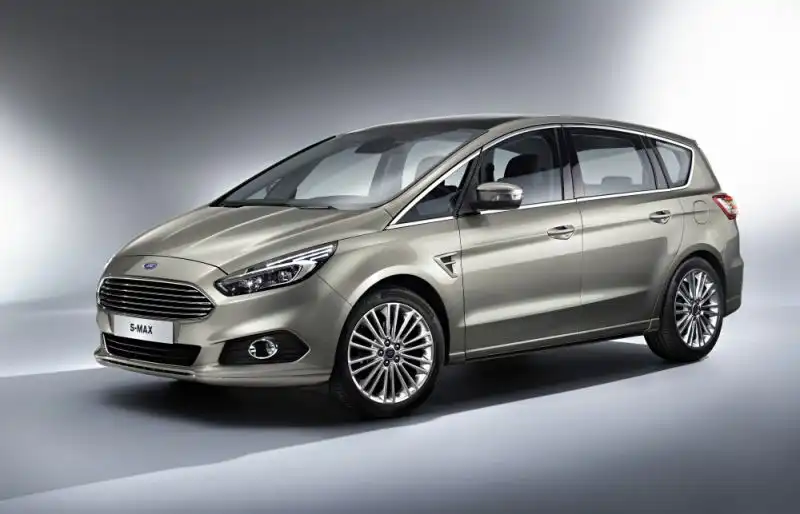
The Ford S-MAX II 2.0 EcoBlue (190 Hp) AWD Automatic S&S represents a significant iteration in Ford’s multi-purpose vehicle (MPV) lineup. Introduced in 2018 and continuing through 2019, this variant occupied a mid-to-upper position within the second-generation S-MAX range (introduced in 2015). Built on the Ford C2 platform, shared with models like the Ford Galaxy and Mondeo, the S-MAX II aimed to blend practicality with a more dynamic driving experience than traditional MPVs. The “EcoBlue” designation signifies Ford’s latest generation of diesel engines, focused on improved efficiency and reduced emissions. The inclusion of “AWD” and “S&S” (Start & Stop) further defines this specific configuration, targeting buyers seeking all-weather capability and fuel economy benefits.
Technical Specifications
| Brand | Ford |
| Model | S-MAX |
| Generation | S-MAX II |
| Type | 2.0 EcoBlue (190 Hp) AWD Automatic S&S |
| Start of production | 2018 |
| End of production | 2019 |
| Powertrain Architecture | Internal Combustion engine |
| Body type | MPV |
| Seats | 5 |
| Doors | 5 |
| Fuel consumption (urban) | 7.0-7.1 l/100 km (33.6 – 33.1 US mpg, 40.4 – 39.8 UK mpg, 14.3 – 14.1 km/l) |
| Fuel consumption (extra urban) | 5.2-5.3 l/100 km (45.2 – 44.4 US mpg, 54.3 – 53.3 UK mpg, 19.2 – 18.9 km/l) |
| Fuel consumption (combined) | 5.8-6.2 l/100 km (40.6 – 37.9 US mpg, 48.7 – 45.6 UK mpg, 17.2 – 16.1 km/l) |
| CO2 emissions | 153-161 g/km |
| Fuel Type | Diesel |
| Acceleration 0 – 100 km/h | 9.9 sec |
| Acceleration 0 – 62 mph | 9.9 sec |
| Acceleration 0 – 60 mph | 9.4 sec |
| Maximum speed | 206 km/h (128 mph) |
| Emission standard | Euro 6 d-TEMP |
| Weight-to-power ratio | 9.5 kg/Hp, 105 Hp/tonne |
| Weight-to-torque ratio | 4.5 kg/Nm, 221.1 Nm/tonne |
| Power | 190 Hp @ 3500 rpm |
| Power per litre | 95.1 Hp/l |
| Torque | 400 Nm @ 2000-3000 rpm (295.02 lb.-ft. @ 2000-3000 rpm) |
| Engine layout | Front, Transverse |
| Engine Model/Code | BCCC |
| Engine displacement | 1997 cm3 (121.86 cu. in.) |
| Number of cylinders | 4 |
| Engine configuration | Inline |
| Cylinder Bore | 85 mm (3.35 in.) |
| Piston Stroke | 88 mm (3.46 in.) |
| Compression ratio | 17:1 |
| Number of valves per cylinder | 4 |
| Fuel injection system | Diesel Commonrail |
| Engine aspiration | Turbocharger, Intercooler |
| Valvetrain | DOHC |
| Engine oil capacity | 6.4 l (6.76 US qt | 5.63 UK qt) |
| Coolant | 10.7 l (11.31 US qt | 9.41 UK qt) |
| Kerb Weight | 1809 kg (3988.16 lbs.) |
| Max. weight | 2615 kg (5765.09 lbs.) |
| Max load | 806 kg (1776.93 lbs.) |
| Trunk (boot) space – minimum | 700 l (24.72 cu. ft.) |
| Trunk (boot) space – maximum | 2200 l (77.69 cu. ft.) |
| Fuel tank capacity | 70 l (18.49 US gal | 15.4 UK gal) |
| Length | 4796 mm (188.82 in.) |
| Width | 1916 mm (75.43 in.) |
| Width including mirrors | 2137 mm (84.13 in.) |
| Height | 1655 mm (65.16 in.) |
| Wheelbase | 2849 mm (112.17 in.) |
| Front track | 1606 mm (63.23 in.) |
| Rear (Back) track | 1606 mm (63.23 in.) |
| Ride height (ground clearance) | 128-150 mm (5.04 – 5.91 in.) |
| Minimum turning circle | 12 m (39.37 ft.) |
| Drive wheel | All wheel drive (4×4) |
| Number of gears | 8 |
| Gearbox type | automatic transmission |
| Front suspension | Independent, type McPherson with coil spring and anti-roll bar |
| Rear suspension | Independent coil spring |
| Front brakes | Ventilated discs |
| Rear brakes | Disc |
| Assisting systems | ABS (Anti-lock braking system) |
| Steering type | Steering rack and pinion |
| Tires size | 235/55 R17; 235/50 R18; 245/45 R19 |
| Wheel rims size | 7.5J x 17; 7.5J x 18; 8J x 19 |
Powertrain & Engine Architecture
The heart of the S-MAX II 2.0 EcoBlue AWD is the Ford BCCC engine, a 2.0-liter inline-four cylinder diesel. This engine is part of Ford’s EcoBlue family, characterized by advanced combustion technology designed to improve efficiency and reduce NOx emissions. The BCCC utilizes a common-rail direct fuel injection system, operating at pressures up to 2,500 bar, ensuring precise fuel delivery and optimized combustion. The engine also features a variable geometry turbocharger (VGT) and an intercooler, enhancing both low-end torque and overall power output. The DOHC (Double Overhead Camshaft) valvetrain, with four valves per cylinder, further contributes to the engine’s breathing efficiency. Paired with this engine is a sophisticated eight-speed automatic transmission, providing smooth and efficient gear changes. This transmission is crucial for managing the engine’s torque output and delivering a comfortable driving experience, especially when combined with the all-wheel-drive system.
Driving Characteristics
The 2.0 EcoBlue engine, producing 190 horsepower and 400 Nm of torque, delivers a respectable level of performance for a large MPV. Acceleration from 0-60 mph takes approximately 9.4 seconds, and the vehicle has a top speed of 128 mph. The eight-speed automatic transmission is well-tuned, offering quick and seamless shifts. While not as overtly sporty as some competitors, the S-MAX II 2.0 EcoBlue provides ample power for everyday driving and overtaking maneuvers. The all-wheel-drive system enhances traction, particularly in adverse weather conditions, providing a surefooted feel. Compared to the lower-powered 1.5 EcoBlue variants, this 2.0-liter engine offers a noticeable improvement in performance, while remaining more fuel-efficient than the higher-output 2.3 EcoBoost petrol engine.
Equipment & Trim Levels
The 2.0 EcoBlue AWD Automatic S&S trim typically included a generous level of standard equipment. This often encompassed features such as Ford’s SYNC 3 infotainment system with an 8-inch touchscreen, navigation, Apple CarPlay and Android Auto compatibility, and a premium sound system. Comfort features included automatic climate control, heated front seats, and keyless entry. Safety equipment was also comprehensive, with features like adaptive cruise control, lane-keeping assist, and automatic emergency braking. Optional extras could include a panoramic sunroof, leather upholstery, and a rear-seat entertainment system. The interior generally featured a dark color scheme with high-quality materials, providing a comfortable and refined cabin environment.
Chassis & Braking
The S-MAX II utilizes an independent suspension setup on both the front and rear axles. The front suspension employs McPherson struts with coil springs and an anti-roll bar, while the rear features an independent multi-link suspension. This configuration provides a good balance between ride comfort and handling. The all-wheel-drive system utilizes a multi-plate clutch to distribute torque between the front and rear axles, optimizing traction based on road conditions. Braking duties are handled by ventilated discs on all four wheels, providing ample stopping power. The vehicle is equipped with ABS (Anti-lock Braking System), Electronic Stability Control (ESC), and Traction Control, enhancing safety and stability.
Market Reception & Comparison
The Ford S-MAX II 2.0 EcoBlue AWD Automatic S&S was generally well-received by automotive critics. It was praised for its spacious interior, comfortable ride, and refined driving experience. The EcoBlue engine was commended for its fuel efficiency and strong torque output. However, some critics noted that the interior design, while functional, lacked the visual flair of some competitors. Compared to rivals like the Volkswagen Sharan and Citroën Grand C4 Picasso, the S-MAX II offered a more engaging driving experience. Fuel economy figures of around 40 mpg combined were competitive for its class. Reliability reports suggest that the EcoBlue engine is generally robust, although regular maintenance is essential.
Legacy
The Ford S-MAX II 2.0 EcoBlue AWD Automatic S&S remains a practical and versatile choice in the used car market. The EcoBlue engine has proven to be relatively reliable, provided it has been properly maintained. The all-wheel-drive system adds to its appeal, particularly in regions with inclement weather. While newer MPVs offer more advanced technology, the S-MAX II continues to provide a compelling combination of space, comfort, and driving dynamics. Its relatively affordable price point makes it an attractive option for families seeking a spacious and capable vehicle.