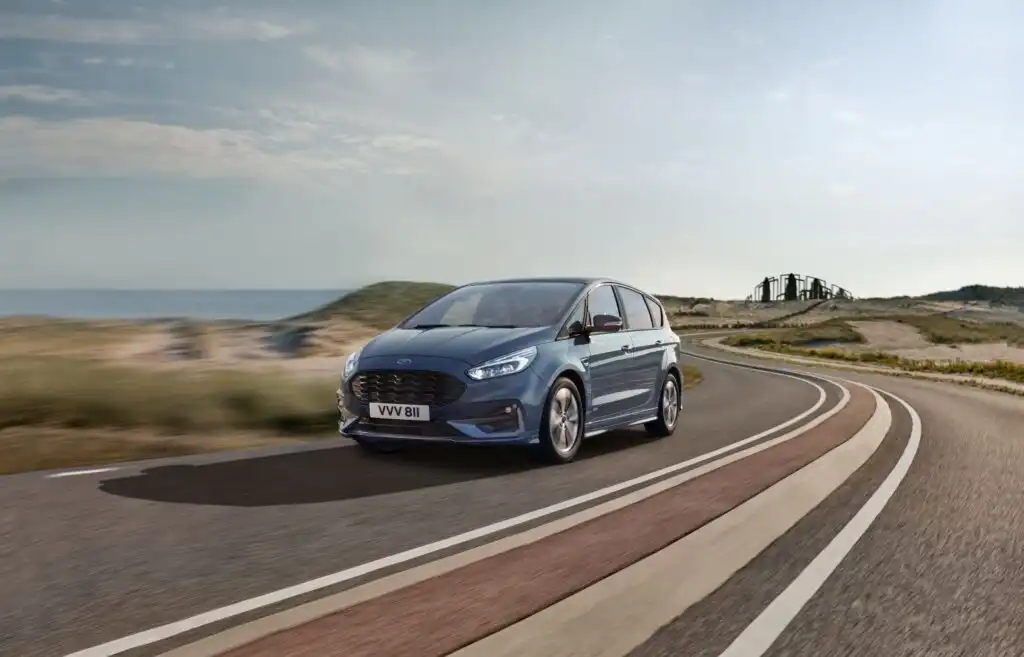
The Ford S-MAX II, specifically the 1.5 EcoBoost variant producing 165 horsepower, represents a key offering in Ford’s European MPV (Multi-Purpose Vehicle) lineup. Introduced with the facelift in November 2019 and continuing through April 2023, this model aimed to balance practicality, fuel efficiency, and affordability within the S-MAX range. It occupied a mid-range position, slotting below the more powerful 2.0-liter EcoBoost options and above the diesel variants in terms of price and performance. The S-MAX II, built on the CD2 platform, was designed to appeal to families seeking a spacious and versatile vehicle with a more dynamic driving experience than traditional minivans.
Technical Specifications
| Brand | Ford |
| Model | S-MAX |
| Generation | S-MAX II (facelift 2019) |
| Type (Engine) | 1.5 EcoBoost (165 Hp) |
| Start of production | November, 2019 |
| End of production | April, 2023 |
| Powertrain Architecture | Internal Combustion engine |
| Body type | MPV |
| Seats | 5-7 |
| Doors | 5 |
| Fuel consumption (urban) | 9.7-10.2 l/100 km (24.2 – 23.1 US mpg) |
| Fuel consumption (extra urban) | 6.1-6.3 l/100 km (38.6 – 37.3 US mpg) |
| Fuel consumption (combined) | 7.4-7.6 l/100 km (31.8 – 30.9 US mpg) |
| CO2 emissions | 170-175 g/km |
| Fuel Type | Petrol (Gasoline) |
| Acceleration 0 – 100 km/h | 10.2 sec |
| Acceleration 0 – 62 mph | 10.2 sec |
| Acceleration 0 – 60 mph | 9.7 sec |
| Maximum speed | 203 km/h (126.14 mph) |
| Emission standard | Euro 6d-TEMP-EVAP-ISC |
| Weight-to-power ratio | 10.4 kg/Hp |
| Weight-to-torque ratio | 7.1 kg/Nm |
| Power | 165 Hp @ 5500-6000 rpm |
| Torque | 242 Nm @ 1650-4500 rpm (178.49 lb.-ft.) |
| Number of cylinders | 4 |
| Engine configuration | Inline |
| Number of valves per cylinder | 4 |
| Fuel injection system | Direct injection |
| Engine aspiration | Turbocharger, Intercooler |
| Engine oil capacity | 4.1 l (4.33 US qt | 3.61 UK qt) |
| Coolant capacity | 10.7 l (11.31 US qt | 9.41 UK qt) |
| Kerb Weight | 1709 kg (3767.7 lbs) |
| Max. weight | 2450 kg (5401.33 lbs) |
| Max load | 741 kg (1633.63 lbs) |
| Trunk (boot) space – minimum | 965 l (34.08 cu. ft) |
| Trunk (boot) space – maximum | 2020 l (71.34 cu. ft) |
| Fuel tank capacity | 65 l (17.17 US gal | 14.3 UK gal) |
| Max. roof load | 75 kg (165.35 lbs) |
| Permitted trailer load with brakes (8%) | 1800 kg (3968.32 lbs) |
| Permitted trailer load with brakes (12%) | 1600 kg (3527.4 lbs) |
| Permitted trailer load without brakes | 750 kg (1653.47 lbs) |
| Permitted towbar download | 90 kg (198.42 lbs) |
| Length | 4796 mm (188.82 in) |
| Width | 1916 mm (75.43 in) |
| Width with mirrors folded | 1953 mm (76.89 in) |
| Width including mirrors | 2137 mm (84.13 in) |
| Height | 1655 mm (65.16 in) |
| Wheelbase | 2850 mm (112.2 in) |
| Minimum turning circle | 11.95 m (39.21 ft) |
| Drivetrain Architecture | Front wheel drive |
| Number of gears | 6 |
| Gearbox type | Manual transmission |
| Front suspension | Independent, type McPherson with coil spring and anti-roll bar |
| Rear suspension | Independent coil spring |
| Front brakes | Ventilated discs |
| Rear brakes | Disc |
| Tires size | 235/55 R17; 235/50 R18 |
| Wheel rims size | 7.5J x 17; 7.5J x 18 |
Powertrain & Engine Architecture
The heart of this S-MAX variant is the 1.5-liter EcoBoost inline-four cylinder engine. This engine, part of Ford’s EcoBoost family, utilizes direct fuel injection and a single turbocharger with an intercooler to deliver a balance of power and efficiency. The engine code is typically GXDA. The direct injection system allows for precise fuel delivery, optimizing combustion and reducing emissions. The turbocharger provides increased power output by forcing more air into the cylinders. The 165 horsepower peak is achieved between 5500 and 6000 rpm, while the 242 Nm (178 lb-ft) of torque is readily available from 1650 to 4500 rpm. This broad torque curve contributes to good drivability in everyday situations. The engine is paired with a six-speed manual transmission, which was the standard offering for this trim level. While an automatic transmission was available on other S-MAX models, it wasn’t offered with this specific engine and power output.
Driving Characteristics
The 1.5 EcoBoost 165 hp S-MAX offers a comfortable and capable driving experience. Acceleration from 0 to 60 mph takes approximately 9.7 seconds, making it adequate for most daily driving scenarios. However, it’s noticeably slower than the higher-powered 2.0-liter EcoBoost versions. The six-speed manual transmission provides good control, but the gear ratios are tuned for fuel efficiency rather than outright performance. The engine feels responsive at lower revs thanks to the turbocharger, but it can feel strained when pushed hard, especially when fully loaded with passengers and luggage. The S-MAX’s suspension provides a good balance between comfort and handling, absorbing bumps well while maintaining reasonable body control in corners.
Equipment & Trim Levels
The 1.5 EcoBoost 165 hp S-MAX typically came equipped with a respectable level of standard features. These included air conditioning, Ford’s SYNC 3 infotainment system with an 8-inch touchscreen, Bluetooth connectivity, and a suite of safety features such as ABS, ESP, and multiple airbags. Higher trim levels, such as Titanium and ST-Line, added features like leather upholstery, heated front seats, a panoramic sunroof, and advanced driver-assistance systems like adaptive cruise control and lane-keeping assist. The interior generally featured a dark color scheme with durable cloth upholstery. Optional extras included navigation, premium sound systems, and parking sensors.
Chassis & Braking
The S-MAX II utilizes an independent suspension setup on both the front and rear axles. The front suspension employs McPherson struts with coil springs and an anti-roll bar, while the rear features an independent multi-link suspension. This configuration provides a comfortable ride and good handling characteristics. The braking system consists of ventilated discs on the front wheels and solid discs on the rear. ABS (Anti-lock Braking System) and ESP (Electronic Stability Program) are standard features, enhancing safety and control. The steering is electrically assisted, providing a light and precise feel.
Market Reception & Comparison
The 1.5 EcoBoost 165 hp S-MAX was generally well-received by critics as a practical and affordable option within the S-MAX range. It was praised for its fuel efficiency and spacious interior, but some reviewers noted its lack of outright performance compared to the more powerful engine options. Compared to the 2.0-liter EcoBoost models, the 1.5-liter version offered lower running costs but sacrificed some driving excitement. The diesel variants provided even better fuel economy but were often criticized for their higher purchase price and potential maintenance costs. The 1.5 EcoBoost aimed to strike a balance between these extremes.
Legacy
The 1.5 EcoBoost engine has proven to be relatively reliable, although some owners have reported issues with the timing chain and carbon buildup on the intake valves. Regular maintenance, including oil changes and fuel system cleaning, is crucial to ensure long-term reliability. In the used car market, the 1.5 EcoBoost S-MAX represents a good value proposition for families seeking a spacious and versatile MPV. Its fuel efficiency and reasonable running costs make it an attractive option, but potential buyers should be aware of the potential issues with the engine and ensure a thorough inspection before purchase.