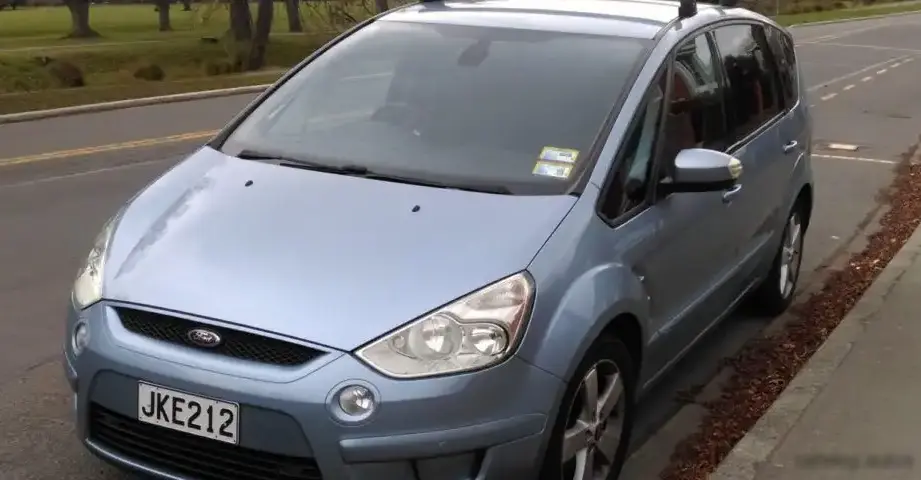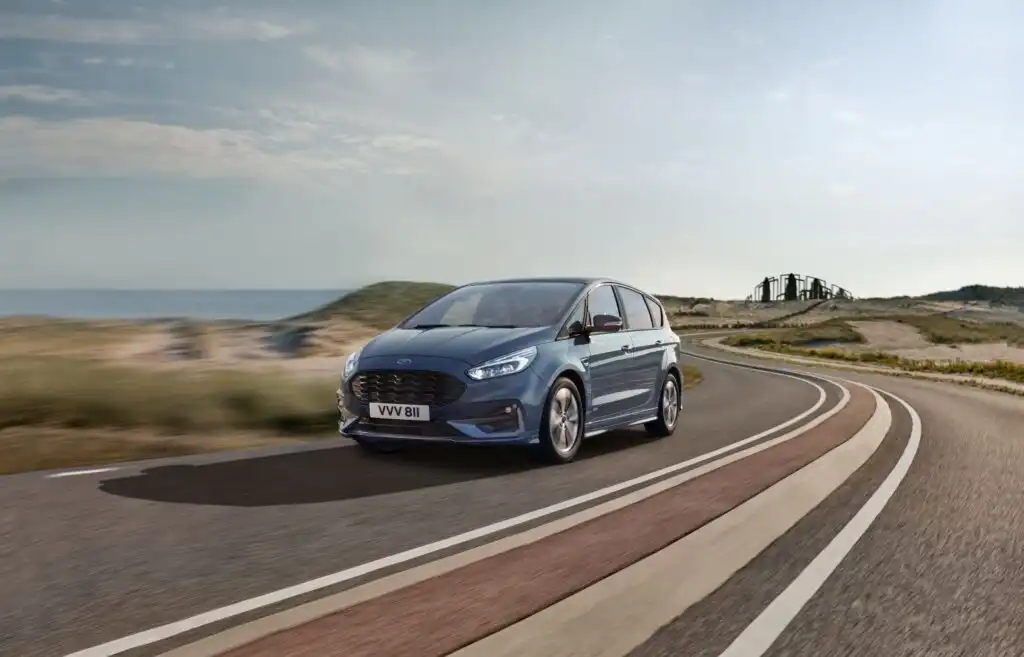
The Ford S-MAX II, specifically the 2.0 EcoBlue variant producing 150 horsepower, represents a mid-cycle update to the second generation of Ford’s popular multi-purpose vehicle (MPV). Introduced in November 2019 and continuing through April 2023, this version aimed to balance fuel efficiency with practical family transport. Positioned as a core offering within the S-MAX lineup, it served as a more economical alternative to the higher-powered engine options while providing a more refined experience than the base models. The facelift brought styling revisions, updated technology, and improvements to the existing powertrain options, including this 2.0-liter diesel.
Technical Specifications
| Brand | Ford |
| Model | S-MAX |
| Generation | S-MAX II (facelift 2019) |
| Type (Engine) | 2.0 EcoBlue (150 Hp) |
| Start of production | November, 2019 |
| End of production | April, 2023 |
| Powertrain Architecture | Internal Combustion engine |
| Body type | MPV |
| Seats | 5-7 |
| Doors | 5 |
| Fuel consumption (urban) | 6.0-6.3 l/100 km (39.2 – 37.3 US mpg) |
| Fuel consumption (extra urban) | 4.5-4.9 l/100 km (52.3 – 48 US mpg) |
| Fuel consumption (combined) | 5.0-5.4 l/100 km (47 – 43.6 US mpg) |
| CO2 emissions | 132-141 g/km |
| Fuel Type | Diesel |
| Acceleration 0 – 100 km/h | 10.6 sec |
| Acceleration 0 – 62 mph | 10.6 sec |
| Acceleration 0 – 60 mph | 10.1 sec |
| Maximum speed | 198 km/h (123.03 mph) |
| Emission standard | Euro 6d-TEMP-EVAP-ISC |
| Weight-to-power ratio | 12.2 kg/Hp |
| Weight-to-torque ratio | 4.9 kg/Nm |
| Power | 150 Hp @ 3500 rpm |
| Torque | 370 Nm @ 2000-2500 rpm (272.9 lb.-ft. @ 2000-2500 rpm) |
| Engine Model/Code | YMCB |
| Number of cylinders | 4 |
| Engine configuration | Inline |
| Number of valves per cylinder | 4 |
| Fuel injection system | Diesel Commonrail |
| Engine aspiration | Turbocharger, Intercooler |
| Engine oil capacity | 6.4 l (6.76 US qt | 5.63 UK qt) |
| Coolant capacity | 10.7 l (11.31 US qt | 9.41 UK qt) |
| Kerb Weight | 1826 kg (4025.64 lbs) |
| Max. weight | 2555 kg (5632.81 lbs) |
| Max load | 729 kg (1607.17 lbs) |
| Trunk (boot) space – minimum | 965 l (34.08 cu. ft) |
| Trunk (boot) space – maximum | 2020 l (71.34 cu. ft) |
| Fuel tank capacity | 63 l (16.64 US gal | 13.86 UK gal) |
| Max. roof load | 75 kg (165.35 lbs) |
| Permitted trailer load with brakes (8%) | 2000 kg (4409.25 lbs) |
| Permitted trailer load with brakes (12%) | 1800 kg (3968.32 lbs) |
| Permitted trailer load without brakes | 750 kg (1653.47 lbs) |
| Permitted towbar download | 90 kg (198.42 lbs) |
| Length | 4796 mm (188.82 in) |
| Width | 1916 mm (75.43 in) |
| Width with mirrors folded | 1953 mm (76.89 in) |
| Width including mirrors | 2137 mm (84.13 in) |
| Height | 1655 mm (65.16 in) |
| Wheelbase | 2850 mm (112.2 in) |
| Minimum turning circle | 11.95 m (39.21 ft) |
| Drivetrain Architecture | Front wheel drive |
| Number of gears | 6 |
| Gearbox type | Manual transmission |
| Front suspension | Independent, type McPherson with coil spring and anti-roll bar |
| Rear suspension | Independent coil spring |
| Front brakes | Ventilated discs |
| Rear brakes | Disc |
| Assisting systems | ABS (Anti-lock braking system) |
| Steering type | Steering rack and pinion |
| Power steering | Electric Steering |
| Tires size | 235/55 R17; 235/50 R18 |
| Wheel rims size | 7.5J x 17; 7.5J x 18 |
Powertrain & Engine Architecture
The heart of this S-MAX variant is the 2.0-liter EcoBlue turbocharged diesel engine, designated with the engine code YMCB. This engine is part of Ford’s EcoBlue family, known for its focus on efficiency and reduced emissions. It utilizes a common-rail direct fuel injection system, delivering fuel directly into the cylinders at extremely high pressure for optimized combustion. The engine features a single turbocharger with an intercooler to increase air density and improve power output. The 150 horsepower output is achieved at 3500 rpm, while the peak torque of 370 Nm (272.9 lb-ft) is available between 2000 and 2500 rpm. This broad torque curve provides good responsiveness in everyday driving situations. The engine also incorporates features like variable geometry turbocharging (VGT) to optimize performance across the rev range. Paired with this engine is a six-speed manual transmission, chosen for its efficiency and driver engagement.
Driving Characteristics
The 150 hp EcoBlue engine, coupled with the manual transmission, delivers a balanced driving experience. Acceleration from 0 to 60 mph takes approximately 10.1 seconds, and top speed is rated at 198 km/h (123.03 mph). While not as brisk as the higher-powered versions of the S-MAX, this configuration provides adequate performance for most driving scenarios, particularly when fully loaded with passengers and luggage. The manual gearbox allows for greater driver control and contributes to improved fuel economy. The gear ratios are well-spaced, providing sufficient torque in each gear for comfortable cruising and overtaking. Compared to the automatic transmission options, the manual version offers a more engaging driving experience and slightly better fuel efficiency. It also feels less strained during uphill climbs or when carrying a full load.
Equipment & Trim Levels
The 2.0 EcoBlue 150 hp model typically came equipped as a mid-range trim level, offering a good balance of features and affordability. Standard equipment generally included air conditioning, a touchscreen infotainment system with Bluetooth connectivity, alloy wheels, and a suite of safety features such as ABS, electronic stability control, and multiple airbags. Higher trim levels added features like leather upholstery, a panoramic sunroof, adaptive cruise control, and a premium sound system. Optional extras included parking sensors, a rear-view camera, and navigation system. Interior upholstery was typically cloth, with higher trims offering partial leather options. The dashboard layout was functional and well-designed, with a focus on ergonomics and ease of use.
Chassis & Braking
The S-MAX II utilizes an independent suspension system on both the front and rear axles. The front suspension employs McPherson struts with coil springs and an anti-roll bar, while the rear suspension features an independent coil spring setup. This configuration provides a comfortable ride quality and good handling characteristics. The braking system consists of ventilated discs on the front wheels and solid discs on the rear. ABS (Anti-lock Braking System) is standard, enhancing braking performance and stability. The steering is electrically assisted, providing a light and responsive feel. The S-MAX’s chassis is designed to accommodate the vehicle’s weight and provide a stable platform for carrying passengers and cargo.
Market Reception & Comparison
The 2.0 EcoBlue 150 hp S-MAX was generally well-received by critics as a practical and efficient family vehicle. It was praised for its spacious interior, comfortable ride, and good fuel economy. However, some reviewers noted that the engine could feel slightly underpowered when fully loaded or driving on steep inclines. Compared to the higher-powered engine options, such as the 2.0-liter bi-turbo diesel, this variant offered a more affordable entry point into the S-MAX range. In terms of reliability, the EcoBlue engine has proven to be generally robust, although regular maintenance is essential to prevent issues with the diesel particulate filter (DPF) and fuel injection system. Fuel economy figures of 5.0-5.4 l/100 km (47-43.6 US mpg) were competitive within its segment.
Legacy
The Ford S-MAX II 2.0 EcoBlue 150 hp has established itself as a reliable and practical used car option. The EcoBlue engine, when properly maintained, offers good longevity and reasonable running costs. The availability of spare parts is good, and the S-MAX’s relatively simple mechanical design makes it relatively easy to repair. While not the most exciting vehicle to drive, it remains a popular choice for families seeking a spacious, comfortable, and fuel-efficient MPV. Its blend of practicality and affordability ensures its continued presence in the used car market for years to come.