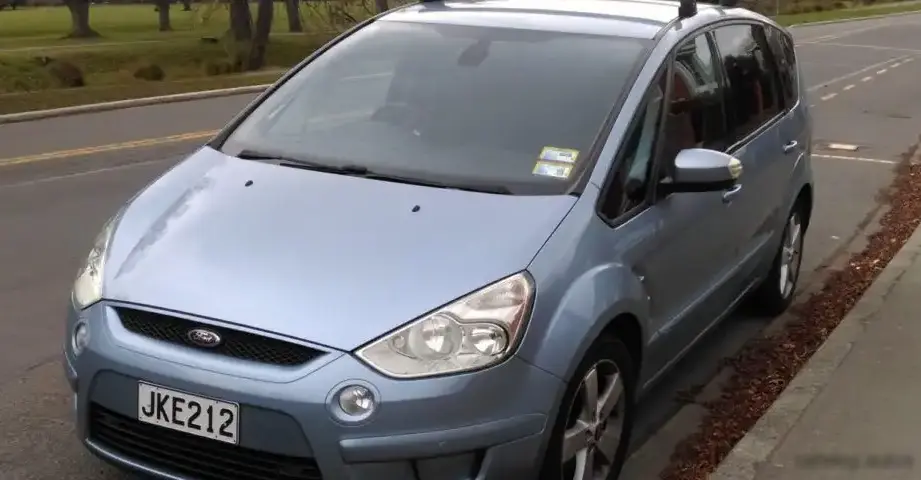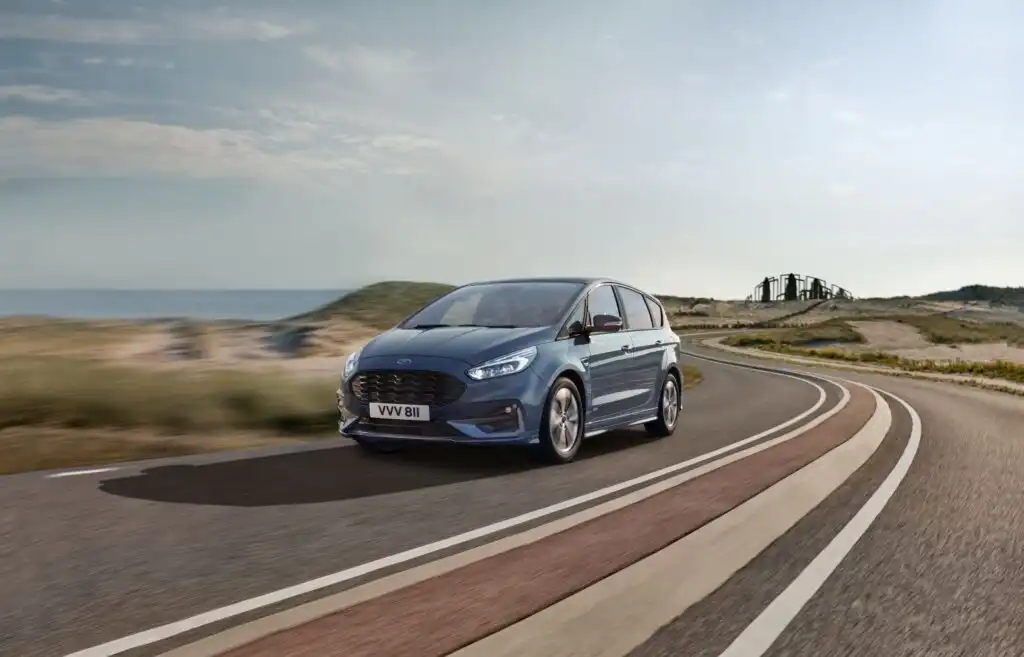
The Ford S-MAX II, specifically the 2.0 EcoBlue (190 hp) 4×4 Automatic variant produced from November 2019 to April 2023, represents a significant evolution of Ford’s multi-purpose vehicle (MPV) offering. This iteration falls within the second generation of the S-MAX, which debuted in 2015, and benefits from a 2019 facelift that brought styling updates and technological enhancements. Positioned as a mid-to-upper trim level within the S-MAX lineup, this model aimed to provide a balance of performance, practicality, and all-weather capability for families and those requiring flexible passenger and cargo space. It primarily served the European market, where MPVs remained a popular choice, though limited numbers were also available in select international markets.
Technical Specifications
| Brand | Ford |
| Model | S-MAX |
| Generation | S-MAX II (facelift 2019) |
| Type (Engine) | 2.0 EcoBlue (190 Hp) 4×4 Automatic |
| Start of production | November, 2019 |
| End of production | April, 2023 |
| Powertrain Architecture | Internal Combustion engine |
| Body type | MPV |
| Seats | 5-7 |
| Doors | 5 |
| Fuel consumption (urban) | 7-7.2 l/100 km (33.6 – 32.7 US mpg, 40.4 – 39.2 UK mpg, 14.3 – 13.9 km/l) |
| Fuel consumption (extra urban) | 5.2-5.4 l/100 km (45.2 – 43.6 US mpg, 54.3 – 52.3 UK mpg, 19.2 – 18.5 km/l) |
| Fuel consumption (combined) | 5.8-6.1 l/100 km (40.6 – 38.6 US mpg, 48.7 – 46.3 UK mpg, 17.2 – 16.4 km/l) |
| CO2 emissions | 153-159 g/km |
| Fuel Type | Diesel |
| Acceleration 0 – 100 km/h | 9.9 sec |
| Acceleration 0 – 62 mph | 9.9 sec |
| Acceleration 0 – 60 mph | 9.4 sec |
| Maximum speed | 206 km/h (128 mph) |
| Emission standard | Euro 6d-TEMP-EVAP-ISC |
| Weight-to-power ratio | 10 kg/Hp, 99.5 Hp/tonne |
| Weight-to-torque ratio | 4.8 kg/Nm, 209.5 Nm/tonne |
| Power | 190 Hp @ 3500 rpm |
| Torque | 400 Nm @ 2000-3000 rpm (295.02 lb.-ft. @ 2000-3000 rpm) |
| Engine Model/Code | BCCC |
| Number of cylinders | 4 |
| Engine configuration | Inline |
| Number of valves per cylinder | 4 |
| Fuel injection system | Diesel Commonrail |
| Engine aspiration | Turbocharger, Intercooler |
| Engine oil capacity | 6.4 l (6.76 US qt | 5.63 UK qt) |
| Coolant capacity | 10.7 l (11.31 US qt | 9.41 UK qt) |
| Kerb Weight | 1909 kg (4208.62 lbs) |
| Max. weight | 2635 kg (5809.18 lbs) |
| Max load | 726 kg (1600.56 lbs) |
| Trunk (boot) space – minimum | 965 l (34.08 cu. ft) |
| Trunk (boot) space – maximum | 2020 l (71.34 cu. ft) |
| Fuel tank capacity | 61 l (16.11 US gal | 13.42 UK gal) |
| Max. roof load | 75 kg (165.35 lbs) |
| Permitted trailer load with brakes (8%) | 2000 kg (4409.25 lbs) |
| Permitted trailer load with brakes (12%) | 2000 kg (4409.25 lbs) |
| Permitted trailer load without brakes | 750 kg (1653.47 lbs) |
| Permitted towbar download | 90 kg (198.42 lbs) |
| Length | 4796 mm (188.82 in) |
| Width | 1916 mm (75.43 in) |
| Width with mirrors folded | 1953 mm (76.89 in) |
| Width including mirrors | 2137 mm (84.13 in) |
| Height | 1655 mm (65.16 in) |
| Wheelbase | 2850 mm (112.2 in) |
| Minimum turning circle | 11.95 m (39.21 ft) |
| Drivetrain | All wheel drive (4×4) |
| Number of gears | 8 |
| Gearbox type | Automatic transmission |
| Front suspension | Independent, type McPherson with coil spring and anti-roll bar |
| Rear suspension | Independent coil spring |
| Front brakes | Ventilated discs |
| Rear brakes | Disc |
| Steering type | Steering rack and pinion |
| Power steering | Electric Steering |
| Tires size | 235/55 R17; 235/50 R18 |
| Wheel rims size | 7.5J x 17; 7.5J x 18 |
Powertrain & Engine Architecture
At the heart of the S-MAX 2.0 EcoBlue 4×4 Automatic lies the Ford BCCC engine, a 2.0-liter inline four-cylinder diesel engine. This engine is part of Ford’s EcoBlue family, known for its focus on efficiency and reduced emissions. The BCCC utilizes a common-rail direct fuel injection system, delivering fuel at extremely high pressure for optimized combustion. A turbocharger with intercooling further enhances performance by forcing more air into the cylinders. The engine produces 190 horsepower at 3500 rpm and a substantial 400 Nm (295 lb-ft) of torque between 2000 and 3000 rpm. This torque output is particularly beneficial for a vehicle of this size and weight, providing strong acceleration and effortless cruising. The engine also incorporates a particulate filter to minimize soot emissions, meeting stringent Euro 6d-TEMP-EVAP-ISC emission standards. The engine is paired with an eight-speed automatic transmission, providing smooth and efficient gear changes. This transmission is electronically controlled and adapts to driving conditions to optimize fuel economy and performance.
Driving Characteristics
The 2.0 EcoBlue 4×4 Automatic S-MAX delivers a composed and comfortable driving experience. The 190 hp engine, coupled with the eight-speed automatic, provides adequate power for most driving situations. Acceleration from 0-60 mph takes approximately 9.4 seconds, which is respectable for an MPV. The automatic transmission shifts smoothly and responsively, although it may not be as engaging as a manual gearbox. The all-wheel-drive system provides enhanced traction and stability, particularly in adverse weather conditions. Compared to lower-powered S-MAX variants, this 190 hp version offers a noticeable performance improvement, making it more suitable for long journeys and carrying a full load of passengers and luggage. However, it doesn’t match the outright performance of the higher-output diesel options available in some markets. The steering is precise and well-weighted, and the suspension effectively absorbs bumps and imperfections in the road surface.
Equipment & Trim Levels
The S-MAX 2.0 EcoBlue 4×4 Automatic typically came well-equipped, reflecting its mid-to-upper trim level positioning. Standard features often included alloy wheels, automatic headlights and wipers, a touchscreen infotainment system with navigation, Bluetooth connectivity, and a rearview camera. Higher trim levels added features such as leather upholstery, heated front seats, a panoramic sunroof, and advanced driver-assistance systems like adaptive cruise control and lane-keeping assist. Interior upholstery was typically a combination of cloth and leather, with a focus on durability and comfort. The dashboard layout was modern and functional, with a clear instrument cluster and intuitive controls. Optional extras included a premium sound system, a rear-seat entertainment system, and parking sensors.
Chassis & Braking
The S-MAX II utilizes an independent suspension system on both the front and rear axles. The front suspension employs a McPherson strut design with coil springs and an anti-roll bar, while the rear suspension features an independent coil spring setup. This configuration provides a good balance of ride comfort and handling. The braking system consists of ventilated discs on the front wheels and solid discs on the rear. Anti-lock braking system (ABS) is standard, along with electronic brakeforce distribution (EBD) and emergency brake assist. The chassis is designed to provide a stable and secure platform, with a focus on minimizing body roll and maximizing grip.
Market Reception & Comparison
The Ford S-MAX II 2.0 EcoBlue 4×4 Automatic was generally well-received by automotive critics. It was praised for its spacious interior, comfortable ride, and efficient engine. The all-wheel-drive system was also seen as a valuable asset, particularly in regions with harsh winters. Compared to other trims in the S-MAX lineup, this variant offered a good balance of performance and fuel economy. The 1.5-liter EcoBlue engine was considered less powerful, while the higher-output 2.0-liter diesel options were more expensive. Fuel economy figures of around 40.6-38.6 US mpg combined were competitive for its class. Reliability reports suggest that the EcoBlue engine is generally robust, although regular maintenance is essential.
Legacy
The Ford S-MAX II 2.0 EcoBlue 4×4 Automatic has established itself as a practical and reliable MPV in the used car market. The EcoBlue engine has proven to be durable, provided it is properly maintained. While MPVs have seen a decline in popularity in recent years due to the rise of SUVs, the S-MAX remains a popular choice for families seeking a spacious and versatile vehicle. Its all-wheel-drive capability and comfortable ride make it well-suited for long journeys and challenging driving conditions. As a used vehicle, it represents good value for money, offering a lot of space and features for its price.